


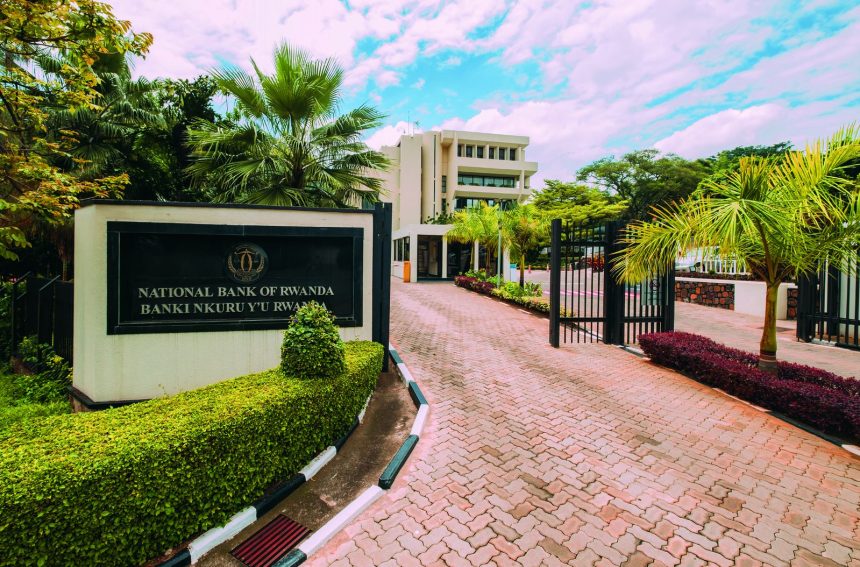
The National Bank of Rwanda (BNR) has increased its benchmark interest rate from 7.25% to 8.25% in a major policy move aimed at controlling inflation and maintaining economic stability.
The announcement was made by BNR Governor Soraya Hakuziyaremye, who explained that the decision is intended to reduce the rising cost of goods and services while safeguarding Rwanda’s long-term economic growth.
“This increase aims to bring down the pace of rising prices in the market and keep inflation within BNR’s target range as one of the key pillars in safeguarding economic growth,” she said.
The decision represents a tightening of monetary policy at a time when inflationary pressures are affecting economies across the region and globally.
By raising the central bank rate, BNR is effectively making borrowing more expensive for commercial banks, which in turn impacts lending rates offered to businesses and consumers.
In practical terms, the move means loans are likely to become more expensive, reducing excessive spending and slowing the circulation of money in the economy.
Central banks often use this strategy to fight inflation because when people and businesses borrow and spend less, pressure on prices gradually decreases.
For Rwanda’s capital market, the increase in the benchmark rate carries important implications.
Higher interest rates generally make fixed-income investments such as treasury bonds and government securities more attractive to investors because they offer improved returns with lower risk.
This could encourage investors to move some of their money away from equities and into bonds or other interest-bearing assets.
At the same time, the stock market could experience temporary caution as companies face higher borrowing costs.
Businesses that rely heavily on loans for expansion and operations may reduce investments or delay projects, potentially affecting corporate earnings and investor confidence.
Sectors such as construction, manufacturing, and real estate are often among the most sensitive to rising interest rates.
However, the banking sector may benefit from the new policy environment.
Commercial banks can potentially earn higher margins on loans as lending rates increase, strengthening profitability within the financial sector.
The rate adjustment may also strengthen confidence in the Rwandan Franc by encouraging savings and attracting foreign investors seeking better returns in Rwanda’s financial market.
A stable currency can help reduce import-related inflation and support broader economic stability.
Inflation remains one of the biggest concerns for policymakers because it directly affects household purchasing power and the cost of living.
When prices rise too quickly, consumers spend more on essentials, businesses face uncertainty, and investment confidence can weaken.
BNR’s latest move signals that controlling inflation has become a top priority to preserve economic resilience and investor confidence.
Economists and market analysts will now closely watch inflation trends, lending activity, consumer spending, and the performance of Rwanda’s financial markets in the coming months.
If inflation begins to ease, the central bank could slow future rate increases.
However, if price pressures continue, additional tightening measures may follow.
Ultimately, BNR’s decision reflects a broader strategy to maintain macroeconomic stability while protecting Rwanda’s growth ambitions.
Although higher interest rates may temporarily slow borrowing and investment activity, the policy is designed to create a more stable economic environment capable of supporting sustainable growth in the long term.
By Andrew shyaka