

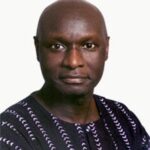



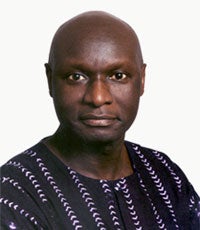
Uganda has officially nominated veteran diplomat Ambassador Olara Otunnu as its candidate for the next United Nations Secretary-General, positioning the seasoned statesman to join an increasingly competitive race to succeed António Guterres when his second and final term ends on December 31, 2026.
Announcing the decision on Sunday, Uganda’s Ministry of Foreign Affairs described Otunnu as “a distinguished Ugandan statesman and international civil servant” whose career spans more than four decades at the highest levels of international diplomacy, government, academia and peacebuilding.
“Ambassador Otunnu brings to this candidature over four decades of distinguished service at the highest levels of international diplomacy,” the ministry said.
Uganda argues that few candidates possess Otunnu’s breadth of experience within the United Nations system. He served as UN Under-Secretary-General and became the first Special Representative of the Secretary-General for Children and Armed Conflict from 1998 to 2005, where he successfully elevated the protection of children affected by war onto the agenda of the UN Security Council.
During his tenure, he helped design the landmark monitoring and compliance mechanism established under Security Council Resolution 1612, which remains the UN’s principal framework for monitoring grave violations against children in armed conflicts.
Otunnu is also credited with leaving a lasting institutional mark on the United Nations long before that appointment. As Uganda’s Permanent Representative to the UN from 1980 to 1985 and President of the Security Council in December 1981, he introduced the confidential straw-balloting process used to select the Secretary-General—a procedure now widely known as the “Otunnu Formula” that continues to guide every UN leadership election.
At home, Otunnu served as Uganda’s Minister of Foreign Affairs between 1985 and 1986 and was a member of the National Consultative Council during the country’s transition following the fall of Idi Amin.
His career has also extended beyond diplomacy. He led the International Peace Academy—now the International Peace Institute—from 1990 to 1998 and later held academic appointments at Albany Law School, the American University in Paris and the Institut Français des Relations Internationales.
His contributions to international peace and human rights have earned him several prestigious honors, including the Sydney Peace Prize, the German Africa Prize and the Harvard Law School Alumni Association Award.
In recent years, Otunnu has co-led the Roco Paco peacebuilding initiative alongside Uganda’s former Chief Justice Alfonse Chigamoy Owiny-Dollo, helping communities in northern Uganda recover from decades of conflict.
He holds a law degree from the University of Oxford and a Master of Laws from Harvard Law School and is fluent in English, French and Luo.
The Ugandan government said Otunnu’s experience across the UN Secretariat, Security Council, national government, academia and grassroots peacebuilding makes him uniquely qualified to lead the organization.
“The Government of Uganda is confident that Ambassador Otunnu’s unique breadth of experience… makes him exceptionally well suited to lead the United Nations at this critical juncture in global affairs,” the ministry said.
Otunnu enters a race that has already attracted several high-profile international figures, including former Senegalese President Macky Sall, former Chilean President Michelle Bachelet, former Ecuadorian Foreign Minister María Fernanda Espinosa, International Atomic Energy Agency Director General Rafael Grossi, former Costa Rican Vice President Rebeca Grynspan and Guyana’s Foreign Minister Carolyn Rodrigues-Birkett.
The next UN Secretary-General will be selected following a series of confidential straw polls by the 15-member Security Council. The successful candidate must secure the support of at least nine Council members without a veto from any of its five permanent members—China, France, Russia, the United Kingdom and the United States—before being formally appointed by the UN General Assembly.
By nominating Otunnu, Uganda has presented one of Africa’s most accomplished diplomats for one of the world’s most influential positions, arguing that his decades of experience in diplomacy, conflict resolution and international governance make him well suited to lead the United Nations at a time of growing global instability.