



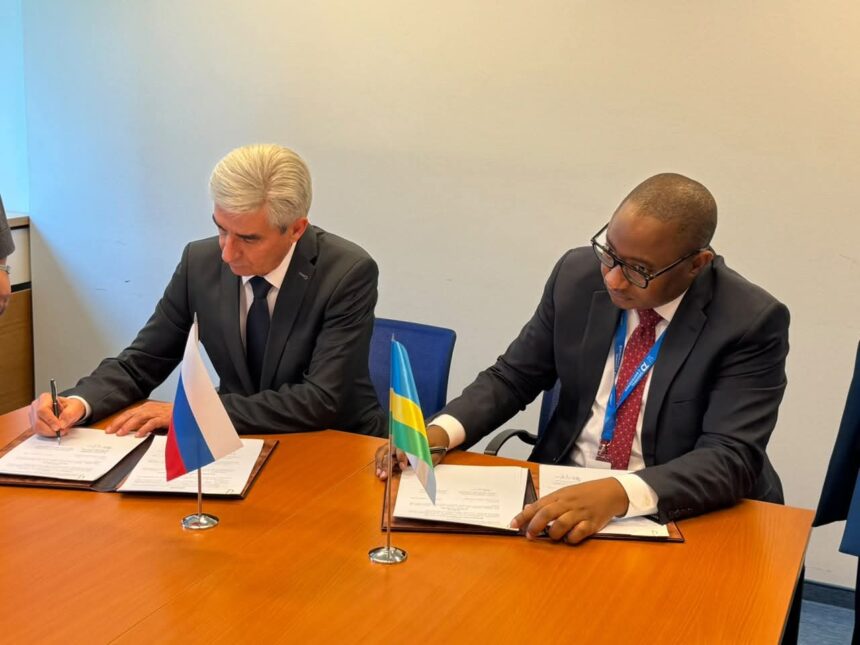
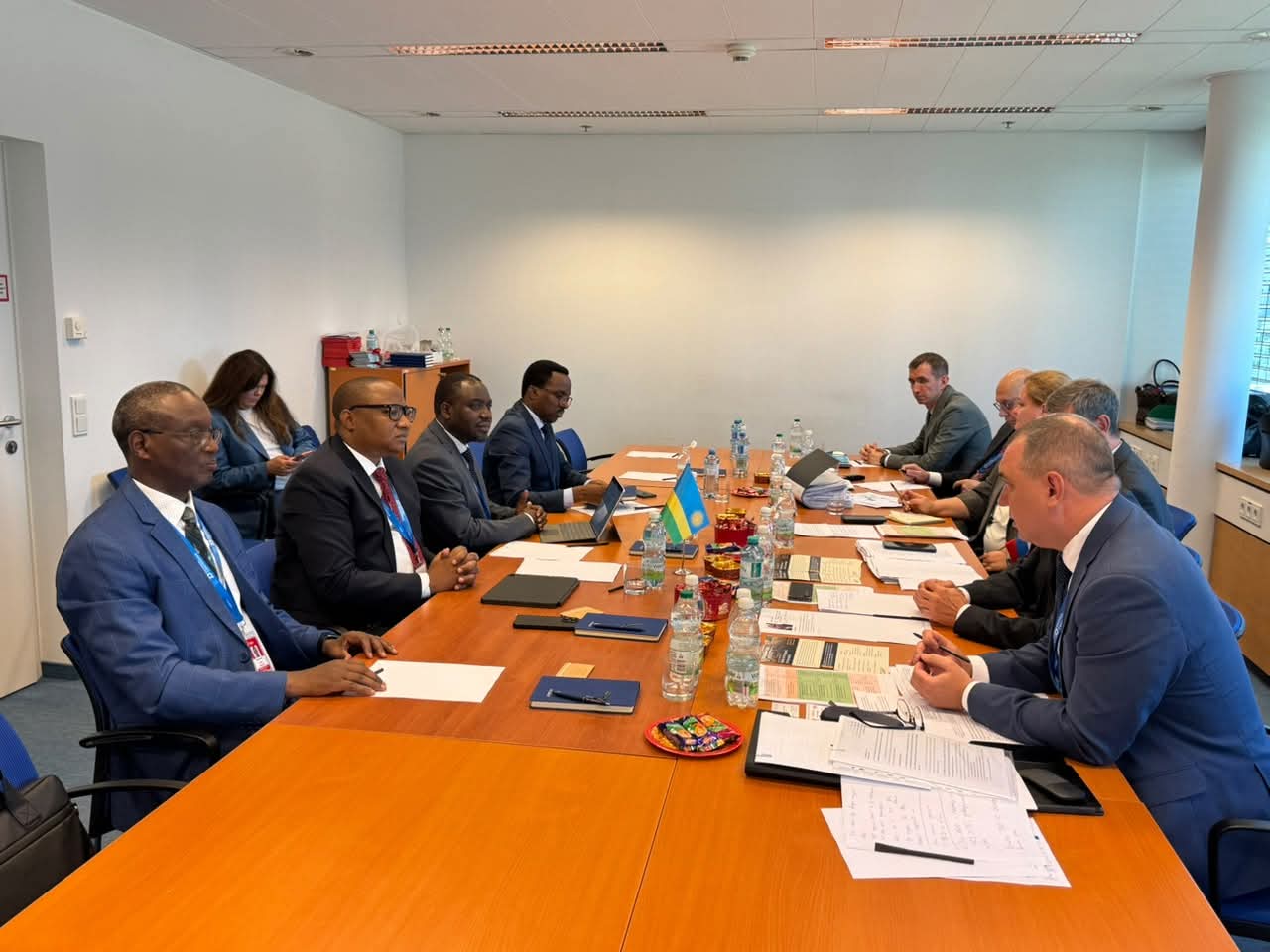
Rwanda’s Utilities Regulatory Authority (RURA) has signed a cooperation agreement with Russia’s federal authority responsible for environmental, industrial and nuclear energy regulation, strengthening collaboration as the country advances plans to develop nuclear energy.
The agreement was signed on the sidelines of the 70th General Conference of the International Atomic Energy Agency (IAEA), which is taking place in Vienna from Monday, September 14, 2026.
The deal provides a framework for cooperation between the two regulatory institutions in areas including staff capacity building, exchange of technical knowledge and information, regulatory practices and the sharing of experience in nuclear safety and oversight.
For Rwanda, the partnership comes at a time when the country is developing the institutional and technical foundations needed to safely introduce nuclear energy into its energy mix.
Building Rwanda’s nuclear regulatory capacity
One of the key benefits of the agreement will be strengthening the skills and expertise of Rwandan professionals responsible for regulating nuclear-related activities.
Through training, technical exchanges and access to international regulatory experience, RURA staff are expected to gain greater capacity to assess nuclear technologies, oversee operators and enforce safety and security requirements.
The cooperation could also help Rwanda develop regulatory systems that are aligned with international standards as it moves toward the implementation of its nuclear energy programme.

Another important area is information sharing.
Nuclear regulation requires access to accurate technical information and continuous learning because of the complexity and safety requirements associated with nuclear technologies.
The agreement will therefore create opportunities for the two sides to exchange experience on regulatory approaches, safety practices and other issues related to nuclear oversight.
Supporting Rwanda’s nuclear energy ambitions
Rwanda has identified nuclear energy as one of the potential sources that could contribute to meeting its long-term electricity needs while supporting economic development.
Developing nuclear power, however, requires more than building or acquiring nuclear technology. Countries must establish strong independent regulatory institutions capable of ensuring that nuclear facilities, materials and activities meet stringent safety, security and environmental requirements.
The new cooperation framework is expected to contribute to that process by giving Rwanda access to technical expertise and regulatory experience from Russia, a country with extensive experience in the nuclear energy sector.
It could also help RURA strengthen its preparedness for future nuclear projects, including licensing, inspection, monitoring, emergency preparedness and compliance with safety requirements.
Wider economic and technological benefits
Beyond regulation, stronger nuclear-sector capacity could support Rwanda’s broader ambitions in science, technology and innovation.
The development of nuclear energy requires highly skilled professionals in fields such as engineering, physics, environmental protection, safety and regulatory science. Cooperation and training programmes could therefore contribute to the development of a specialised workforce.
The partnership may also facilitate further technical cooperation between institutions in the two countries, creating opportunities for research, knowledge transfer and professional development.
For Rwanda, the agreement represents another step toward ensuring that any future use of nuclear technology is supported by a strong regulatory and safety framework.
As the IAEA General Conference brings together countries and nuclear-sector institutions from around the world, Rwanda’s agreement with Russia underscores the importance of international cooperation in building the capacity needed to develop nuclear energy safely and responsibly.