







Rwanda has reaffirmed its commitment to ending AIDS as a public health threat by 2030, leveraging one of Africa’s most successful HIV responses as a model for sustainable healthcare delivery.
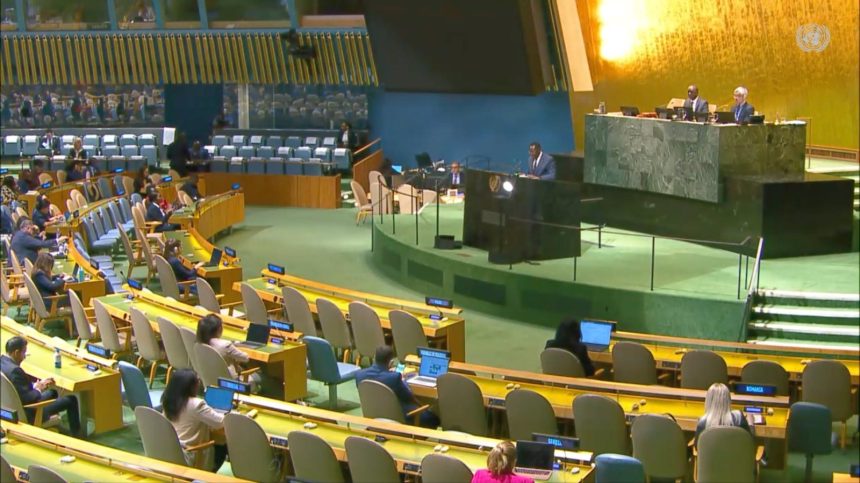
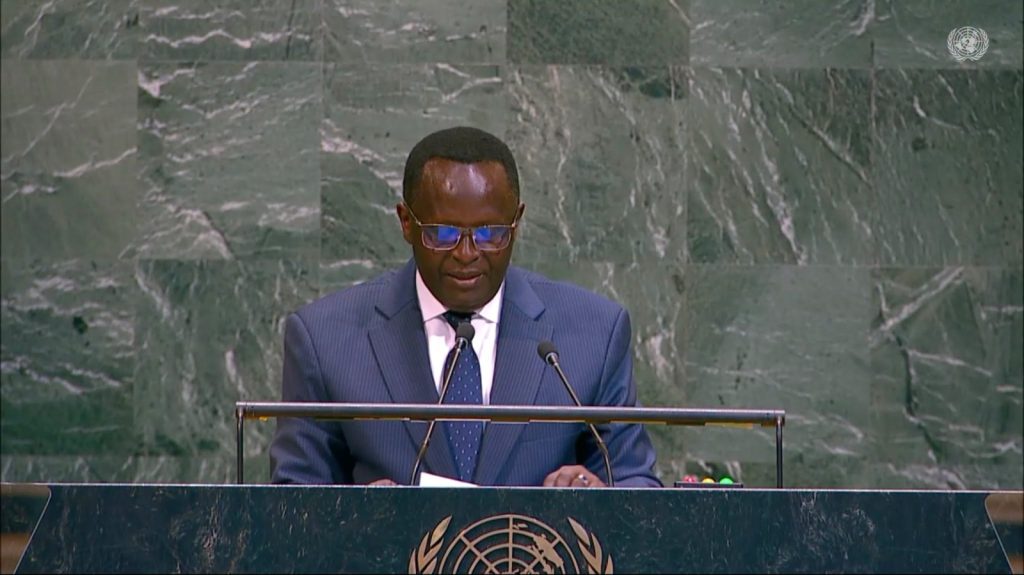
Speaking at a United Nations General Assembly high-level meeting on HIV/AIDS on Monday, Rwanda’s Ambassador to the United Nations, Martin Ngoga, underscored the country’s determination to build resilient health systems capable of sustaining progress in prevention, treatment and long-term care.
Ngoga highlighted Rwanda’s remarkable achievements in the fight against HIV, noting that the country has already surpassed the United Nations’ ambitious 95-95-95 targets.
“By strengthening resilient health systems and maintaining sustained investment, we remain firmly committed to ending AIDS by 2030,” Ngoga told the UN General Assembly.
The global benchmark seeks to ensure that 95% of people living with HIV know their status, 95% of those diagnosed receive antiretroviral therapy, and 95% of those on treatment achieve viral suppression, meaning the virus becomes undetectable and cannot be transmitted to others.
Rwanda currently exceeds those goals, with approximately 96% of people living with HIV aware of their status, 98% of diagnosed individuals receiving treatment and 98% of those on treatment achieving viral suppression.
According to recent estimates, around 230,000 people in Rwanda are living with HIV among a population of about 14 million.
The country’s adult HIV prevalence rate stands at approximately 3%, significantly lower than many countries in sub-Saharan Africa.
The country has also made notable progress in preventing mother-to-child transmission, with nearly 99% of pregnant women living with HIV receiving antiretroviral treatment.
Decades of sustained investment in community-based healthcare, widespread testing programmes and universal access to treatment have contributed to substantial declines in both new infections and AIDS-related deaths.
New HIV infections have fallen by more than 80% over the past two decades, while AIDS-related deaths have declined by nearly 86%.
However, challenges remain. Rwanda still records an estimated 3,200 new HIV infections and about 2,600 AIDS-related deaths each year, highlighting the need to sustain funding and strengthen prevention efforts among vulnerable populations.
Global financing uncertainties have also emerged as a growing concern. International partners, including PEPFAR and the Global Fund, continue to provide the majority of funding for Rwanda’s HIV response, prompting authorities to increasingly focus on long-term domestic sustainability.
As the international community races toward the 2030 target, Rwanda’s experience is increasingly being recognised as evidence that ending AIDS is achievable through strong political commitment, resilient healthcare systems and equitable access to life-saving treatment.
The country’s progress has positioned it among a small group of African nations demonstrating that sustained investment and community-centred healthcare can transform the fight against one of the world’s most persistent public health challenges.
By Andrew Shyaka