



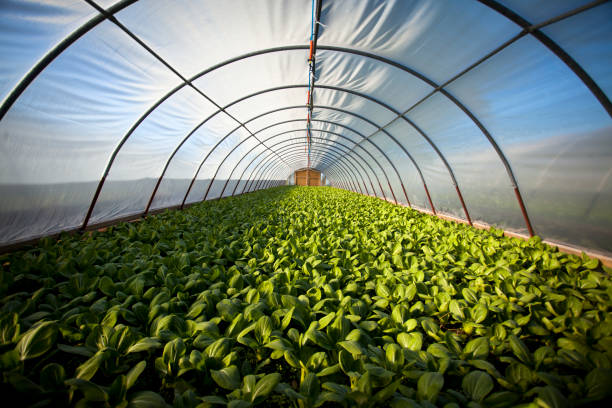
The Rwanda Agriculture and Animal Resources Development Board (RAB) has announced plans to establish a modern biotechnology seed production center expected to become one of the leading facilities in the region by 2027, as Rwanda intensifies efforts to improve agricultural productivity and food security through science and innovation.
The state-of-the-art facility will initially focus on the production of improved and disease-free planting materials for three major staple crops, bananas, Irish potatoes, and cassava before gradually expanding to other crops in the future.
According to RAB, the center will rely on advanced tissue culture biotechnology, a modern propagation technology that enables scientists to multiply clean and high-yield seedlings in large quantities while reducing the spread of crop diseases and pests.
The initiative is expected to significantly strengthen Rwanda’s seed systems and increase access to quality planting materials for farmers across the country.
The development comes at a time when Rwanda is increasingly investing in agricultural biotechnology to improve crop resilience, increase productivity, and support smallholder farmers who depend heavily on agriculture for their livelihoods.
RAB’s biotechnology program already operates tissue culture laboratories at Rubona and Musanze research stations, where scientists are producing disease-free seedlings for crops including cassava, banana, sweet potato, Irish potato, and hybrid coffee.
Recent data from RAB shows that the country has made major progress in seed multiplication using biotechnology.
During the 2023/2024 agricultural year alone, RAB produced more than 2 million potato plantlets through tissue culture technology, alongside 12,450 banana plantlets and thousands of cassava and sweet potato seedlings.
Earlier reports indicate that Rwanda has steadily expanded production capacity over the years.
In the 2020/2021 fiscal year, Rubona tissue culture laboratories produced approximately 1.48 million potato plantlets, 14,203 cassava plantlets, 9,760 sweet potato plantlets, and 7,375 banana plantlets.
RAB says the future biotechnology center will help accelerate multiplication of improved crop varieties that are resistant to diseases and climate-related challenges.
Scientists are particularly focusing on cassava and potatoes, two crops that have frequently suffered from devastating diseases such as Cassava Brown Streak Disease and potato late blight.
The planned center is also expected to support Rwanda’s ambition of becoming a regional hub for agricultural innovation.
Through partnerships with international institutions including the International Institute of Tropical Agriculture (IITA) and CGIAR research programs, Rwanda has already introduced modern technologies such as Semi Autotrophic Hydroponic (SAH) systems that improve survival rates of cassava seedlings to nearly 100% during acclimatization.
Agriculture remains the backbone of Rwanda’s economy, employing the majority of the population.
Experts believe the new biotechnology seed center could play a critical role in boosting yields, improving food security, increasing farmer incomes, and supporting the country’s broader agricultural transformation agenda.
Officials say once fully operational, the center will not only supply high-quality seedlings to farmers within Rwanda but could also position the country as a major supplier of improved planting materials across East and Central Africa.