








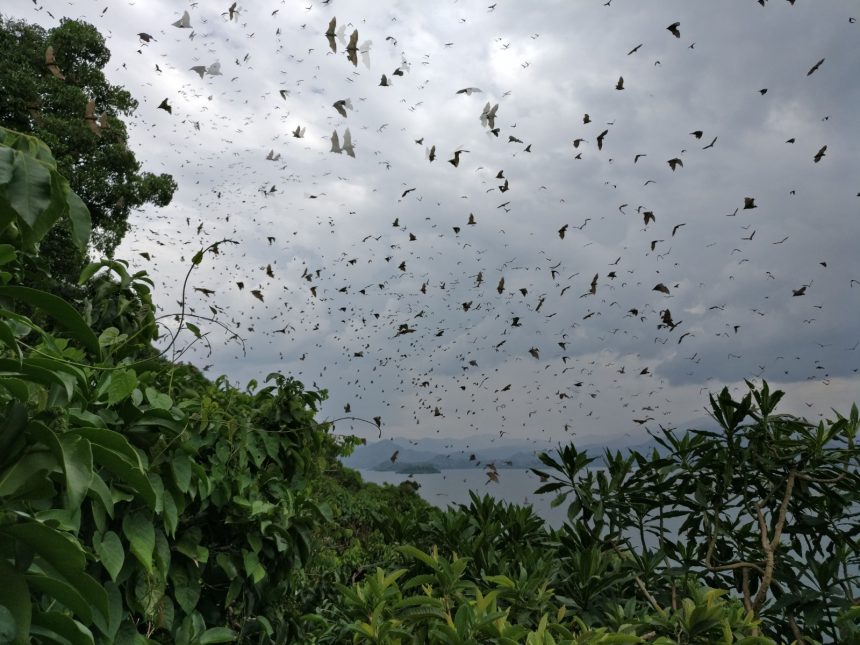
On International Bat Appreciation Day, the wildlife conservation organisation Wild Africa is calling for urgent action to protect Rwanda’s iconic bat species. This includes the critically endangered Hill’s horseshoe bat, which was recently rediscovered in Nyungwe National Park in southwestern Rwanda. Bats are among Rwanda’s most overlooked yet essential wildlife species, playing a critical role in the country’s ecosystems. They are often associated with fear and superstition, cast as villains, when in reality they are nature’s unsung heroes.
Bats have existed for more than 50 million years. They are found on every continent except Antarctica. The IUCN lists 54 bat species as occurring in Rwanda, though recent surveys in Nyungwe National Park have added new records and rediscoveries of additional species, suggesting the country’s true bat diversity may be higher. Bats are believed to make up at least 40% of Rwanda’s mammal diversity, and most species are insectivorous, playing an important role in natural pest control. Despite common misconceptions, vampire bats are native only to the Americas and do not occur in Rwanda or elsewhere in Africa.
Sadly, bat populations are under growing pressure. The IUCN Red List assessments indicate that around one in five bat species is currently threatened with extinction globally. In Rwanda, bats face increasing pressure from habitat loss, disturbance of cave systems, and persecution driven by fears of zoonotic disease transmission.
The Egyptian fruit bat has been identified by health authorities as a “natural reservoir host of the Marburg virus”. However, conservationists and public health researchers emphasize that they do not pose a direct risk to the general public. Spillover events are rare and are primarily associated with habitat disturbance and human intrusion into bat-inhabited caves and mines.
In fact, scientific evidence shows that large-scale culling of bats to control zoonotic diseases can be counterproductive and may increase risk over time. As keystone species, bats play a critical role in maintaining biodiversity, delivering essential ecosystem services that support human health, and helping to reduce the ecological conditions that can drive zoonotic spillover. They do this through:
But there is hope. In Rwanda, researchers working with the Rwanda Development Board (RDB) are actively mapping bat roosting sites to support bat conservation planning while strengthening disease surveillance efforts. Long-term monitoring and protection efforts have been established, led by Bat Conservation International, Rwanda Development Board, and the Rwanda Wildlife Conservation Association, to protect the newly discovered and critically endangered Hill’s horseshoe bat, along other species.
Dr. Olivier Nsengimana of the Rwanda Wildlife Conservation Association says, “Far from being scary or evil creatures, bats are good neighbours due to their ecological value. They are highly effective consumers of agricultural pests and, therefore, a natural asset for Rwanda’s agricultural productivity. Rwandan bat populations should be protected and promoted, since they may foster higher crop yields and more sustainable livelihoods.”
Protecting bats protects all of us. On International Bat Appreciation Day, Wild Africa urges the Rwandan public to help shift perceptions by sharing accurate information and strengthening efforts to conserve these iconic species for generations to come.
Stills and footage are available here.
Lee Ndayisaba is an independent media consultant.