




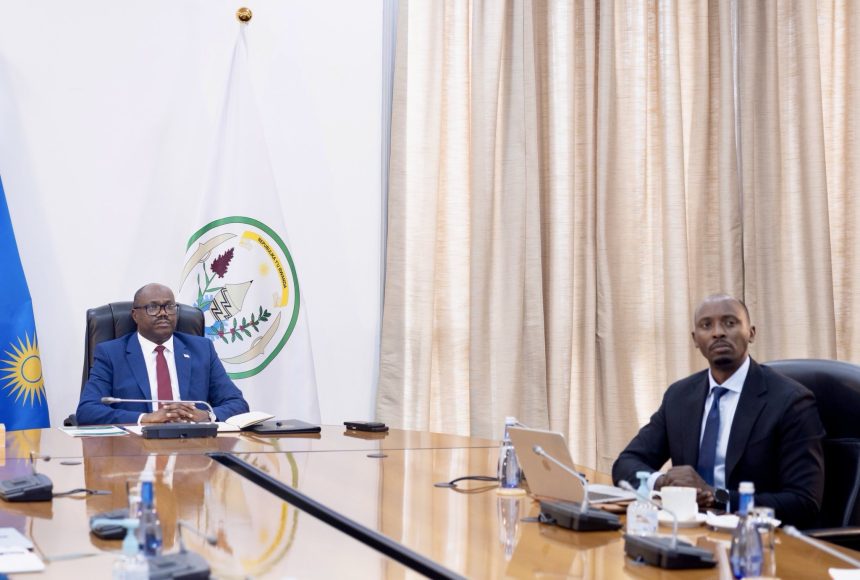
Rwanda has reaffirmed its readiness to prevent the spread of Ebola as the deadly outbreak in the Democratic Republic of the Congo (DRC) continues to escalate, with Prime Minister Édouard Ngirente, speaking on behalf of President Paul Kagame, highlighting the country’s investments in public health preparedness during the High-Level Meeting of African Heads of State, Governments and Partners on the Ebola Outbreak.
Addressing the virtual summit on Tuesday, the Prime Minister said Rwanda has remained free of Ebola because of deliberate and sustained investments in resilient health systems.
“Rwanda remains Ebola-free thanks to deliberate investments in preparedness and resilient public health systems. We have strengthened surveillance, screening, laboratory capacity, emergency response mechanisms, and public awareness to safeguard public health,” he said.
His remarks come as the World Health Organization (WHO) warns that the Bundibugyo strain outbreak centred in eastern DRC continues to expand rapidly.
According to the latest WHO figures, 676 confirmed Ebola cases and 136 confirmed deaths had been reported in the DRC by 11 June, with additional cross-border cases recorded in Uganda.
The outbreak has spread across 29 health zones, making it the largest Bundibugyo Ebola outbreak ever documented.
WHO and the Africa Centres for Disease Control and Prevention (Africa CDC) have jointly appealed for approximately US$518 million to finance the continental response between June and November 2026.
The funding will support surveillance, laboratory testing, emergency medical care, infection prevention and control, community engagement, cross-border preparedness, logistics, and research into vaccines and therapeutics for the Bundibugyo strain, for which there is currently no licensed vaccine or specific treatment.
Sharing a border with eastern DRC, Rwanda has remained on high alert since the outbreak was confirmed.
Authorities have intensified screening at border crossings, strengthened disease surveillance, expanded laboratory capacity, trained rapid response teams, and increased public awareness campaigns aimed at early detection and prevention.
The Prime Minister stressed that investing in resilient public health systems is not only essential for protecting Rwanda’s population but also for strengthening regional health security as neighbouring countries work together to contain one of Africa’s most serious disease outbreaks in recent years.
The high-level meeting brought together African Heads of State, governments, international partners and health institutions to coordinate regional action, mobilize resources, and reinforce cross-border collaboration to halt the spread of Ebola across Central and East Africa.