





From a 10-year hosting agreement and a potentially record-breaking circuit to 100 million African fans and ambitious engine technology, Rwanda’s Formula 1 deal carries significant implications for global motorsport.
Here are 10 key figures from the historic announcement in Kigali on October 13, 2026.
- 10 Years: Rwanda’s Formula 1 Agreement
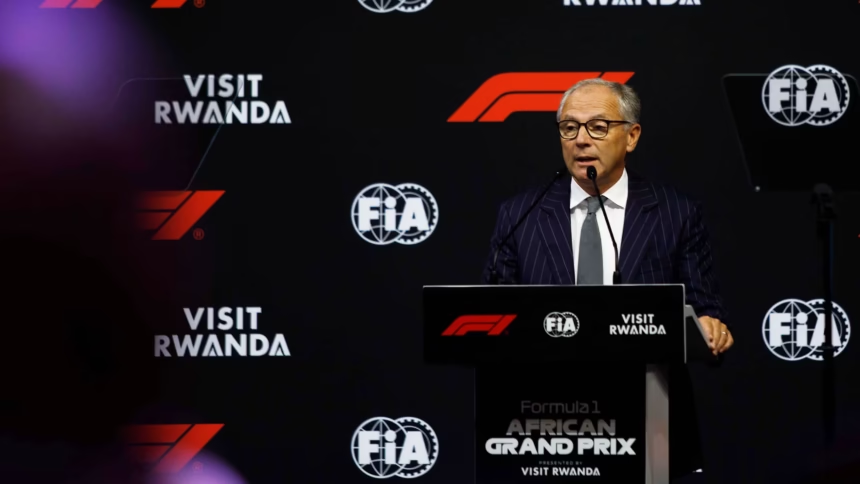
Rwanda has secured a 10-year agreement to host the African Grand Prix, presented by Visit Rwanda, with the inaugural race expected in the early 2030s. Formula 1 President and CEO Stefano Domenicali suggested the partnership could extend beyond its initial term. “We are talking about 10 years, but 10 years is just the beginning, because before arriving to 20 you need to pass through 10,” he said. The agreement establishes a long-term commitment between Rwanda, Formula 1 and the FIA.
- 33 Years: Africa’s Wait for Formula 1
The last Formula 1 World Championship race on African soil took place on March 14, 1993, at South Africa’s Kyalami Circuit, where Alain Prost emerged victorious. Morocco previously hosted a championship race in 1958. Rwanda is therefore set to become the 3rd African country to stage a Formula 1 World Championship Grand Prix, ending the continent’s absence from the calendar
- 800 Million: Formula 1’s Global Audience
Formula 1 has more than 800 million fans worldwide, according to Domenicali. This audience makes the championship an important international marketing platform for host destinations. Rwanda could benefit from global broadcasting exposure, international tourism promotion and opportunities to attract businesses associated with motorsport, technology and entertainment.
- 100 Million: Africa’s Formula 1 Fanbase
More than 100 million Formula 1 fans live in Africa, with nearly 60% of followers in key sub-Saharan African markets aged below 35. The figures highlight a young and growing audience that has largely experienced the championship through television and digital platforms. Hosting a Grand Prix on the continent could improve access to live racing and strengthen regional interest in motorsport.
- 6km: Length of the Bugesera Circuit
Rwanda’s proposed Formula 1 circuit will measure approximately 6km and will be constructed near the new Kigali International Airport, about 40km south of Kigali. Designed with the involvement of former Formula 1 driver Alexander Wurz and Tilke Engineering, the facility will target FIA Grade 1 certification. It is also intended to accommodate conferences, exhibitions, concerts and other motorsport events throughout the year.
- 17 Corners: Rwanda’s Technical Racing Challenge
The Bugesera circuit is planned to feature 17 corners and run anticlockwise. Its layout will incorporate natural changes in terrain, combining challenging turns with sections designed to test drivers’ precision, braking and vehicle handling. Presenter Naomi Schiff unveiled these details during the announcement at BK Arena, describing a circuit intended to offer both competitive racing and distinctive spectator experiences.
- 197 Metres: Potentially Record-Breaking Elevation Gain
The proposed circuit will feature approximately 197 metres of cumulative elevation gain per lap, a figure Schiff described as potentially record-breaking. Such pronounced changes in gradient could influence car performance, braking demands and race strategy. The design aims to preserve Bugesera’s natural landscape while creating elevated viewing areas for spectators. The figure remains subject to final engineering plans.
- 600 Volunteers: Developing Local Motorsport Expertise
FIA President Mohammed Ben Sulayem said approximately 600 volunteers would require training for Grand Prix operations. The FIA intends to support Rwanda through technical education and capacity-building programmes covering race management, safety and event operations. The training could also create a pool of qualified personnel for future international sporting competitions.
- 80kg: Proposed Reduction in Formula 1 Car Weight
Ben Sulayem outlined ambitions for a new V8 engine formula around 2030 that could make Formula 1 cars approximately 80kg lighter. He expressed hope that Rwanda’s inaugural Grand Prix might coincide with the introduction of the technology. The proposed reduction could improve vehicle agility and handling, although the engine regulations and launch arrangements have not been formally approved.
- 50%: Targeted Reduction in Engine Development Costs
The FIA president also suggested that the proposed V8 engine formula could reduce research and development expenditure by at least 50%. Lower development costs could improve the financial sustainability of engine programmes while potentially encouraging greater manufacturer participation. Ben Sulayem also emphasised the importance of engine sound to the spectator experience. The projected savings remain an FIA ambition rather than a confirmed outcome.
Two additional figures illustrate the project’s potential commercial reach. The Bugesera circuit is planned to accommodate approximately 100,000 spectators, according to Rwanda Development Board CEO Jean-Guy Afrika, while Domenicali said some established Formula 1 events attract more than 400,000 attendees across a race weekend.
The project’s total construction cost, financing arrangements, hosting fees and expected financial returns have not yet been disclosed. These details will be important in assessing the economic impact of Rwanda’s Formula 1 investment.