

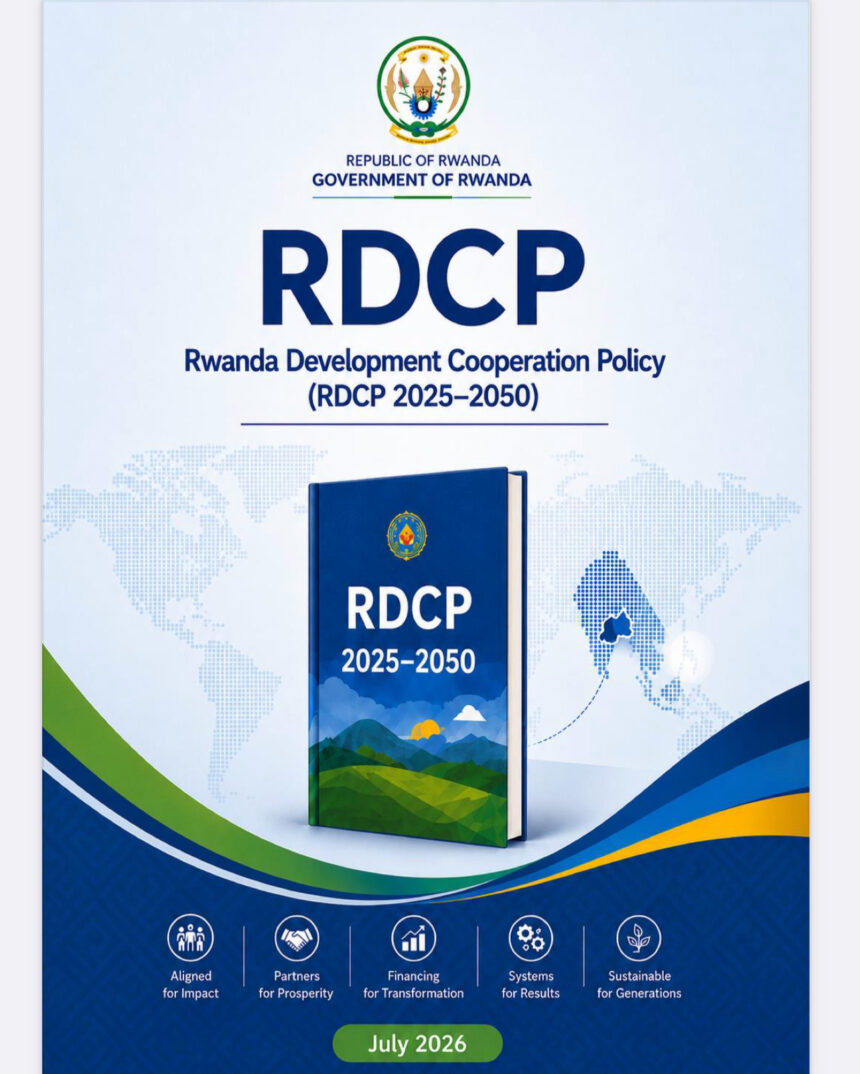
Rwanda has released a Development Cooperation Policy that seeks to change how the country works with those who help finance its development.
Instead of receiving support as a collection of separately planned projects, Rwanda wants partners to contribute to national programmes with results they can measure together.
The document is intended to replace the 2006 Aid Policy and guide cooperation through 2050.
Finance Minister Yusuf Murangwa explains in his foreword that Rwanda’s ambitions have changed, as have the sources of development finance.
Grants remain useful, but loans, climate finance and private investment now sit alongside them. He calls for a shift “from fragmented projects to a coherent portfolio of national flagship programs and investments.”
That is the policy’s central proposition: Rwanda would set out the work it considers most important, while partners would help shape and finance programmes within that plan.
The change also speaks to a familiar imbalance in development cooperation. A country seeking support can spend considerable time adapting to different partners’ funding cycles, procedures and preferred projects. Rwanda is proposing a more coordinated relationship, without dismissing what its partners bring.
As the policy puts it, “Rwanda exercises full leadership over its development agenda.” Partners would still contribute money and expertise, but both sides would be able to judge their work against agreed national outcomes.
To organise that work, six Priority Working Groups would replace 16 Sector Working Groups, covering food systems, employment, infrastructure, human development, governance and sustainable financing.
The document says “the majority of development cooperation resources will be directed to flagship programs” so that related investments can be planned together. Smaller pilots may continue, while humanitarian assistance and refugee protection can use arrangements suited to their purpose.
The Muvumba multipurpose dam offers an example of why those connections matter. Storing water is one achievement; getting it to farms, helping farmers choose viable crops and connecting them to buyers requires more than a dam.
The Rwanda Water Resources Board says an additional €45.4 million will support irrigation across 3,073 hectares in Nyagatare. Its executive chairperson, Richard Nyirishema, has said the investment will reach its full potential only when the water reaches people.
The policy’s instructions to partners are unusually direct. It says support should be included in national plans and budgets and reported through government systems. “Development cooperation must strengthen, not bypass, Rwanda’s national systems,” the document states.
For Rwanda, this could reduce overlapping projects and give the government a clearer view of available resources. For partners, it could make their contributions easier to connect to lasting results, although some may have to adjust established ways of delivering and reporting support. Separate bilateral agreements would remain possible.
Money, however, comes with different obligations. Rwanda’s 2026/27 budget proposal estimates Rwf 1,974.1 billion in external loans and Rwf 548.3 billion in grants, together about 32 percent of its proposed Rwf 7,796.3 billion budget.
These are budget estimates, not funds secured by the new policy. The document favours grants and highly concessional finance for services that earn no revenue and says commercial borrowing should be considered only where repayment can be justified.
Greater national control over financing choices also means greater responsibility for their future costs.
The policy promises annual targets, public reporting and a dashboard through which commitments and results could be followed. Its transition would take up to 24 months after Cabinet approval, but detailed operating rules and a costed transition plan remain to be completed.
The finance ministry described the framework as proposed in July, with implementation to follow approval.
Its success will depend on whether this proposed balance between national leadership and partnership improves delivery for citizens, while giving partners credible evidence of what their support achieved.