


The people building artificial intelligence are warning that it could become dangerous. Donald Trump’s response is to ask why they are still building it.
On September 14, the U.S. president called claims that AI could destroy humanity a “hoax”. He questioned why industry leaders would seek rules that might damage their own companies and warned: “Don’t kill the Golden Goose!” His remarks captured a dilemma facing governments everywhere. They want the gains from AI, but have yet to agree on how to manage its risks.
For Trump, the immediate contest is with China. The White House says the country with the strongest AI industry will gain economic and military advantages and help set global standards.
The money at stake is substantial. Stanford University’s 2026 AI Index estimates that private AI investment in the United States reached $285.9 billion in 2025, compared with $12.4 billion in China.
That comparison does not include all Chinese state-backed spending, and Stanford says the performance gap between leading American and Chinese models has largely closed. Trump is defending an American lead, but cannot assume it is secure.
His administration therefore wants to remove rules it considers burdensome and speed up construction of data centres and energy infrastructure. Trump predicts that AI and data centres could become a bigger economic engine than oil or the internet.
Investment on that scale explains his urgency. It does not establish that every system is safe to release or that every promised return will materialise.
Some of the companies pursuing those returns are asking for oversight of the most powerful systems. OpenAI, led by Sam Altman, says their development and deployment must have “strong public oversight”.
Anthropic chief executive Dario Amodei has warned that AI capabilities may advance faster than our ability to manage them.
The difficult question is which systems require special scrutiny and who has the authority to act when a test reveals a serious problem.
Computer scientist Roman Yampolskiy offers a much darker forecast. If AI begins designing more capable AI without effective human control, “we will become secondary species on this planet”, he said in a recent debate.
That is a warning about a possible future, not a description of today’s technology. Present concerns are easier to measure. Stanford recorded 362 documented AI incidents in 2025, up from 233 the year before.
Those incidents do not prove Yampolskiy’s prediction, but they show why testing and accountability matter now.
Countries are making different choices. The European Union has adopted an AI law that places stronger obligations on applications judged to pose greater risks. Rwanda is approaching the technology from another pressing question: can it improve services people need today?
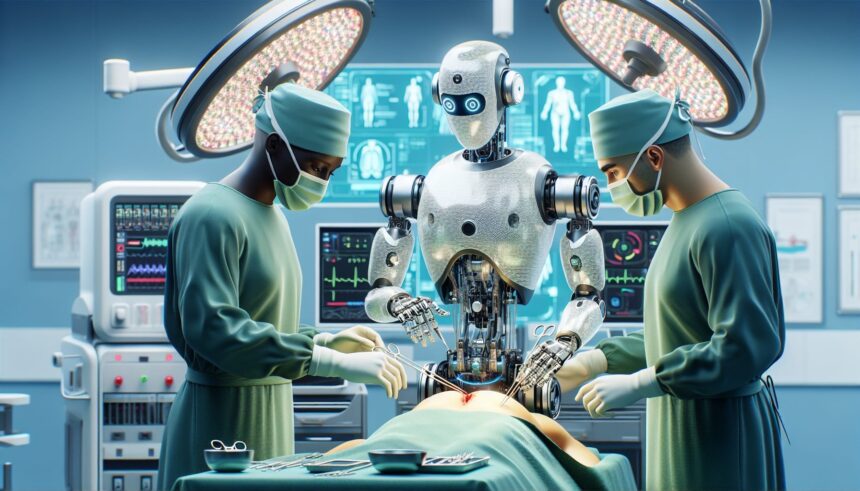
Consider a patient waiting at a busy clinic. Bill Gates says Rwanda has roughly one health worker per 1,000 people. The country is the starting point for Horizon 1000, a Gates Foundation and OpenAI initiative committing $50 million in funding, technology and technical support.
It aims to reach 1,000 primary care clinics and their communities across African countries by 2028. Gates says the tools should “support health workers, not replace them”.
For a clinician managing a long queue, help with records or clinical guidance could mean more time with each patient. Whether it does so safely still has to be demonstrated.
President Paul Kagame has expressed that ambition in terms of access. Launching the AI for Good Global Commission in July, he said technology should be “a force for good” and urged countries to use AI to reduce inequality. He co-chairs the commission, which examines public trust, access and practical benefits.
Rwanda’s health plans also expose a weakness in a debate dominated by Washington and Beijing. A tool that performs well in English may struggle during a consultation in Kinyarwanda.
A confident but mistaken answer could have serious consequences in a clinic. Local health workers must be able to understand, question and correct what the technology produces.
Delaying a useful tool has a cost, yet releasing one without adequate checks can carry a cost too.
For Rwanda, the measure of success will be whether a patient receives better care while the health worker remains firmly in charge.