








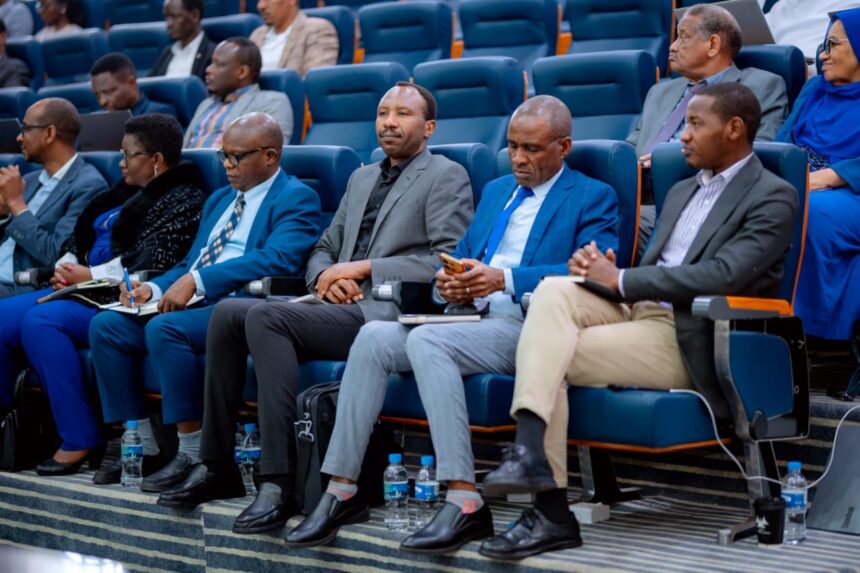
Rwanda is developing a national Higher Education Performance Measurement Framework that will provide a common, evidence-based system for assessing the performance and quality of universities and other higher learning institutions.
The framework, being developed by the Higher Education Council (HEC) in consultation with higher learning institutions and other stakeholders, is expected to improve the availability and reliability of data on students, lecturers, research, innovation, teaching and learning, and graduate outcomes.
HEC Director General Kadozi Edward said the initiative is intended to ensure that information generated by Rwanda’s higher education sector is systematically collected, cleaned, organized and made available for decision-making.
He said the absence of comprehensive and standardized data has previously made it difficult for some international organizations and global education databases to fully capture developments within Rwanda’s higher education sector.
“Now we are building a system whereby all data related to higher learning institutions and universities will be captured, organized, cleaned, digitalized and published,” Kadozi said.
The information will also be accessible to relevant stakeholders, including international organizations such as UNESCO, the World Bank and the African Union, while helping the government and institutions identify areas requiring improvement.
Kadozi said the framework will not be designed simply to rank or monitor institutions, but to provide evidence that can guide interventions aimed at improving teaching, learning, research, innovation and graduate outcomes.
Institutions that fall below expected standards will be engaged and supported to improve their performance, with assessments based on clearly defined indicators rather than subjective judgments.
The framework will also give students and other stakeholders access to information that can help them understand how different higher learning institutions are performing.
At the University of Kigali, Professor Ogechi Adiola, Deputy Vice Chancellor for Research, Innovation and Enterprise, said the initiative would help universities move away from keeping important information in isolated institutional systems.
She said reliable data is essential for universities seeking to understand their students, staff and academic performance, particularly as Rwanda seeks to strengthen its position as an education destination for students from across Africa.
The framework is expected to capture information such as student enrolment, dropout and transfer rates, students’ countries and regions of origin, internationalization, staff profiles and research outputs.
For universities seeking to attract more international students, such information could also help identify markets where recruitment efforts should be strengthened.
Adiola said the framework should equally provide a clearer picture of where lecturers publish their research and the quality and international recognition of the journals in which they publish.
“We need the research. We need to know where staff are coming from and where they are publishing. If you don’t have established metrics, you will not be able to encourage lecturers to publish in the right place,” she said.
The initiative is also expected to strengthen universities’ internal information management systems, ensuring that institutions are able to generate and submit accurate information required under the national framework.
Kigali Independent University, Deputy Vice-Chancellor in charge of Postgraduate Studies and Research, as well as a senior lecturer and economist Dr. Byiringiro Enock said involving universities from the early stages of designing the framework would help create a system that reflects the realities and needs of higher learning institutions.
He said the initiative could improve the visibility of Rwandan universities internationally while creating a stronger culture of competition and continuous improvement based on evidence.
“At the institutional level, we had our own systems. This time, the framework is going to compare all universities in the country, so it means everyone is going to work hard,” he said.
Enock added that universities will need to strengthen their information management systems and infrastructure to ensure that the data they generate is accurate, complete and aligned with the new performance indicators.
The framework is being developed through consultations with higher learning institutions, after which HEC plans to refine the indicators based on stakeholder input and digitize the system.
HEC expects the full process, including capacity building and training of institutions on data generation, collection, reporting and utilization, to take between one and two years.
Once operational, the framework is expected to provide a common evidence base for measuring the quality of Rwanda’s higher education system, identifying gaps and informing policies and interventions.
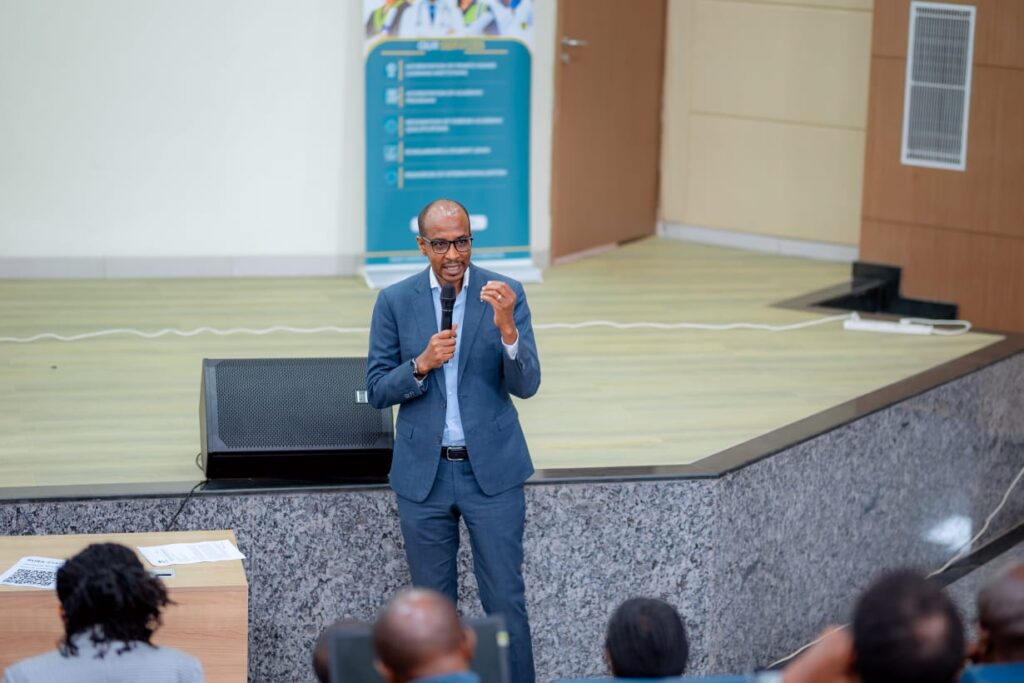
Beyond accountability, the system could help institutions better understand their students and graduates, improve academic programmes, strengthen research and innovation, and make more informed decisions about resources and institutional development.
For Rwanda, the broader objective is to build a higher education sector whose performance can be measured using reliable evidence while increasing the international visibility and credibility of its universities.