


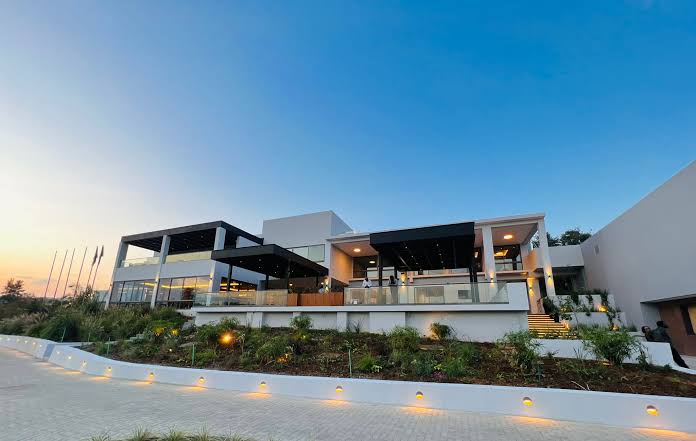
Yesterday, a friend sent me the new menu at the Kigali Golf Resort and Villas clubhouse. His message carried a familiar complaint: the prices had risen again.
He is not alone. Many members have complained about the cost of food, drinks and membership. But after looking through the menu, I found myself defending the clubhouse.
KGC is not an ordinary neighbourhood bar. It is a high-end property that is costly to operate and maintain. It offers privacy, security, space and a degree of exclusivity that few establishments in Kigali can reproduce. Those qualities come at a price.
The new menu reflects that positioning. Steak frites costs Rwf29,500, while a local tilapia fillet is Rwf24,500. Burgers range from Rwf18,500 to Rwf19,500, and cocktails cost between Rwf16,000 and Rwf25,000.
The wine list begins at Rwf60,000 and rises to hundreds of thousands of francs. Dom Pérignon is listed at Rwf1.4 million. Yet beer starts at Rwf4,000, soft drinks cost Rwf2,500, and coffee ranges from Rwf3,500 to Rwf4,500.
It is an expensive menu, but it is not an unreasonable one for the concept and location.
An imported premium wine at Rwf145,000 should not be treated as evidence that management has lost its mind. The bottle must be imported, transported, taxed, stored and served within a premium establishment. A private golf club cannot promise exclusivity while pricing itself like an ordinary local bar.
Some members may also misunderstand the concept they joined. They are attracted by the prestige attached to club membership, but uncomfortable with the economics required to maintain it. They want the image of exclusivity without its cost.
A membership card does not automatically mean that someone has financially or culturally grown into the lifestyle the institution represents. (Kwisumbukuruza, ubusongarere).
I risk offending many of my friends, but in all honesty some of them join the symbol before they graduate into the experience. That may sound harsh, but aspiration and readiness are not the same thing.
Well, the club is privileged that these same members can painstakingly bet on it instead of making other meaningful investments. If every premium price provokes outrage, perhaps the problem is not always the price.
Nevertheless, the members’ complaints reveal an important weakness. Many do not believe they are receiving sufficient value.
The real value of a private club is not simply a golf course, a comfortable chair or an expensive bottle of wine. It is the people one can meet, the conversations one can enter and the opportunities that emerge from belonging to a carefully cultivated network.
On an ordinary day, however, the scene can be predictable. Golfers arrive, play their rounds, have a brief drink and leave.
Even some of the club’s most prominent members rarely remain at the clubhouse unless there is a tournament or special event.
The majority are ordinary professionals and businesspeople who already know one another. There is nothing wrong with them, and their membership should not be diminished.
But many joined partly because they expected access to a broader and more influential network. Instead, they often find themselves sitting with the same people they could meet elsewhere.
That is also my personal hesitation. The people I would genuinely love to meet frequently, including major investors, leading entrepreneurs, senior executives and influential decision-makers, are rarely there. I cannot justify spending money on membership simply to sit among people I already know.
It is not that I cannot pay. I honestly cannot waste my money on a membership that does not provide the particular value I am seeking.
The annual premium membership fee is Rwf5 million and can be paid in installments. and Social Membership at Frw 1.6 million. For an institution aspiring to be an elite private club, that is relatively modest.
But it remains substantial money, especially in Rwanda, and members are entitled to ask what it gives them beyond the golf course.
The answer cannot be guaranteed access to the First Family, wealthy individuals or senior officials. No membership card should purchase another person’s private time.
Instead, I believe, KGC can create legitimate opportunities for meaningful interaction through members’ dinners, investment forums, private conversations, tournaments and carefully curated social events.
At present, when highly influential guests attend, ordinary members may only see them from a distance.
Basically they occupy the same property without truly sharing the same room. The opportunity to meet, mingle and build relationships remains limited.
Sometimes members don’t even know influential members are in the house. On some occasions, they book the club and on that day, other members (ordinary) are prohibited from entering. Exclusivity without meaningful access can therefore feel empty.
There is also the question of service. If KGC charges Rwf29,500 for a steak, that steak should arrive properly prepared and on time.
Members should not endure delayed orders, unavailable dishes, uninspiring entertainment or staff who are unprepared for the standards the club claims to represent.
KGC’s greatest problem is not the price of its steak or wine. It is the gap between the premium price and the complete premium experience.
Management should not apologise for charging premium prices. It should improve the service, enliven the atmosphere and build the influential community that makes those prices worth paying.