



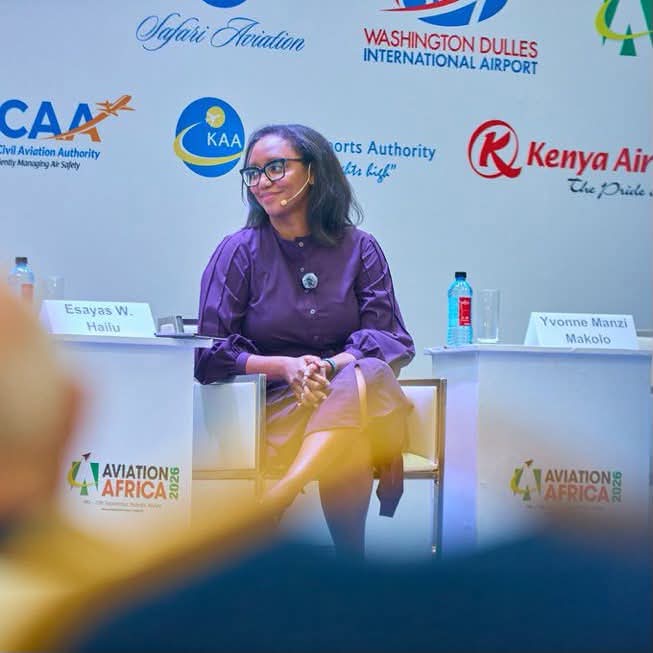
RwandAir Chief Executive Officer Yvonne Makolo has called on African governments to move beyond policy commitments and take concrete steps to fully open the continent’s skies to African airlines, arguing that implementation is now the biggest challenge facing the sector.
Speaking at the Aviation Africa Summit and Exhibition in Nairobi, Kenya, Makolo said Africa’s aviation industry needs practical action, stronger cooperation and measurable results if the continent is to build a more integrated and competitive air transport market.
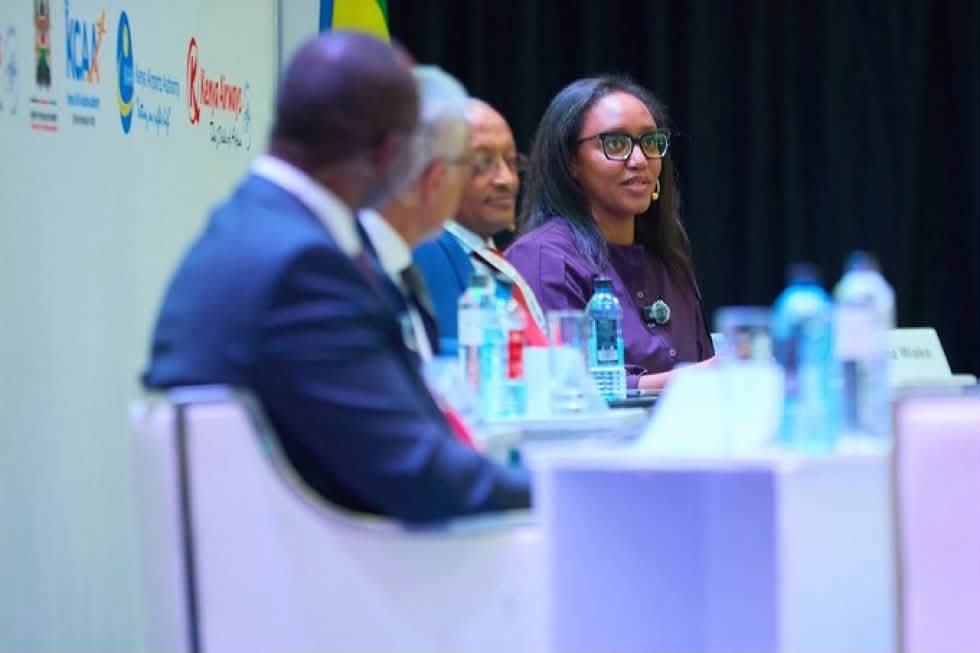

The 2026 summit, taking place on September 9–10, has brought together aviation leaders, airlines, governments, regulators, airports and industry experts from across Africa and beyond. Organisers say representatives from 103 countries, including 47 African nations, are attending the event, which is focused on finding solutions to challenges holding back the continent’s aviation industry.
Makolo’s call comes amid continued efforts to implement the Single African Air Transport Market (SAATM), an initiative designed to remove restrictions on market access, expand air traffic rights and improve connectivity between African countries.
She has argued that African countries should judge progress not simply by agreements signed, but by whether travellers are seeing cheaper fares, more direct routes and better connectivity.
“What we need now, and what I am prepared to put RwandAir’s weight behind, is implementation on a clock. The skies were never the barrier. Our follow-through has been.”
Makolo also highlighted the growing pressure on airlines from instability in the Middle East.
Conflicts in the region have affected aviation through higher fuel prices, restrictions on airspace and longer flight routes, all of which increase operating costs for airlines.
For African carriers, which already face high taxes, airport charges, fuel costs and limited connectivity, such external shocks can further raise the cost of air travel.
From commitments to practical solutions
Makolo has advocated several measures that could help African aviation overcome these challenges.
These include releasing funds belonging to airlines that remain blocked in some African markets, strengthening commercial cooperation between African carriers through interline agreements and fifth-freedom operations, and aligning SAATM implementation with efforts to facilitate movement of people across borders.
The summit is also examining infrastructure, airport financing, airspace management, technology, workforce development and the use of artificial intelligence to improve efficiency.
Industry leaders say better coordination between airports and airlines, harmonised regulations and investment in modern aviation infrastructure could help African countries expand route networks without unnecessarily increasing costs.
AFCAC Secretary-General AdeSewa Adeyemi identified market access, physical connectivity, affordability, financial sustainability and local capacity building as key pillars for transforming African aviation.
The broader objective is to create a more connected African aviation market in which airlines can operate across borders more easily, passengers can access more affordable flights and aviation can contribute more strongly to trade, tourism, investment and economic integration.
For Makolo, the priority is now clear: Africa needs to turn its open-skies commitments into action—and do so with clear timelines and measurable outcomes.