






President Paul Kagame’s two-day official visit to Oman combined the grandeur of a royal welcome with a more practical objective: laying the foundations for deeper trade, investment and strategic cooperation between Rwanda and the Gulf state.
From his arrival in Salalah on Monday, September 7, to his talks with Sultan Haitham bin Tarik Al Said, an official banquet, the exchange of commemorative gifts and the signing of eight bilateral instruments, the visit brought together diplomacy, culture, history and economic ambition.
It was Kagame’s first official visit to Oman, giving the trip added significance as the two countries seek to translate growing diplomatic relations into concrete economic partnerships.
Royal welcome in Salalah
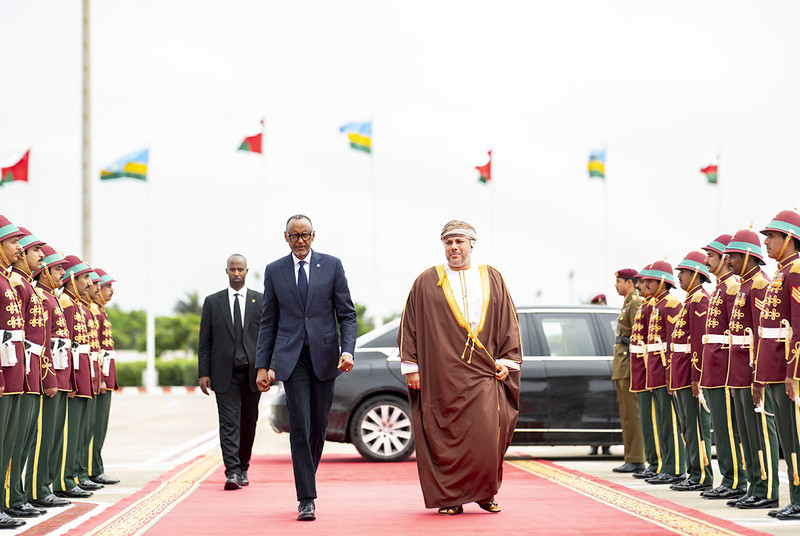
Kagame arrived at the Royal Airport in Salalah, where he was received by senior Omani officials before travelling to Al Hosn Palace, the Sultan’s palace in Salalah.
The reception was marked by full ceremonial honours.



Royal cavalrymen lined the route as Kagame’s motorcade approached the palace.
Sultan Haitham personally accompanied the Rwandan President to the ceremonial dais, where Rwanda’s national anthem, Rwanda Nziza, was played, followed by a 21-gun salute.
The salute was a formal military honour accorded to the visiting head of state, rather than a gesture directed specifically at Rwanda.
Its combination with the national anthem, royal cavalry and formal introductions reflected the importance Oman attached to Kagame’s visit.
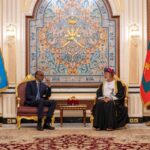

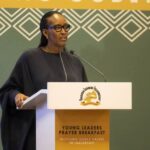
The ceremony also showcased Oman’s cultural traditions, including performances involving traditional weapons.
Such displays are rooted in the country’s heritage and today serve primarily as expressions of history, bravery, identity and loyalty rather than preparations for modern warfare.
Beyond the pageantry: investment, energy and trade
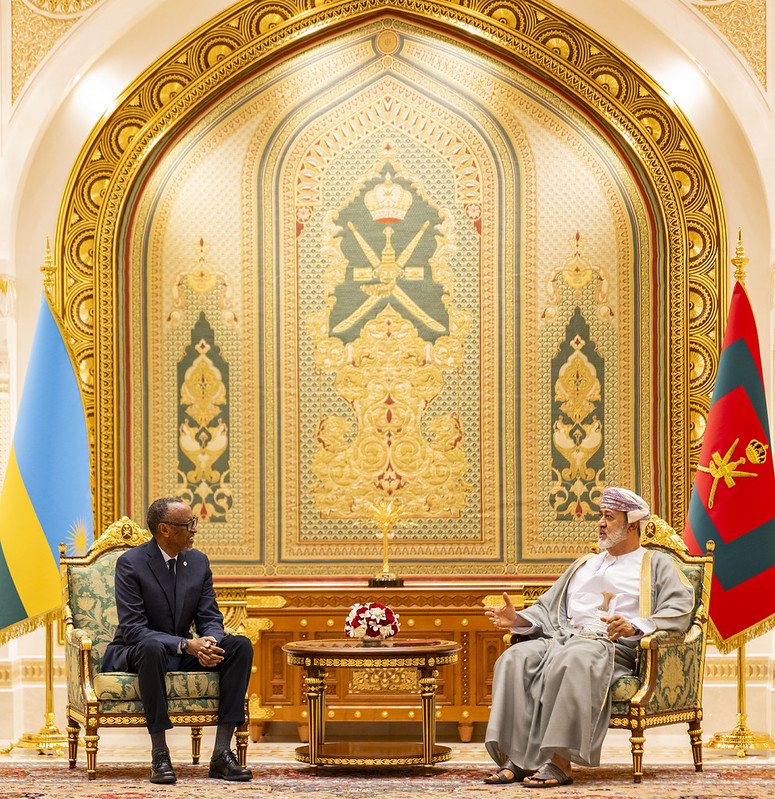
After the formal reception, Kagame and Sultan Haitham turned to the substance of the visit.
Their discussions focused on expanding cooperation in mining, renewable energy, food security, inland and dry ports, logistics and healthcare.
For Rwanda, Oman offers potential access to Gulf capital, maritime trade networks, logistics expertise and wider Middle Eastern markets.
For Oman, Rwanda presents an entry point into East Africa and an economy seeking to expand its role in logistics, agriculture, tourism, technology and investment.
The existing trade relationship remains modest, underscoring the scale of the opportunity.
Available UN Comtrade data, for instance, put Rwanda’s exports to Oman at about US$190,000 in 2022, with coffee, tea and spices accounting for most of the value.
The figures illustrate a relationship with considerable room for expansion.
Eight agreements lay groundwork for closer ties
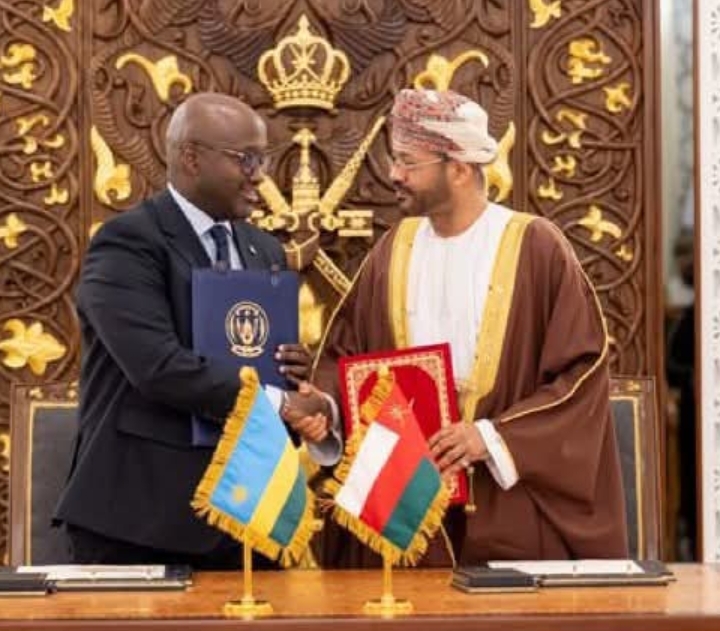
One of the most concrete outcomes of the visit was the signing of two agreements and six memoranda of understanding.
The two agreements cover: Mutual exemption from visa requirements for holders of diplomatic, official/service and special passports, Avoidance of double taxation.
The six memoranda cover areas including Agriculture, Logistics, Development of inland and dry ports, Supply-chain services, Investment, Broader strategic cooperation and investment activation, including political consultations and labour and trade cooperation.
The agreements address some of the practical issues that can stand between diplomatic goodwill and commercial activity.
The double-taxation agreement, for example, is designed to provide greater certainty for businesses and investors operating across the two countries by reducing the possibility of the same income being taxed twice.
The visa arrangement should also make official travel easier, strengthening the institutional contacts needed to support deeper political and economic engagement.
For Rwanda, the logistics and dry-port cooperation is particularly significant.
As a landlocked country, Rwanda depends heavily on efficient regional and international transport corridors to connect its businesses to global markets.
Building a logistics bridge between East Africa and the Gulf
Logistics has increasingly become one of the central pillars of Rwanda-Oman cooperation.
In January 2026, the two countries signed cooperation arrangements covering logistics, dry ports, supply chains, aviation, infrastructure, data centres, cloud computing and artificial intelligence.
Air connectivity has since added another dimension to the relationship.
In July, SalamAir launched twice-weekly direct services between Muscat and Kigali, while Oman Air has also been developing direct connectivity between the two countries.
The new links are expected to facilitate tourism, business travel, investment and the movement of people between East Africa and the Gulf.
Their importance, however, extends beyond passenger travel.
Improved air and logistics connections can reduce the cost and complexity of moving high-value goods, professionals, investors and services between the two markets.
For Kigali, the broader ambition is to strengthen Rwanda’s position as a regional logistics and services hub despite its lack of a coastline.
Omani sword: Symbol of heritage and friendship
Among the most striking moments of the visit was the exchange of commemorative gifts between Kagame and Sultan Haitham ahead of the official dinner at Al Hosn Palace.
While the Omani side described the items as commemorative gifts reflecting the friendship and strong relations between the two countries, imagery from the visit showed Kagame receiving a traditional Omani sword.
The gesture carries cultural significance.
Omani rulers have a documented tradition of presenting swords to distinguished foreign leaders.
Sultan Haitham, for example, presented a traditional Omani sword to UAE President Mohamed bin Zayed during his state visit to Oman in 2022.
He has similarly presented swords to other senior international leaders.
The sword, however, should not be confused with Oman’s highest state honour.
Formal decorations such as the Order of Al Said occupy that category.
The sword is better understood as a prestigious cultural and commemorative gift, reflecting Oman’s royal, warrior and maritime heritage.
Traditionally, the sword can symbolize honour, courage, leadership and protection.
In that context, its presentation to a visiting head of state conveys a message of respect and friendship rather than simply the gifting of a weapon.
What did Kagame give Sultan Haitham?
The official Omani account confirms that the two leaders exchanged commemorative gifts but does not specify in its English-language report what Kagame presented to Sultan Haitham.
It would therefore be inappropriate to speculate.
There is, however, a broader diplomatic tradition behind such exchanges.
During Mohamed bin Zayed’s 2022 visit, for example, the UAE leader presented Sultan Haitham with a model of the Sheikh Zayed Grand Mosque after receiving an Omani sword.
Similar exchanges involving other world leaders have often featured culturally significant objects representing the visitor’s country.
The Kagame-Sultan Haitham exchange appears to fit within that wider diplomatic tradition of using cultural gifts to reinforce friendship between states.
Royal banquet closes the first day
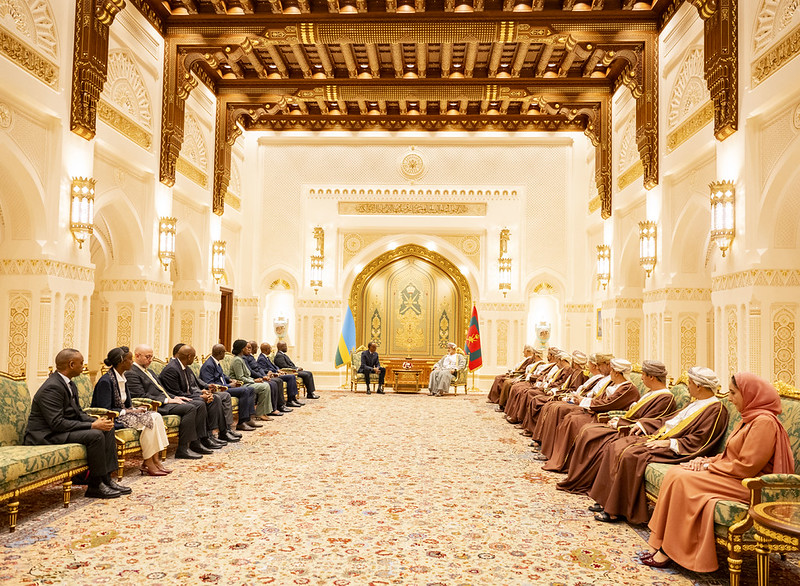
The first day of Kagame’s visit ended with an official dinner hosted by Sultan Haitham at Al Hosn Palace in the Rwandan President’s honour.
Members of the Omani Royal Family, ministers, advisers, senior military commanders and government officials attended the banquet.
The dinner followed the exchange of commemorative gifts and provided an opportunity for the two sides to deepen their engagement beyond the formal negotiating table.
Such occasions are an established part of high-level diplomacy, allowing leaders and senior officials to strengthen relationships that can support longer-term cooperation.
From frankincense to modern trade routes
Kagame’s visit also carried a strong historical dimension.
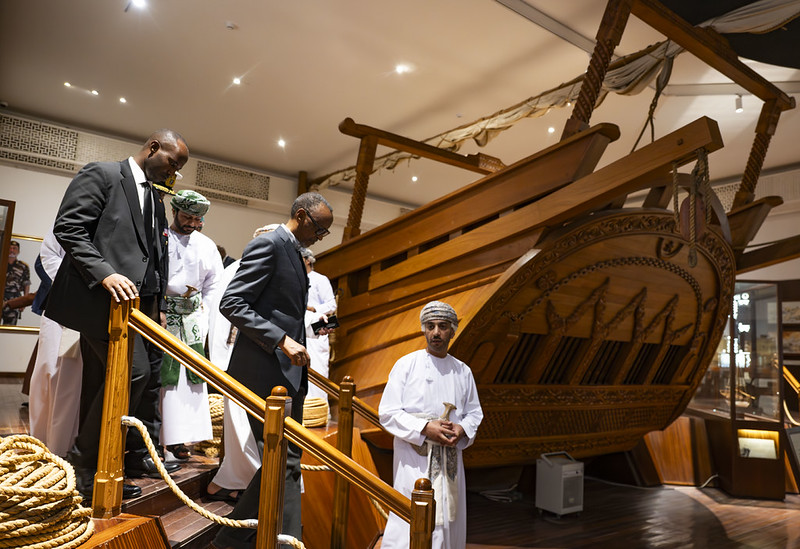
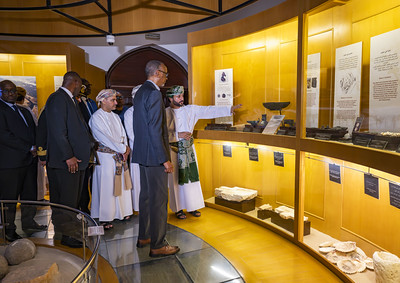
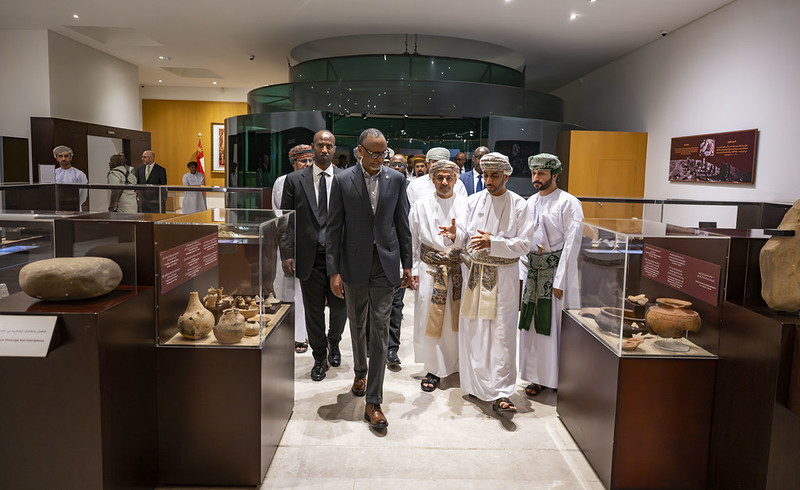
During the second day, he visited the Museum of the Land of Frankincense in Salalah, located within the Al-Baleed Archaeological Park.
The site forms part of Oman’s UNESCO-listed Land of Frankincense World Heritage property and highlights the ancient trade networks built around frankincense, which connected southern Arabia with markets across the wider region.
Kagame was taken through exhibitions documenting Oman’s history, culture and maritime heritage.
The location provided a fitting backdrop to a visit centred on trade and connectivity.
For centuries, Dhofar served as an important centre in international commerce through the frankincense trade.
Today, Oman is seeking to build a modern role in global commerce through ports, logistics, investment and supply chains.
Kagame’s visit therefore connected Oman’s historic trading legacy with the modern economic relationship the two countries are attempting to develop.
A relationship moving from diplomacy to business
The visit comes as Rwanda continues to seek new sources of investment, technology and market access.
Rwanda Development Board data show that the country registered US$2.62 billion in investments across 799 projects in 2025, with the pipeline expected to generate more than 38,000 jobs.
The agreements with Oman arrive against that backdrop, as Kigali looks beyond traditional partners for capital, technology, infrastructure expertise and new markets.
For Oman, the relationship offers its own strategic opportunities.
Rwanda provides a potential gateway into East Africa, while Omani companies and investors can bring capital, logistics experience, maritime connections and access to Gulf markets.
The sectors discussed by Kagame and Sultan Haitham mining, renewable energy, agriculture, logistics, food security, healthcare and investment are among those most capable of turning political goodwill into measurable economic results.
The real test begins after Salalah
By the end of Kagame’s two-day visit, the images were unmistakable: a black presidential limousine surrounded by red vehicles, royal cavalry, the playing of Rwanda Nziza, a 21-gun salute, traditional Omani performances, a palace banquet and the presentation of an Omani sword.
But the lasting significance of the visit will not be measured by ceremony alone.
Rwanda and Oman are seeking to move their relationship from diplomatic goodwill towards trade, investment, logistics, agriculture, energy and strategic economic cooperation.
The eight agreements do not, by themselves, guarantee billions of dollars in investment, and no specific financial value was publicly attached to them.
Their importance lies in establishing a legal and institutional framework through which future commercial partnerships can develop.
For Rwanda, Oman represents an increasingly important gateway to Gulf capital, markets and maritime networks.
For Oman, Rwanda offers a strategically positioned partner in East Africa and a potential platform for expanding its commercial footprint on the continent.
The sword may be the most memorable symbol of Kagame’s visit.
But the real measure of the new chapter will come later in the trade deals, investments, jobs, infrastructure and connectivity that follow after the motorcade has left Salalah.