


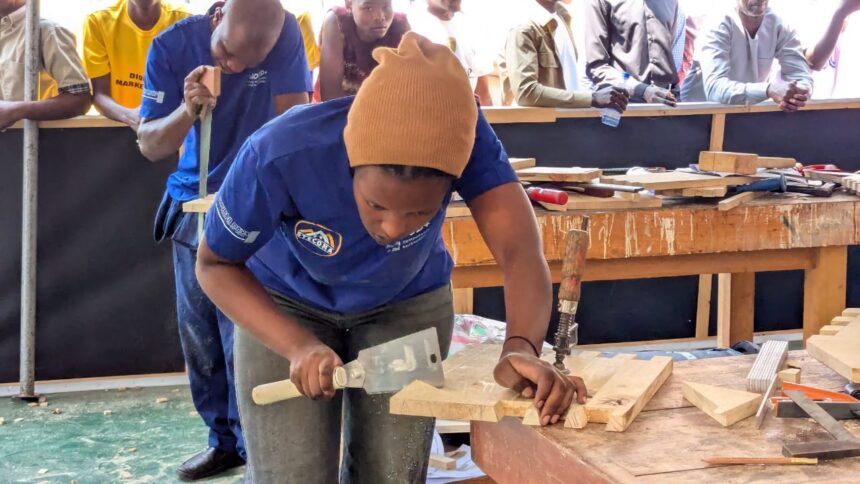
Two young women have become a symbol of Rwanda’s growing effort to attract more women into carpentry and other hands-on technical careers traditionally dominated by men, after competing alongside male counterparts at the third edition of Umubaji Day in Kigali.
The annual woodworks and carpentry competition, held on August 21 in Kimisagara Sector, Nyarugenge District, brought together 22 finalists from 20 districts who emerged from technical schools and institutions across the country after demonstrating outstanding skills and speed in woodcraft.

But this year’s competition carried a broader message beyond showcasing craftsmanship: women can compete, earn a living and build professional careers in the wood sector.
The two female finalists completed the same practical woodcraft tasks as their male counterparts, drawing attention from spectators and industry players who watched them demonstrate that carpentry is not exclusively a man’s profession.
Among them was Esther Providence Dusengiteka from Karongi District, who says social stigma remains one of the biggest barriers discouraging women from entering carpentry.
Yet her own experience, she says, demonstrates that the profession can provide women with a decent livelihood and even support higher education.


“Today she earn a good salary and I am able to pay my university education because of this career choice. So it is possible for other women but they need to be courageous and work hard just like men,” Dusengiteka said.
From competition to a women’s carpentry movement:
The Umubaji Day competition was initiated by the National Round Table of Integrated Crafts Production Centres, commonly known as Agaciro, and organised by the Trade Union of Workers in Construction, Wood and Artisanal Industries in Rwanda (STECOMA), together with Rubengera Technical Secondary School.
The event was supported by proWOOD+, the Skilled Crafts Network Rwanda and proQglobal, with the wider objective of improving working conditions, professional recognition and skills development in Rwanda’s wood sector.
This year’s edition also marked the launch of a growing network of women carpenters under the **Carpentress Club Rwanda**, with five chapters established in Nyagatare, Gatsibo, Nyabihu, Rubengera in Karongi District, and Nyamagabe.

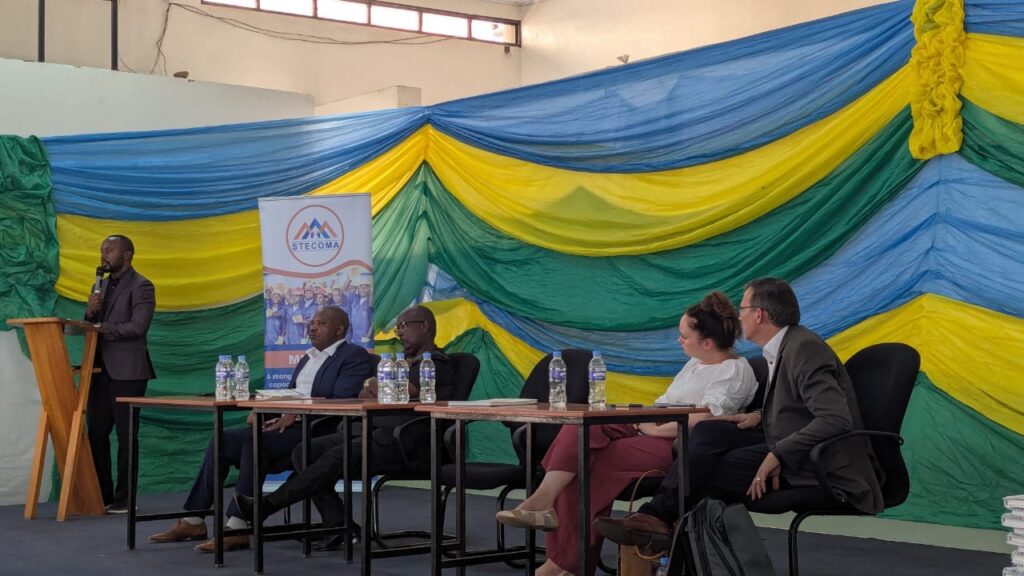
Tim Bluthardt, Team Leader of proWOOD+, said the establishment of the chapters represents an important milestone in efforts to promote women’s participation in the carpentry trade.
“A truly valuable milestone promoting women in the carpentry trade,” Bluthardt said.
The initiative was also presented under the **“Crafted to Inspire”** programme, which seeks to celebrate women’s contribution to the wood sector while encouraging more young women to pursue technical and vocational careers.
Turning skills into decent jobs:
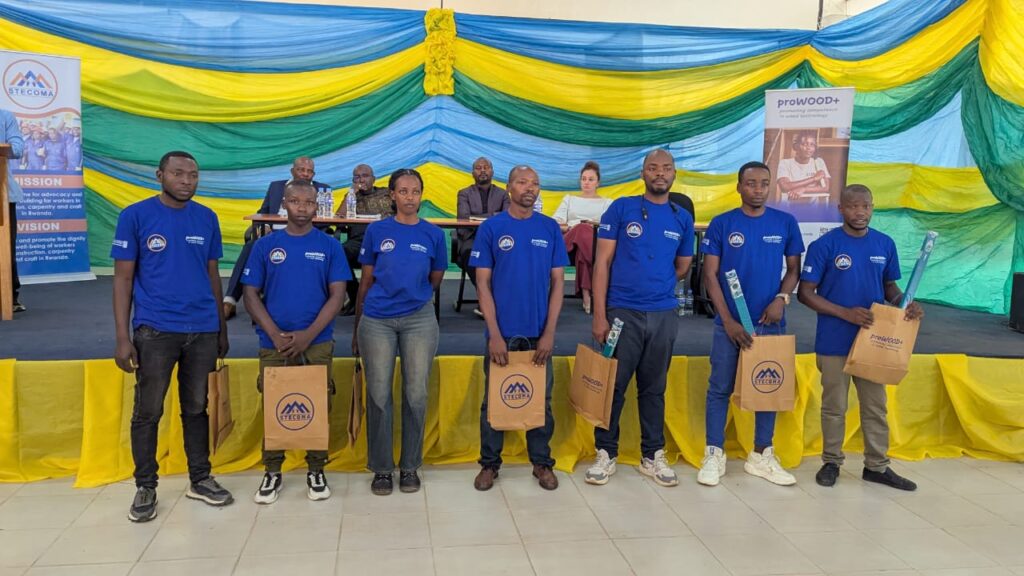
Umubaji Day also celebrated more than 500 graduates who completed the Recognition of Prior Learning (RPL) programme, through which experienced artisans receive formal recognition and certification for skills acquired through work.
Supported by proWOOD+ in collaboration with the Rwanda TVET Board, the programme is designed to bridge the gap between practical experience and formal qualifications.
Graduates received certificates, while top performers were awarded professional toolkits sponsored by TOTAL Rwanda, providing them with equipment to strengthen their businesses and compete in both domestic and regional markets.
The German cooperation, through proWOOD+ implemented by sequa and Internationaler Bund, also supported the production of a new carpentry handbook designed specifically for Rwanda.
The German Embassy donated 1,000 copies of the handbook to trained professionals.
Developed by Rwandan trainers and carpenters, the handbook is available in Kinyarwanda and English and contains practical learning materials tailored to the local market. It also incorporates audio learning resources accessible through QR codes at the end of each module.
Bluthardt, a German wood-sector expert with more than 15 years of experience in the industry and five years working with STECOMA, said the annual competition provides an opportunity to celebrate progress while also confronting the challenges facing carpenters.

“It is a pleasure to be part of the Umubaji days 2026. We are gathered not only to celebrate an important milestone, but also to recognize the partnerships, friendships, and shared achievements that have made this occasion possible.”
However, he cautioned that celebrations must translate into practical improvements in the daily working environment.
“Joint efforts achieve greater impact! We do hope as partners, that the Umubaji days 2026 become a testimony of impact, of inspiration, of motivation and performance, changing working conditions and communities,” Bluthardt said.
He pointed to dust, noise, fire outbreaks and workplace accidents as some of the challenges that continue to affect carpenters and called for stronger collaboration to improve safety in Agaciro centres.
Safer workplaces for craftsmen and Women:
The concerns have prompted STECOMA and proWOOD+ to prepare the proSAFE initiative, which will bring together stakeholders working with Agaciro centres and carpenters to improve workplace safety.
The initiative will focus on creating safer working environments, including for young people entering the sector.
Bluthardt said Rwanda’s wood sector must continue moving beyond skills competitions towards professionalisation, better working conditions and stronger market access.
He also identified certification of wood products as an important next step if Rwandan carpenters are to expand into international markets.
Building a larger skilled workforce
STECOMA Secretary General Evariste Habyarimana said the RPL programme and annual competitions are part of a broader effort to showcase the skills of artisans while opening opportunities for decent employment and better-paying markets.
He said STECOMA has more than 80,000 members, of whom more than 39,000 have so far received training, including more than 1,900 working in wood-related activities.
The union aims to train at least 100,000 members over the next five years.
“This will be done through continued advocacy to improve decent work and more skills training programs so that we can sell at good prices and reach more markets beyond Rwanda,” Habyarimana said.
The Skilled Crafts Fund Rwanda, also supported by German cooperation and implemented by sequa, is contributing to the development of wood-sector companies through networking, advisory services, internships for women and support from international experts.
Meanwhile, proQglobal, an international NGO promoting craft qualification programmes, is working with the Rwanda TVET Board to strengthen professional training in wood technology in line with international craft standards.
Technical experts involved in the programme said sustained professional training and competitions could help Rwanda build a more professional carpentry workforce over the next decade.
Germany sees opportunity:
The partnership is also strengthening the long-standing technical and vocational education relationship between Rwanda and Germany.
Silvia Heer, Head of Cooperation at the German Embassy in Rwanda, said the programme provides an opportunity to deepen bilateral cooperation through skills exchange and professional development.
Germany, she noted, has decades of expertise in technical skills development but is also facing an ageing workforce, creating opportunities for cooperation with countries such as Rwanda, where a young and increasingly skilled workforce is emerging.
“As a German, you cannot fail to be impressed by the beautiful works done here and be amazed by the amount of skills development. Everything that is happening here is going to be a big part of our relationship because we have a concrete interest that aligns with your vision,” Heer said.
The partnership could ultimately open opportunities for Rwandan craftsmen and women to produce higher-quality furniture and wood products capable of accessing European and other international markets.
Women at the centre:
For local authorities, expanding opportunities for women in carpentry also fits within Rwanda’s wider ambition to promote employment, technical skills and gender equality.
Jonas Twagiramungu, a representative of Nyarugenge District, said the RPL programme is important to Rwanda’s ambition of creating jobs and building a middle-income economy by 2029.
He urged beneficiaries to turn their newly recognised skills into productive businesses that can benefit both themselves and the wider economy.
Twagiramungu also called on STECOMA and its partners to put greater emphasis on promoting hands-on carpentry skills among women.
The success of the two female competitors at Umubaji Day, he said, demonstrates that technical careers can provide equal opportunities when women are given the skills and confidence to participate.
For organisers, the message from Umubaji Day 2026 is therefore extending beyond the workshop: Rwanda’s future carpentry workforce should be more skilled, better protected, connected to wider markets—and increasingly inclusive of women.
As Bluthardt put it, the celebration should be followed by continued action.
“Let´s continue to work together as partners in the wood sector—to improve working conditions from the different angles we are responsible, crafting to inspire and shaping future!”