







The introduction of interoperability through the National Bank of Rwanda’s eKash platform was intended to transform Rwanda’s mobile money landscape by creating a more inclusive and competitive digital payments ecosystem.
By allowing customers across different networks to send and receive money seamlessly, the policy was expected to remove one of the biggest barriers in mobile financial services: network limitations.
It was widely viewed as a significant step towards ensuring that every Rwandan, regardless of the telecom operator they use, could participate more fully in the country’s rapidly expanding digital economy.
However, months after the rollout, the latest Rwanda Utilities Regulatory Authority (RURA) ICT Sector Statistics Report for the first quarter of 2026 suggests that the expected gains from interoperability have not translated into stronger growth for Airtel Money.
Instead, the platform continues to lose ground in one of Rwanda’s fastest-growing sectors.
According to the report, active mobile money accounts nationwide increased by 15.1 percent over the past year, surpassing 8.5 million users.
The growth highlights how mobile financial services have become an essential part of everyday life, particularly for communities where access to traditional banking services remains limited.
Yet, while the market continues to expand, Airtel Money’s share has declined from 16.9 percent to 14.3 percent during the same period, suggesting that the company is not benefiting from the broader growth of the sector.
The decline is also reflected in Airtel Money’s agent network, a critical pillar of mobile financial services.
RURA data shows that Airtel’s active mobile money agents dropped from 53,316 to 48,847, even as Rwanda’s overall mobile money agent network expanded to nearly 196,000.
For many Rwandans, especially those living outside major urban centres, agents remain the most important link between communities and the digital economy.
They provide the physical connection point where people deposit and withdraw money, pay bills, receive transfers and access services that would otherwise be difficult to reach.
The issue is particularly sensitive because Airtel Money has historically attracted a significant number of rural and price-conscious customers. For many households in villages, mobile money is not simply a convenient service; it is often their main financial lifeline.
Farmers, informal traders and families depending on remittances frequently rely on mobile money to manage daily transactions, pay school fees, purchase goods and receive financial support from relatives.
This makes Airtel Money’s declining position more than just a corporate performance issue.
It raises broader questions about digital inclusion, market competition and the risk of widening the very divide that policies such as eKash were designed to address.
The intention behind interoperability was to ensure that no Rwandan would be disadvantaged because of the network they use.
But if one operator continues losing relevance, some of the country’s most vulnerable users could gradually find themselves with fewer practical choices, particularly in rural communities where access to competing services may not always be equal.
For many Airtel users, the alternative could increasingly become reliance on MTN, which remains the dominant player in mobile money but does not offer a comparable single free service that could provide a similar incentive for some customers to remain within the ecosystem.
This is the paradox of the digital divide: a policy designed to expand access can only achieve its full potential when all players are strong enough to compete and provide meaningful choices to users.
Beyond consumers, the trend also carries implications for investors and shareholders.
Mobile money has become one of the most valuable growth engines for telecommunications companies globally, often generating higher-margin digital revenues while deepening customer loyalty.
A declining customer base, shrinking agent network and weaker market position can affect future revenue opportunities, profitability and the long-term value proposition of the business.
For shareholders, the concern is not only about current market share but whether Airtel Money has the capacity to capture future growth as Rwanda’s economy becomes increasingly digital.
A weaker mobile money ecosystem could mean missed opportunities in areas such as digital payments, merchant services, financial products and partnerships with businesses and government institutions.
The challenge for Airtel is therefore no longer simply about increasing transaction volumes.
The company must strengthen the wider ecosystem around Airtel Money by rebuilding its agent network, expanding services, improving merchant acceptance and restoring customer confidence.
Successful mobile money platforms are rarely built only on the ability to transfer money.
They succeed because they become embedded in people’s daily economic activities, from paying for goods and services to accessing savings, credit and other financial solutions.
The introduction of eKash removed the argument that customers were trapped by network barriers.
The remaining question is whether Airtel can create a compelling enough ecosystem to attract and retain users in an increasingly competitive market.
Taarifa sought a response from Airtel Money regarding the declining market share and shrinking agent network.
Jean Claude Gaga, Head of Airtel Money at Airtel Rwanda, declined to comment. He asked Taarifa to speak to the communications manger. John Magara, who also has not been able to provide an explanation for the company’s current position in the market.
”I have asked the communications office to engage directly and coordinate on the request for comments. Currently unable to talk as I am participating on a panel interview session,” Gaga said.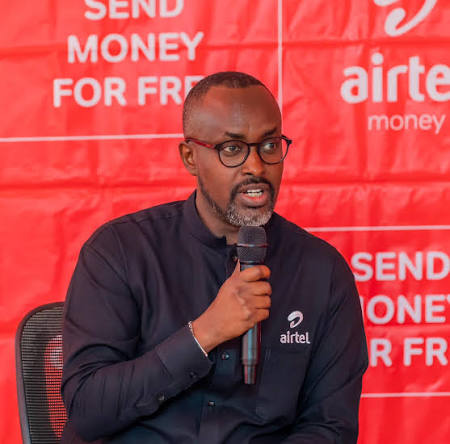
His decision not to comment leaves several important questions unanswered: Why has Airtel Money struggled to attract new users despite the introduction of interoperability? Why is its agent network shrinking while the overall market continues to expand? And what strategy does the company have to reverse the trend?
As Rwanda accelerates its transition towards a digital and cash-lite economy, the answers will matter not only for Airtel but also for millions of citizens who depend on mobile money as their gateway to financial inclusion.
The promise of eKash was to level the playing field.
The challenge now is ensuring that the playing field does not leave behind the very communities the policy was designed to serve, while also ensuring that investors continue to see mobile money as a sustainable and attractive growth opportunity.