







Airtel Rwanda is asking customers to talk more, browse more and pay less. But despite offering the country’s cheapest voice and data services, the telecom operator is finding it increasingly difficult to convince more Rwandans to join its network.
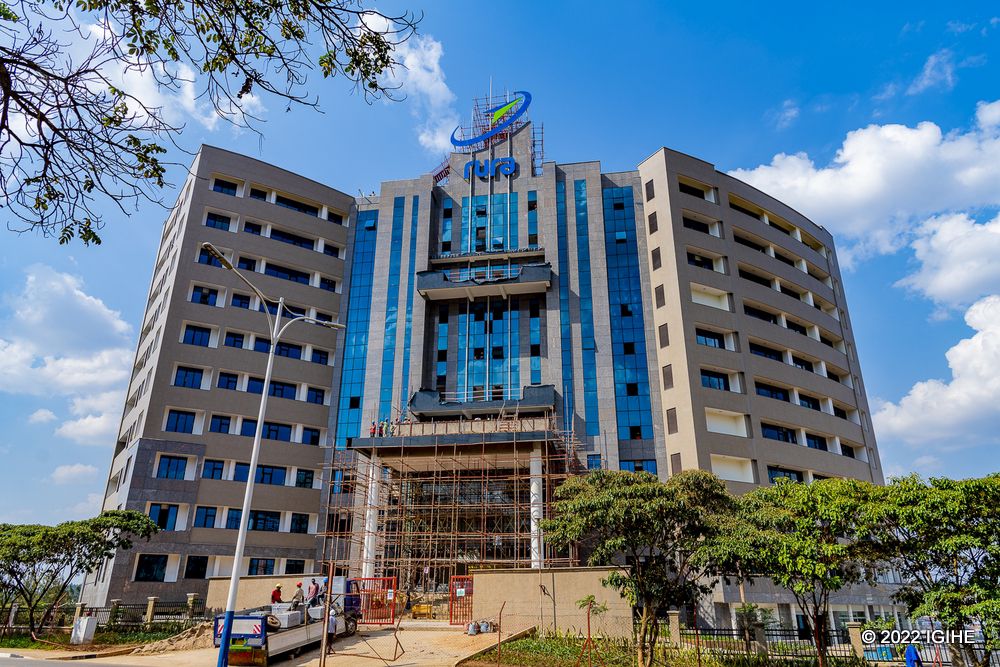
That is perhaps the biggest takeaway from the Rwanda Utilities Regulatory Authority (RURA) ICT Sector Statistics Report for the first quarter of 2026.
Over the past year, Airtel lost nearly 137,000 active subscribers, becoming the only mobile operator in Rwanda to register a decline in customer numbers.
Its active subscriber base fell by 2.8 percent from 4.85 million to 4.72 million, while MTN added more than 940,000 new customers. As a result, Airtel’s market share dropped from 36.8 percent to 33.7 percent.
The figures are striking because Rwanda’s telecommunications market is not shrinking.
The country added more than 800,000 new mobile subscriptions over the same period, pushing total active SIM cards beyond 14 million.
Mobile phone penetration also increased to 97 subscriptions for every 100 people, meaning almost every adult now owns at least one mobile connection.
For ordinary subscribers, this is like watching two supermarkets on the same street. More shoppers are arriving every day, but only one shop is attracting most of the newcomers.
Critically assessed, the same report reveals an interesting contradiction.
Airtel customers appear to use their phones more intensively than many of their competitors. During the first three months of the year, Airtel users generated almost six billion minutes of calls, representing 41 percent of all voice traffic in Rwanda despite accounting for only one-third of subscribers.
More remarkably, Airtel customers made nearly three out of every four calls placed to people on other networks, accounting for 72 percent of all cross-network calls.
“I keep an Airtel line because calling my relatives on MTN is cheaper,” said one subscriber interviewed by Taarifa in Kigali after reviewing the findings. “I actually have two SIM cards. MTN is for Mobile Money and Airtel is for talking.”
That experience reflects another trend visible in the report.
Airtel remains the cheapest operator for standard voice calls, charging Rwf35 per minute compared with Rwf45 on MTN. Mobile internet is also cheaper, with Airtel charging Rwf5 per megabyte against MTN’s Rwf10 before bundles are applied.
Even bundled internet packages remain among the cheapest in the market, and the low prices appear to encourage heavier usage.
Although Airtel has about 3.65 million mobile internet subscribers compared with MTN’s 6.93 million, Airtel customers consumed more mobile data overall.
During the quarter, Airtel carried 63.3 million gigabytes of mobile internet traffic compared with MTN’s 54.8 million GB. In simple terms, the average Airtel customer uses considerably more internet than the average MTN customer.
For many subscribers, affordability remains Airtel’s strongest selling point.
“When I buy a data bundle on Airtel, it lasts longer,” another subscriber in Huye told Taarifa. “But when it comes to sending money or receiving payments, almost everyone asks for an MTN number, yet it’s free on Airtel.”
Marketing pundits asked why Airtel continues to struggle in Rwanda’s rapidly growing mobile money market, beleive this might be a brand appreciation phenomenon.
“Airtel hasn’t really managed to consolidate it’s market position with its product offerings,” says a marketing expert who preferred anonymity. “There is something missing, and I don’t know exactly what it is.”
For example, the number of SIM cards linked to active mobile money accounts grew by 15.1 percent nationally to more than 8.5 million.
However, Airtel’s share of that market fell from 16.9 percent to 14.3 percent, yet it is Airtel to send or receive money via Airtel.
Even more telling, the number of active Airtel Mobile Money agents declined from 53,316 to 48,847 while the country’s overall agent network expanded to almost 196,000.
The report itself does not explain why Airtel is losing subscribers, so any reasons beyond the statistics can only be informed by market analysis rather than findings from RURA.
Industry analysts have long argued that telecom customers increasingly choose networks not only because of cheaper calls or data but because of the strength of their digital ecosystem.
Mobile money has become the service people use every day to receive salaries, pay school fees, settle utility bills, shop and transfer money.
Once family members, employers and businesses converge on one platform, switching to another network becomes less attractive even if it offers lower prices.
Another factor is network perception. Consumer surveys in recent years have frequently shown that customers associate the largest operator with wider coverage and greater reliability, particularly in rural areas.
Whether or not those perceptions always match technical performance, they can influence purchasing decisions.
Still, Airtel has important strengths that should not be overlooked.
The operator now has about 3.65 million internet subscribers, almost two million active VoLTE users, carries more mobile data than any other operator and remains Rwanda’s price leader in both voice and internet services.
The challenge for Airtel is therefore less about keeping existing customers happy than attracting new ones.
The latest RURA figures suggest its subscribers are loyal, make longer calls and consume more data than on competitors.
What the company has yet to achieve is converting those strengths into faster customer growth in a market that is becoming increasingly driven by digital financial services rather than traditional phone calls alone.
Editor: Taarifa could not get any comments from Airtel.