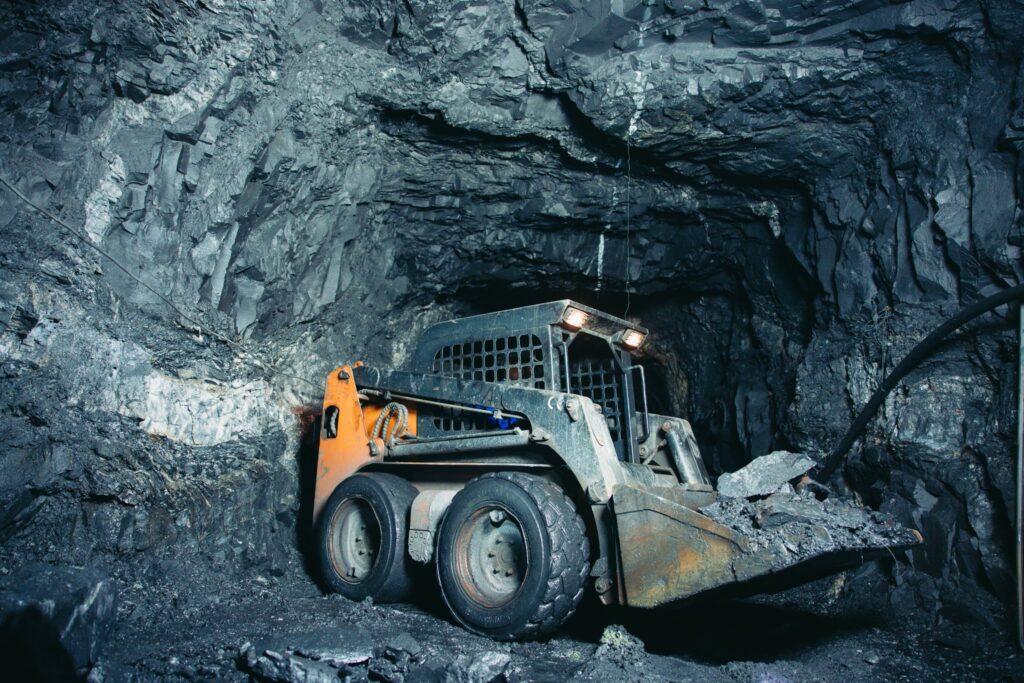


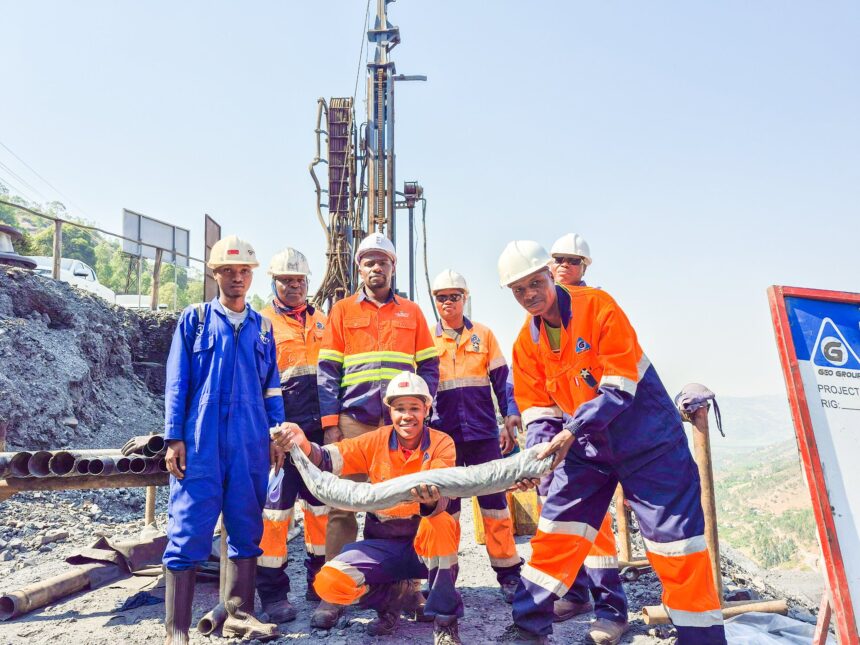
KIGALI – Trinity Metals has commenced its first-ever sonic drilling program at the Nyakabingo Mine, marking a significant milestone in the company’s efforts to expand mineral resources and strengthen Rwanda’s position as a leading global supplier of tungsten.
The program, launched at Africa’s largest tungsten-producing mine, will involve up to 106 drill holes reaching depths of between 12 and 20 metres.
The drilling campaign is expected to generate approximately 210 samples for metallurgical testing and particle size distribution analysis, alongside 1,600 laboratory-grade samples that will be used to update the mine’s Mineral Resource Statement.
The company expects the results to substantially increase the estimated mineral resources at Nyakabingo, providing greater confidence for future investment decisions while supporting planned expansions in mining and mineral processing capacity.
Trinity Metals Chief Executive Officer Peter Geleta said the project represents an important step towards unlocking additional value from the mine’s historical stockpiles.
“By unlocking additional value from the Nyakabingo mine stockpiles, we will significantly increase our mineral resource base, creating new opportunities to increase production, and entrenching Trinity Metals and Rwanda as a leading global supplier of tungsten,” Geleta said.
He added that once the drilling program is completed, the company will publish an updated mineral reserve and resource statement to guide long-term mine planning and optimize mineral recovery.
The initiative focuses on reassessing between 2.5 million and 3 million tonnes of historically mined stockpiled material.
Preliminary estimates suggest the stockpiles could add around 2.5 million tonnes of mineral resources at an estimated grade of 0.3% tungsten trioxide (WO₃).
The updated resource estimate and metallurgical testing results will also support the design of a modern mineral processing plant aimed at improving the recovery of valuable minerals from both newly mined ore and historical stockpiles.
Beyond increasing production, Trinity says the project is central to its sustainability strategy by recovering valuable minerals from legacy stockpiles, reducing the environmental footprint associated with new resource extraction.
The company said it has adopted strict quality assurance and quality control procedures throughout the drilling campaign, using only environmentally approved drilling fluids with certified Material Safety Data Sheets.
Water generated during drilling will be collected through the mine’s existing water management system and safely stored in designated containment dams.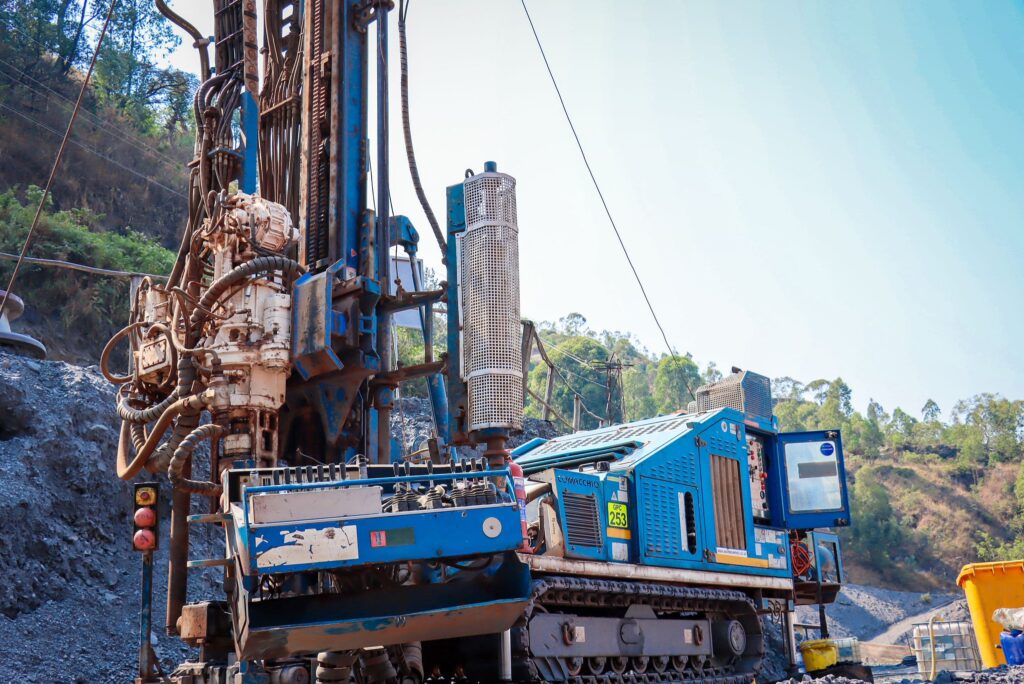

Following completion of the Nyakabingo program, Trinity Metals plans to undertake similar resource evaluation projects at its Musha and Rutongo mines as part of a company-wide strategy to maximize resource recovery and improve operational efficiency.
Formed in 2022 through the merger of Nyakabingo Tungsten Mine, Rutongo Tin Mine and Musha Tin and Tantalum Mine, Trinity Metals has become Rwanda’s largest producer of conflict-free critical minerals.
The company employs more than 6,500 people and produces responsibly sourced tungsten, tin and tantalum for global technology supply chains.
The company has also identified a promising lithium deposit at Ntunga within its Musha concession, further strengthening its portfolio of critical minerals.
In June 2024, Trinity became the first operating mine in Africa to receive financial support from the U.S. International Development Finance Corporation (DFC), securing $3.865 million in technical assistance funding.
Its majority shareholder, TechMet Ltd., is partly owned by the DFC, underscoring growing international interest in Rwanda’s critical minerals sector.
Nyakabingo Mine, which operates under a 25-year mining licence granted in 2015, covers approximately 1,600 hectares and is estimated to contain more than 30,000 tonnes of recoverable tungsten, with exploration indicating significant potential for further resource growth at depth.
The mine currently produces more than 100 tonnes of wolframite concentrate each month, containing between 65 and 70 percent tungsten trioxide (WO₃), making it one of Africa’s most strategically important sources of the critical mineral.