

There is a saying that the true measure of leadership is not found in the number of speeches delivered or buildings inaugurated, but in the number of lives quietly transformed.
Few public figures in Rwanda embody that idea more than First Lady Jeannette Kagame. She is playing in her own league. Let me give you a disclaimer before I dive deeper into this. This is my own perspective. You can disagree to agree.
Ask a teacher in Nyagatare about the shy girl who became the first engineer in her family. Speak to a mother in Burera whose child survived because healthcare reached her village.
Visit an innovation hub and meet a young entrepreneur whose first business started with a small grant and a mentor who believed in an idea that everyone else dismissed.
These stories may seem unrelated, but together they trace the legacy of a woman who, for the past 25 years, has made people; not politics, the centre of her public service.
When Mrs. Jeannette Kagame founded the Imbuto Foundation in 2001, Rwanda was still healing from the devastation of the 1994 Genocide against the Tutsi.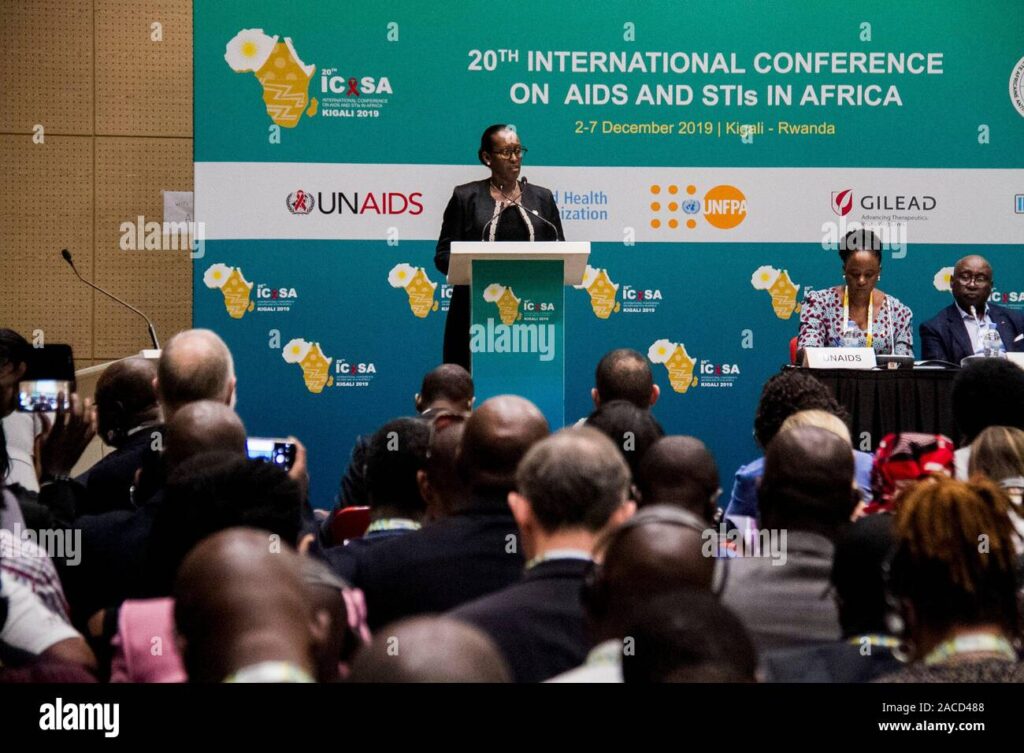

Thousands of children had lost parents, families were grappling with HIV/AIDS, poverty remained widespread, and rebuilding confidence in the country’s future was as important as rebuilding its roads and institutions.
Rather than creating a charity that simply distributed aid, she chose a different path. The Foundation took its name from the Kinyarwanda word Imbuto; a seed.
It reflected a belief that if people are given the right support at the right time, they can grow into something far greater than anyone imagined.
“What we are celebrating here today is not a feat of charity, but rather the fulfilling of duty,” she once said while reflecting on the Foundation’s journey. “The mission that drove Imbuto from the very beginning was not glory, it was responsibility.”
That philosophy helps explain why, over the years, the Foundation has focused less on short-term relief and more on long-term opportunity.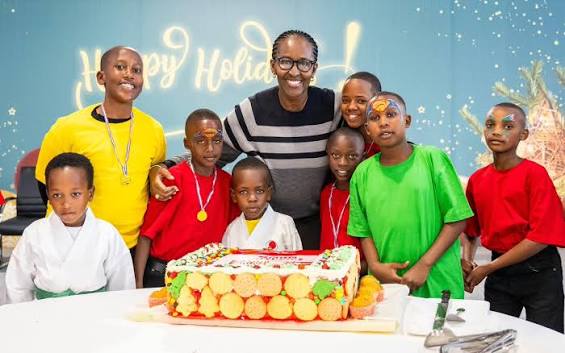

Take education, for example.
For more than two decades, Jeannette Kagame has made it a personal mission to encourage girls to stay in school; not only because education changes one life, but because it changes entire families.
It is now common to hear stories of young women who once attended Imbuto mentorship camps returning years later as doctors, pilots, software engineers or entrepreneurs to inspire the next generation. This is controversial: many of them are kids from what one would call “politically incorrect” backgrounds. She acted like a parent, not a politician.
And she did it selflessly, and very well. There is no reward worth her sacrifice and dedication. Many of those individual stories are reflected in the numbers.
Since 2002, more than 10,900 scholarships have been awarded to secondary school students through Imbuto programmes, while over 8,100 outstanding girls have been recognised through the Inkubito z’Icyeza initiative for academic excellence.
Behind every scholarship is a child whose future took a different direction because someone invested in her potential.
Health has followed the same people-centred approach.
Behind the statistics are mothers who no longer have to travel hours for medical care, teenagers who can openly seek reproductive health information without fear, and families who have learned that prevention saves lives.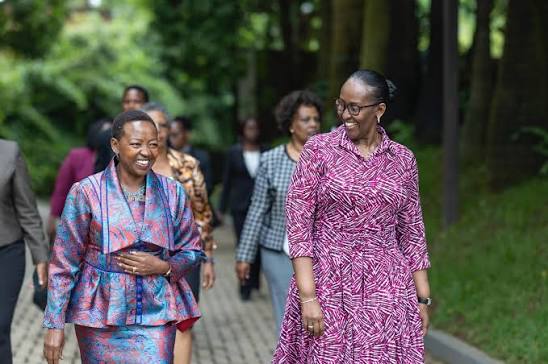

Through programmes supported by the Foundation, nearly 594,000 adolescents have accessed sexual and reproductive health services, while family planning campaigns have reached more than 6.7 million people across Rwanda. The Foundation has also supported the construction or renovation of 105 health facilities and helped provide 33 ambulances, mobile clinics and blood collection buses, bringing healthcare closer to communities that once had little access.
One of Jeannette Kagame’s greatest strengths has been recognising that development does not begin at university or even in primary school. It begins much earlier—in the earliest years of a child’s life and inside the family itself.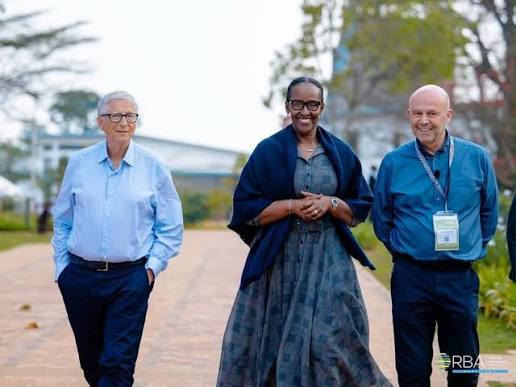

That thinking has helped shape Rwanda’s early childhood development efforts.
Today, nearly 186,000 children and their families have benefited from early childhood programmes supported by Imbuto.
More than 163,000 parents have received parenting education, while over 41,600 caregivers have been trained to give children a stronger start in life.
Across the country, the Foundation has helped establish 5,830 Early Childhood Development centres, places where learning often begins long before formal schooling.
Young people have perhaps become the clearest reflection of her long-term vision.
Whether through leadership forums, innovation competitions or entrepreneurship programmes, the message has remained remarkably consistent: Rwanda’s greatest resource is not beneath its soil but within its people.
More than 926,000 young people have participated in leadership and empowerment programmes supported by the Foundation.
Through innovation challenges, promising youth-led businesses have received seed funding of up to US$10,000, while creative industries supported under ArtRwanda–Ubuhanzi have generated more than US$256,000 for emerging artists.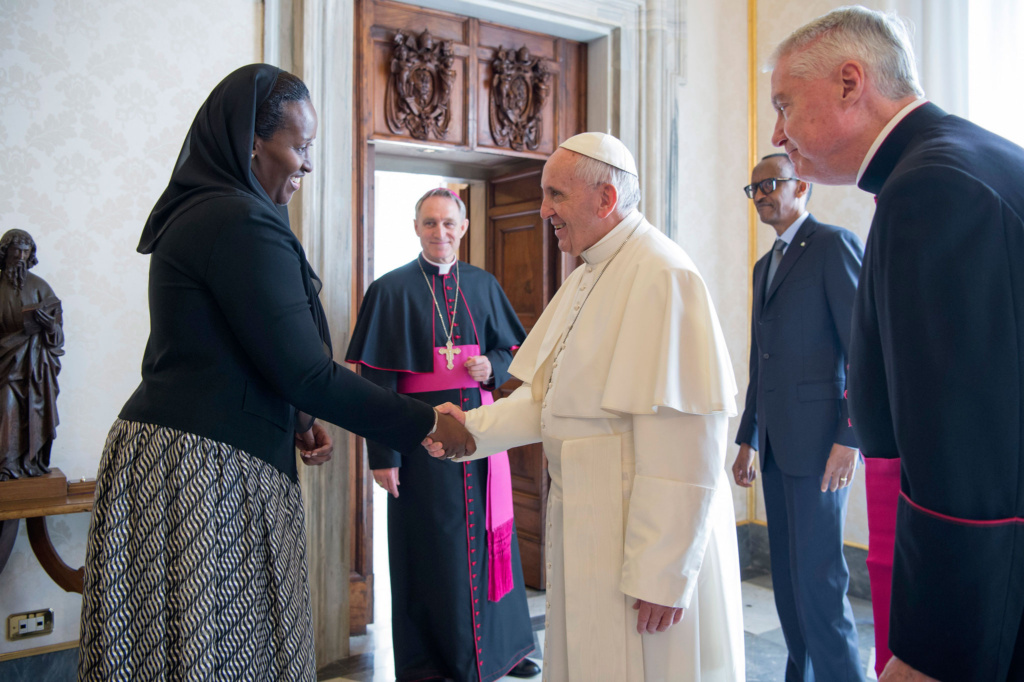

For many participants, the financial support mattered—but what mattered even more was the confidence that someone believed their ideas deserved a chance.
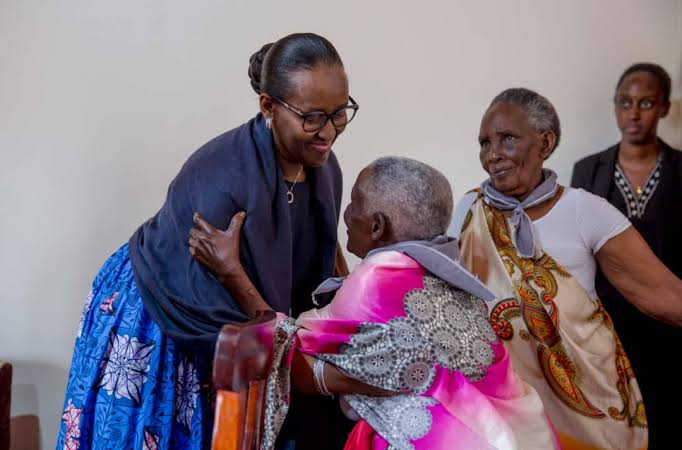
Those who have spent time with Jeannette Kagame often speak less about formal meetings than about quieter moments.
They describe her stopping to ask a student what she hopes to become, sitting beside elderly women instead of standing above them, or taking time to hear the concerns of young mothers in rural communities.
It is a leadership style built less on grand gestures than on human connection.
That same philosophy is visible in the newest chapter of her work.
Last week, as the Imbuto Foundation celebrated its 25th anniversary, she inaugurated Rwanda’s first Imbuto Hub in Bugesera.
At first glance, it looks like a modern community centre. But a closer look reveals something more ambitious: a child can attend daycare there, a teenager can learn digital skills, a young person can receive vocational training, an elderly resident can participate in community activities, and parents can access guidance on raising healthy families—all in one place.

It is, in many ways, the culmination of everything Jeannette Kagame has championed over the past quarter century—not isolated projects, but spaces where entire communities can grow together.
Her work has naturally attracted international recognition. She serves as a UNAIDS Special Ambassador for Adolescent Health and Wellbeing, received the FIGO Distinguished Recognition Award in Women’s Health in 2025, and earlier this year was awarded an honorary doctorate by the University of Global Health Equity.
Yet those honours seem almost secondary to the legacy she has built at home.
Perhaps the easiest way to understand Jeannette Kagame’s contribution is to imagine Rwanda without many of the programmes she championed.
Thousands of girls might never have completed school. Young innovators may never have found their first opportunity.
Vulnerable families might have remained unseen. Communities would have had fewer places to learn, heal and connect.
For 25 years, she has planted seeds—sometimes in classrooms, sometimes in hospitals, sometimes in villages, and increasingly in the ambitions of young people. Like every seed, the results were not immediate.
But today, across Rwanda, those seeds have grown into stories of resilience, opportunity and hope that continue to shape the country’s future, one life at a time.