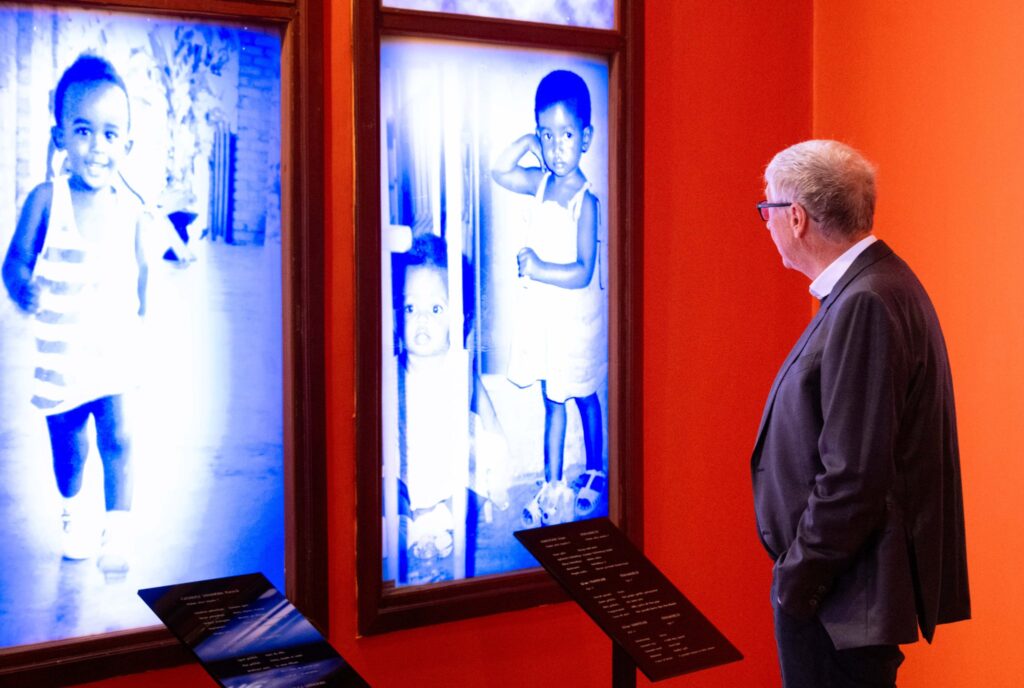


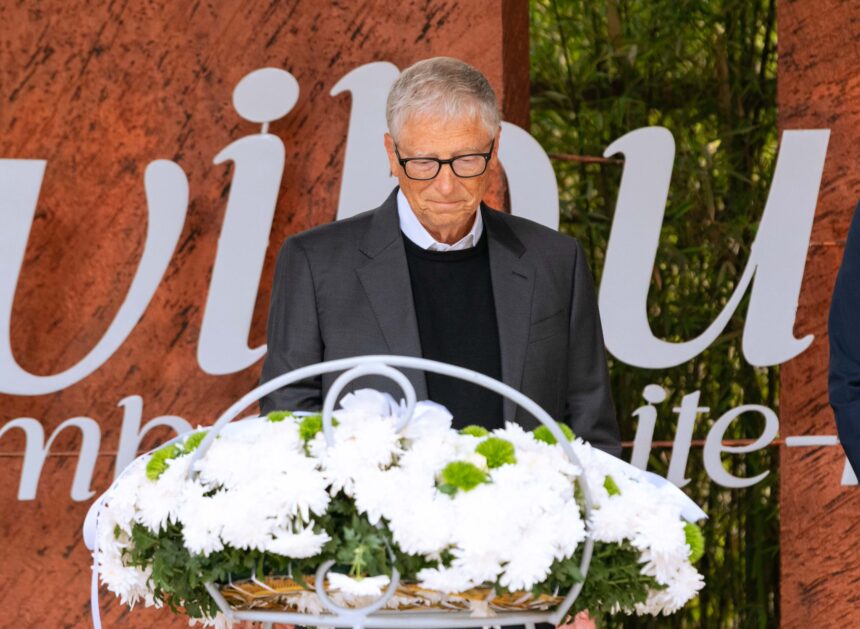
American philanthropist and Microsoft co-founder Bill Gates on Sunday paid tribute to the victims of the 1994 Genocide against the Tutsi during a visit to the Kigali Genocide Memorial, where he honored the memory of more than 250,000 victims laid to rest at the site.
Gates laid a wreath at the memorial’s mass graves before touring its exhibitions, which document the history of the Genocide against the Tutsi, its devastating human toll, and Rwanda’s remarkable journey of justice, reconciliation and national renewal over the past three decades.
The memorial also serves as a center for genocide education, peacebuilding and the preservation of historical memory for future generations.
Deeply moved by the experience, Gates praised Rwanda’s resilience and underscored the importance of preserving the memory of those who perished.
“It is very impressive how Rwanda has recovered from the tragedy of the Genocide and is building a strong country. This memorial is very important to keep the memories of the victims,” he wrote in the memorial’s guestbook.
His visit comes as Rwanda and the Gates Foundation continue to strengthen a partnership spanning more than two decades in public health, agriculture, nutrition, digital innovation and economic development.
Rwanda has frequently been recognized by the foundation as a model for effective delivery of healthcare and evidence-based public policy, particularly in expanding access to vaccines, reducing maternal and child mortality, and strengthening community health systems.
The latest visit also coincides with growing collaboration in artificial intelligence. Earlier this year, the Gates Foundation, together with OpenAI and the Government of Rwanda, announced the Horizon1000 initiative, a US$50 million programme that will deploy AI-powered tools to strengthen primary healthcare, with Rwanda becoming the first country to implement the initiative before its expansion across Africa.
The Kigali Genocide Memorial remains one of Rwanda’s most significant national institutions, welcoming heads of state, diplomats, global business leaders, scholars and millions of visitors seeking to understand one of the darkest chapters of modern history and the country’s remarkable transformation since 1994.
Beyond commemorating the victims, the memorial promotes peace education, combats genocide denial and serves as a global platform for preventing future atrocities.
For Gates, whose philanthropic work has focused on improving lives through health, innovation and education, the visit offered a moment of reflection on both the consequences of hatred and the power of resilience.
His tribute adds to a long list of international leaders who have visited the memorial to honor the victims while recognizing Rwanda’s emergence as a nation widely regarded for its stability, reconciliation and forward-looking development.