

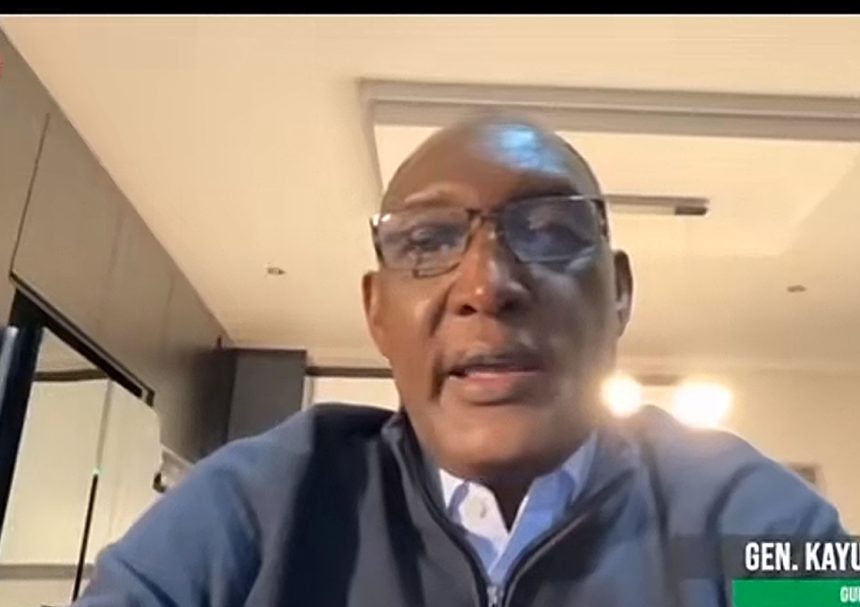
There is something I genuinely wanted from Kayumba Nyamwasa this time. Not sympathy. Not reconciliation. Not even agreement. I wanted substance.
After listening carefully to the recent testimony by Gen (Rtd) Fred Ibingira and President Paul Kagame’s one but key remark, I deliberately put aside my own opinions.
I waited, because I knew Kayumba is big mouthed and he would definitely respond. He did, indeed.
I wanted to hear a different version of events. I wanted to see if Kayumba would reject the allegations made against him, and explain the decisions that led him into exile and, above all, help the public understand why one of the most senior commanders of Rwanda’s liberation struggle ultimately abandoned the movement that so many of his comrades continue to serve.
Instead, I watched a former general, a lawyer by training, sitting with a notebook and pen, narrating what felt like remarkably small stories. That, more than anything else, was the disappointment.
For us, the wanainchi, this was never simply about Kagame vs Kayumba. It was about Rwanda’s liberation story, the credibility of those who helped shape it and the historical record itself. Kayumba was not an ordinary officer commenting from the outside.
He stood at the centre of some of the most consequential moments in Rwanda’s modern history. He witnessed strategic decisions, military operations, institution building and the difficult years that followed liberation. Few people possess the perspective he does. The fact that he can have PK and his comrades dedicate time and effort to reveal historical facts, that’s show the gravity they attach to his desertion from the struggle.
So, his unique position naturally raises expectations because the higher the office one once occupied, the higher the burden of proof. A retired general is not judged by the standards of a political activist or an online commentator. His words carry institutional weight and are expected to be supported by evidence, context and strategic insight equal to the responsibilities he once held.
That is precisely why the YouTuber interview mattered. After more than a decade in exile, many expected revelations that would compel serious reflection.
I expected documented strategic disagreements, evidence of military failures, accounts of governance and institutional weaknesses or decisions that fundamentally altered Rwanda’s trajectory. I expected explanations answering the simple but profound question: why did one of the liberation struggle’s senior commanders walk away while so many others remained?
Instead, much of what emerged revolved around disciplinary meetings, personality clashes and personal recollections that, ironically, often reinforced the image Kagame’s supporters have long projected: a commander who demanded discipline, challenged complacency and held even senior officers accountable. That is hardly the devastating indictment many anticipated.
What struck me even more was the contrast between what Kayumba chose to discuss and what he appeared to avoid.
In recent times, former colleagues have publicly levelled serious allegations against him relating to his conduct while serving in uniform. Their testimony has included claims of abuse of authority, indiscipline, insubordination, misuse of office, nepotism in promotions and disputes over land allocation and many other grave matters.
Rwandan authorities have also, over the years, accused him of involvement with armed groups opposed to the government, some of which his associates have confessed publicly, allegations he has failed to dismantle convincingly.
Whether those allegations are true or false is ultimately a matter for evidence, history and, where appropriate, the law. But what cannot be disputed is that this interview offered him one of the clearest opportunities in years to confront them directly, and that opportunity came and went largely unanswered. Babyita guhusha!
I expected him to address each allegation methodically. I expected facts, references, documents, witnesses and evidence capable of challenging the testimony that has entered the public domain.
Instead, the discussion repeatedly drifted toward comparatively minor episodes, including attempts to revisit or downplay aspects of Kagame’s relationships with Fred Rwigema, Peter Bayingana and Patrick Karegeya. I hear they were more educated than him. Total rubbish. Did Rwigema attend University? Why isn’t the same criticism extended against him? And did that stop the two from being the greatest revolutionaries in recent history?
Those kinds of small anecdotes may interest historians, but they are peripheral to the questions many Rwandans hoped he would finally answer.
The country was waiting for explanations about decisions that shaped a nation, not revisions of personal associations from decades ago.
History asks different questions. It asks what happened, why it happened, who made the decisions and what evidence exists. Too much of the interview relied on memory when the audience was waiting for history.
None of this suggests that Kagame, his government or the institutions he leads should be beyond criticism. No leader is. Every government should remain open to scrutiny, criticism and accountability. But scrutiny is strongest when it is anchored in evidence rather than anecdote, institutional analysis rather than personal grievance.
Extraordinary claims require extraordinary evidence, particularly when they come from someone who once occupied one of the highest offices in the military.
History is full of former generals who later became fierce critics of the governments they once served. Many left behind memoirs, operational records, strategic critiques and documented evidence that forced historians to rethink entire wars and political transitions.
Whether people ultimately agreed with them became almost secondary because the seriousness of their arguments demanded engagement.
That is the standard many expected from Kayumba. He could have challenged Rwanda’s military strategy. He could have questioned decisions taken during critical moments of the liberation struggle.
He could have presented documented evidence of governance failures. He could have systematically dismantled the accusations made against him. He could have fundamentally changed how future generations understand Rwanda’s modern history.
Instead, the biggest questions remained unanswered.
As someone from the generation that inherited the peace secured by the liberation struggle rather than fought for it, I was hoping to learn something that would genuinely reshape my understanding of Rwanda’s past. I did not.
I came away with the impression that one of the most important witnesses to Rwanda’s contemporary history had chosen to spend precious time revisiting personal disputes instead of illuminating national history. That, ultimately, is what made the interview feel so underwhelming, primitive, and ultimately vindictive of a man now living in oblivion.
The opportunity before him was not merely to defend himself or criticise his former commander. It was to help future generations better understand one of Africa’s most consequential liberation movements. In my view, he failed to do so.
Another unfortunate feature of today’s public discourse is what often happens whenever arguments become difficult to defend. Rather than responding with evidence, some people immediately reach for familiar shortcuts. “They paid you.” “You’re a mouthpiece.” Pathetic!
Those phrases may earn applause on social media, but they are poor substitutes for serious debate. They do not answer facts with facts or ideas with better ideas.
They merely dismiss arguments without engaging them. If an opinion is wrong, demonstrate why it is wrong. If evidence is weak, expose its weaknesses. Suggesting that every contrary view must have been purchased is often an admission that one has run out of stronger arguments.
Thirty-two years after Rwanda’s liberation, I expected to hear a former commander illuminate one of Africa’s most consequential chapters with evidence, strategic insight and historical reflection.
Instead, I heard an account that, in my view, leaned heavily on personal recollections while leaving the biggest questions unanswered.
History rarely remembers those who spend their final years explaining personalities. It remembers those who help future generations understand nations.
That, perhaps, was the greatest opportunity before Kayumba Nyamwasa. In my view, it was an opportunity he failed to seize. He chose to tell small stories.