




Rwanda has taken a major step toward a fully interoperable digital payments ecosystem after the National Bank of Rwanda (BNR) completed the transition from fragmented bilateral payment arrangements to the centralized Rwanda National Digital Payment System (RNDPS), known as eKash.
The reform means mobile money merchant codes are no longer tied to individual networks. Consumers can now make payments to the same merchant code regardless of whether they use MTN MoMo, Airtel Money or a participating bank, eliminating one of the biggest inconveniences that previously existed in Rwanda’s digital payments landscape.
The reform also extends beyond merchant payments to mobile wallets. Customers can now transact more seamlessly between bank accounts and mobile money wallets through the centralized interoperability platform, replacing the multiple bilateral arrangements that previously connected individual banks and Electronic Money Issuers (EMIs).
This allows mobile wallets and bank accounts to interact through a single national infrastructure rather than through separate network-specific integrations.
For years, merchants often needed multiple payment codes or separate arrangements to accept payments from customers using different mobile money providers.
The new centralized interoperability model replaces that system with a single national platform through which participating financial institutions connect and exchange transactions.
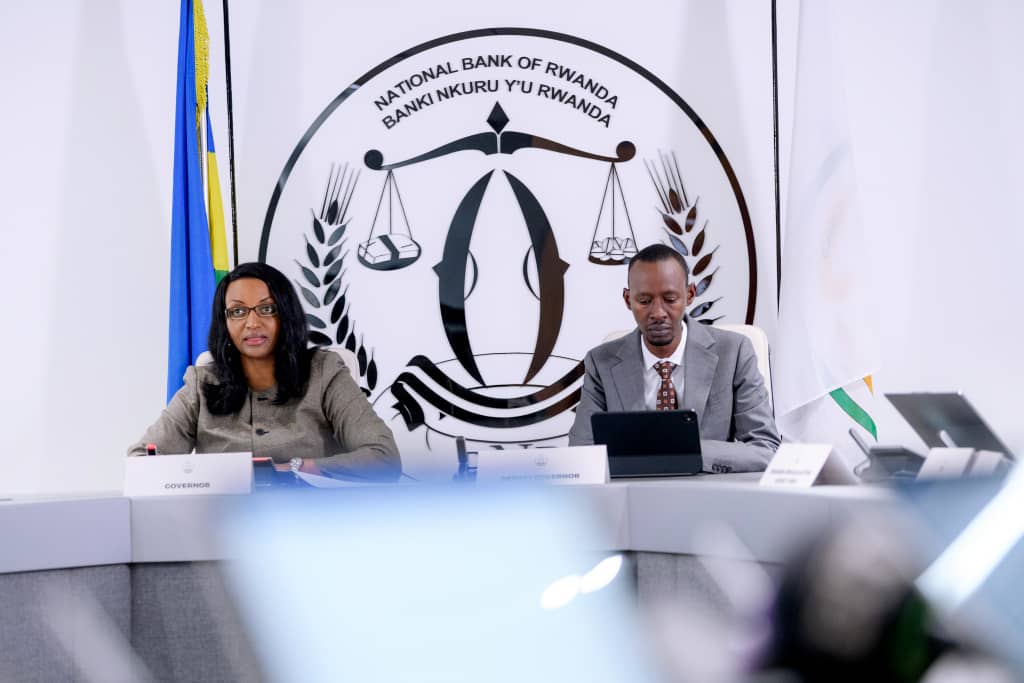
In a circular signed by National Bank of Rwanda Governor Soraya M. Hakuziyaremye, the central bank explained that the migration was preceded by extensive technical assessments after supervisors identified “several operational, infrastructure, transaction reliability, and ecosystem readiness risks” that required remediation before the transition could be completed.
BNR required banks, Electronic Money Issuers and the national switch operator to undergo readiness assessments and operational validation exercises before discontinuing bilateral account-to-wallet and wallet-to-account interoperability arrangements.
The reform also removes the costly and complex web of multiple bilateral integrations that financial institutions previously had to build and maintain.
Rather than establishing separate technical links with every other institution, banks and mobile money operators now connect once to the national eKash platform, significantly reducing duplication, infrastructure costs and operational complexity.
For businesses, the change simplifies the acceptance of digital payments. Merchants no longer have to display or manage separate mobile money payment codes for different networks.
One merchant code can now receive payments from customers across participating banks and mobile money providers, making digital commerce more efficient and convenient.
As of press time, Airtel Money subscribers were already using the new interoperable merchant payment system, allowing them to pay merchants through the unified national payment code. MTN MoMo subscribers, however, were yet to access the same functionality, indicating that the operator had not fully activated the service for its customers despite the expiry of the migration timeline set by the central bank.
Financial institutions are generally expected to comply with BNR directives, and failure to do so may expose them to supervisory or regulatory action where the regulator determines that requirements have not been met.
The centralized model is also expected to improve transaction reliability, simplify future payment innovations and strengthen oversight of Rwanda’s rapidly expanding digital financial ecosystem.
By replacing dozens of bilateral arrangements with a single interoperable national network, BNR has fundamentally redesigned how digital payments move across Rwanda, creating a more seamless experience for consumers while lowering costs and technical burdens for financial institutions.
The reform is expected to accelerate cashless payments and further support Rwanda’s ambition of becoming one of Africa’s leading digital economies.







Great step for Rwanda’s digital economy. A single merchant payment system removes unnecessary barriers between mobile networks, making transactions faster, simpler, and more convenient for both customers and businesses.
If implementation is smooth and merchant adoption is widespread, eKash could significantly accelerate cashless payments, improve financial inclusion, and strengthen trust in digital payments across the country.