


I have developed an unusual habit whenever I read about China. I don’t just follow stories about BYD overtaking global carmakers, Huawei pushing technological frontiers, or Chinese companies dominating electric vehicles, batteries and solar energy. I find myself asking a different question: how do these people do it?
The answer, I have gradually realised, almost always leads back to Chinese universities. The more I have read Reuters reports, Chinese government policy papers, Ministry of Education announcements and studies by organisations such as the OECD and the World Bank, the more one pattern has become impossible to ignore. China rarely builds an industry first and then starts looking for talent. Instead, it educates the talent years before the industry reaches maturity. That may well be one of the country’s greatest competitive advantages.
The evidence stretches back more than seventy years. After the founding of the People’s Republic in 1949, China fundamentally reorganised its higher education system in 1952, creating specialised institutions focused on engineering, mining, metallurgy, railways and heavy industry. Historian Ruth Hayhoe observed in China’s Universities and the Open Door that universities became “an instrument for national development,” producing precisely the expertise required by the country’s economic ambitions. It was hardly surprising, therefore, that engineering dominated university enrolment as China built factories, steel mills, power stations and railways from the ground up.
The education system evolved as the country’s priorities evolved. When Deng Xiaoping launched Reform and Opening Up in 1978, universities rapidly expanded programmes in economics, finance, accounting, statistics and business management because China was shifting from a centrally planned economy to a market-oriented one. The Organisation for Economic Co-operation and Development notes that higher education reforms during the 1980s increasingly reflected labour market demands created by economic liberalisation and China’s growing integration into the global economy.
Another strategic shift emerged during the 1990s as China prepared to join the World Trade Organization. Universities strengthened programmes in international trade, logistics, international business and foreign languages, particularly English, because policymakers understood that competing globally required more than factories; it required people who could negotiate, manage supply chains and operate comfortably across international markets. China formally joined the WTO in 2001, and those graduates became part of the workforce that powered one of the greatest export expansions in modern economic history.
The arrival of the internet economy triggered yet another transformation. As companies such as Alibaba, Tencent, Baidu and Sohu expanded rapidly, universities dramatically increased investment in computer science, software engineering and information technology. Between 1998 and 2001 alone, computer science programmes reportedly expanded by around 70 percent, laying much of the human capital foundation for what would become one of the world’s largest digital economies.
The pattern repeated itself once again after Beijing unveiled the Made in China 2025 strategy. Universities introduced programmes in artificial intelligence, big data, Internet of Things engineering, intelligent manufacturing and digital economics years before Chinese companies became global leaders in electric vehicles, battery technology, renewable energy and advanced manufacturing. Looking back, the rise of companies such as BYD and CATL appears less like an overnight success story than the outcome of decades of coordinated planning.
That success was never driven by education alone. It reflected the careful synchronisation of industrial policy, higher education, scientific research, innovation and patient investment. Universities did not operate in isolation. They formed one part of a much broader national ecosystem in which government, research institutions, financiers and industry worked towards shared long-term objectives.
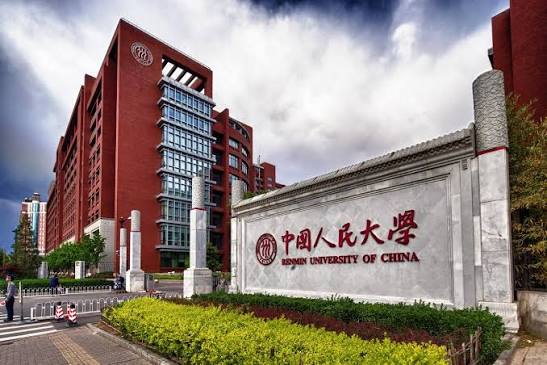
China’s universities continue to reveal where the country believes its future lies. New programmes now focus on semiconductor engineering, embodied artificial intelligence, integrated circuit engineering, carbon neutrality science, agricultural robotics and low-altitude economy technologies. Reuters recently reported that leading institutions including Peking University, Renmin University and Shanghai Jiao Tong University are expanding enrolment in artificial intelligence, semiconductors, engineering, healthcare and new energy disciplines to strengthen China’s long-term technological competitiveness.
China, however, is far from alone. Singapore deliberately aligned its universities with its transition from labour-intensive manufacturing into biotechnology, financial services and advanced technology industries. South Korea built close partnerships between universities, government and companies such as Samsung, Hyundai and LG, creating the skilled workforce that transformed the country into a global industrial powerhouse. Germany’s renowned dual education system similarly integrates universities, technical colleges and employers to ensure graduates leave with skills that directly match industrial demand. Although these countries differ in size, history and political systems, they share one important principle: education is treated as economic infrastructure rather than simply a social service.
The more I reflected on these examples, the more I found myself thinking about Rwanda. At first glance, Rwanda appears to be pursuing a remarkably similar path. Vision 2050 seeks to transform the country into an upper-middle-income economy by 2035 and a high-income nation by 2050 through a knowledge-based economy built on innovation, productivity and human capital. The National Strategy for Transformation (NST2) reinforces that ambition by targeting exports of US$7.3 billion, private investment of US$4.6 billion and the creation of approximately 250,000 jobs annually, while identifying industrialisation, technology and value addition as central pillars of economic growth.
Rwanda has also embraced emerging technologies with notable ambition. The National Artificial Intelligence Policy identifies healthcare, agriculture, education, finance and public administration as priority sectors where artificial intelligence should drive productivity and improve public service delivery. The government has invested heavily in digital infrastructure, innovation hubs, coding academies and digital public services, earning international recognition as one of Africa’s most digitally progressive economies.
The country’s universities have begun responding. The University of Rwanda hosts African Centres of Excellence in data science, biomedical engineering, energy and the Internet of Things. Carnegie Mellon University Africa has established Kigali as one of the continent’s leading centres for artificial intelligence, cybersecurity, software engineering and information technology. These are significant achievements that demonstrate Rwanda is already aligning higher education with national priorities.
Yet they also raise an important strategic question. Is the alignment between Rwanda’s economic ambitions and its university curricula deep enough to support the transformation envisioned in Vision 2050?
If industrialisation is expected to become one of the country’s principal engines of growth, should universities already be offering specialised undergraduate degrees in advanced manufacturing, industrial robotics and factory automation? If Rwanda intends to position itself as a regional leader in electric mobility, should battery engineering, battery chemistry, electric drivetrain technology and charging infrastructure management become dedicated fields of study? If artificial intelligence is expected to transform agriculture, should universities begin producing specialists in agricultural robotics, precision agriculture, agricultural data science and autonomous farming technologies? Likewise, if Rwanda intends to become a leader in green growth, should programmes in carbon accounting, carbon markets, climate finance and environmental engineering receive greater emphasis?
These questions should not be interpreted as criticisms of Rwanda’s higher education system. Rather, they reflect an opportunity to deepen the relationship between national planning and university education. China, Singapore, South Korea and Germany demonstrate that sustained economic transformation rarely happens by chance. It is often the product of deliberately aligning national strategy, industrial policy, research investment and higher education over decades rather than electoral cycles.
Rwanda has already shown remarkable discipline in long-term planning. What may now be required is an equally deliberate approach to curriculum planning, ensuring that every major national priority is quickly reflected in lecture halls, laboratories and research centres. Universities should not merely respond to changes in the economy; they should anticipate them by preparing graduates for industries that are only beginning to emerge.
Perhaps that is the most valuable lesson Rwanda can borrow from China. It is not about copying China’s political system, its scale or even its industrial model. It is about adopting the discipline of asking one simple but powerful question whenever a new national strategy is adopted: if this is the economy Rwanda hopes to build in ten or twenty years, what should its universities be teaching today?
Countries that answer that question consistently do not simply prepare students for the future. They build the future itself.
Sources: Ruth Hayhoe, China’s Universities and the Open Door; Organisation for Economic Co-operation and Development (OECD); Ministry of Education of the People’s Republic of China; Reuters; The State Council of the People’s Republic of China (Made in China 2025); World Bank (China 2030); Government of Rwanda (Vision 2050, National Strategy for Transformation II and National Artificial Intelligence Policy).