

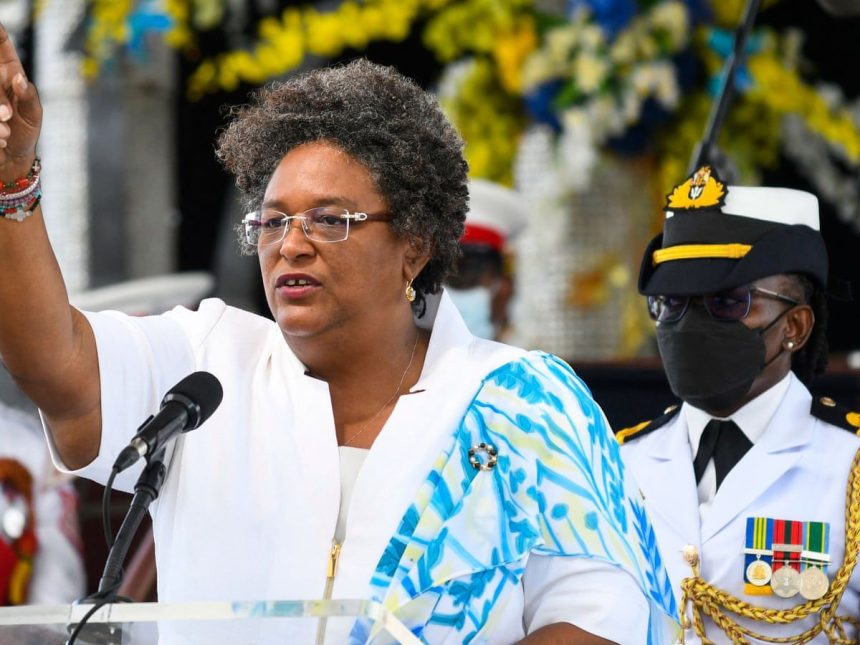
Barbados Prime Minister Mia Mottley has delivered a powerful reflection on the country’s transformation over the past eight years, portraying a nation that has emerged from economic crisis and global uncertainty to become one of the Caribbean’s most influential voices on the world stage.
Addressing the nation, Mottley said the story of the last eight years was not simply about government policies, but about the collective resilience of Barbadians who stood together through some of the most challenging periods in the country’s modern history.
Her remarks come at a time when Barbados is enjoying one of its strongest periods of economic stability in more than a decade. The country’s economy has maintained steady growth following its post-pandemic recovery, with GDP expanding by approximately 2.7 percent in 2025 after growing around 4 percent in 2024. Barbados’ nominal GDP has risen to more than US$8 billion, while GDP per capita has climbed to nearly US$29,000, making it one of the highest-income countries in the Caribbean.
Mottley highlighted several defining moments of her administration, including Barbados’ historic transition from a constitutional monarchy to a republic in 2021, a move that symbolized a new chapter of sovereignty and national confidence. She also recalled the global celebration that accompanied the recognition of Barbadian superstar Rihanna as a National Hero, further elevating the country’s international profile.
Perhaps most significantly, Barbados has emerged as a global leader on climate finance and development reform through the Bridgetown Initiative. What began as a proposal from a small island nation has evolved into one of the world’s most influential frameworks for reforming international financial institutions and improving access to climate funding for vulnerable countries.
The Prime Minister argued that this international leadership has translated into real benefits at home. Barbados has secured grants, climate financing, and international partnerships that have helped reduce pressure on taxpayers while supporting investment in infrastructure, resilience, and social programs.
The country’s economic turnaround has drawn praise from international financial institutions. Barbados has strengthened its public finances, improved macroeconomic stability, reduced inflation, and continued to lower its debt burden. Inflation has fallen significantly from the highs experienced during the global supply-chain crisis, while unemployment has remained relatively low at about 6.6 percent. International reserves have also remained strong, helping safeguard economic stability and investor confidence.
Mottley reflected on the profound challenges that have tested the island’s resilience, from the COVID-19 pandemic to Hurricane Elsa, Tropical Storm Beryl, and other extreme weather events that have increasingly threatened Caribbean nations. She described carrying the weight of those crises personally, often wondering how much more ordinary citizens could endure.
Despite those hardships, Barbados protected jobs, preserved livelihoods, stabilized its economy, and maintained international confidence in its institutions, she said.
Looking forward, the Prime Minister identified three critical challenges that continue to concern her administration.The first is the country’s demographic reality. Barbados faces an aging and slowly declining population, raising concerns about the future labor force and the availability of skills needed to sustain economic growth. This challenge is particularly significant as the country seeks to expand sectors such as tourism, international business, renewable energy, and digital services.
The second challenge is affordability. Although inflation has eased considerably, many Barbadians continue to feel pressure from housing costs, utility bills, food prices, and other everyday expenses. Ensuring that economic growth translates into improved living standards remains a key priority for the government.
The third challenge is public safety and the protection of young people. Mottley spoke emotionally about families who have lost loved ones to violence or tragedy, emphasizing that every life lost represents a setback for the nation.
At the heart of her vision remains a commitment to reducing poverty and expanding economic ownership. She argued that true development must mean more Barbadians owning homes, land, businesses, and productive assets rather than merely participating in the economy as workers.
Mottley’s leadership has also extended beyond the Caribbean, including efforts to strengthen ties with African nations such as Rwanda. Over recent years, Barbados and Rwanda have deepened diplomatic engagement through the Commonwealth and international forums focused on climate change, sustainable development, and South-South cooperation.
The relationship between the two countries gained visibility through growing collaboration on global governance reform, climate finance, digital transformation, and economic resilience. Both nations have championed the interests of developing countries in international negotiations and have advocated for fairer access to development financing.
Rwanda and Barbados share several similarities despite being located on different continents. Both are relatively small nations that have sought to amplify their global influence through innovation, strategic diplomacy, and effective governance. Both governments have also emphasized sustainable development, gender equality, digitalization, and investment-led economic growth.
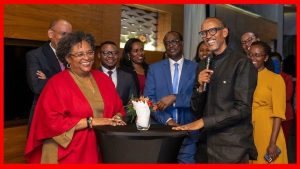

Trade between the two countries remains modest, but opportunities for cooperation continue to expand in areas such as tourism, aviation, financial services, technology, education, and climate resilience. Barbados has increasingly looked toward Africa as part of its broader strategy to strengthen economic and cultural ties with the continent, while Rwanda has emerged as a key African partner due to its reputation for stability, ease of doing business, and forward-looking development policies.
The two countries are also active participants in international discussions on climate action. As vulnerable nations facing different but significant environmental challenges, both Rwanda and Barbados have consistently called for greater climate financing and stronger commitments from developed economies.
Her message was both a celebration of progress and a warning against complacency. Barbados has recorded several consecutive years of economic growth, tourism arrivals have rebounded strongly, international confidence has returned, and the country has become a respected voice in global policymaking. Yet Mottley insists that the nation’s greatest achievements will not be measured by international recognition alone, but by whether ordinary Barbadians can enjoy greater prosperity, opportunity, and security.
“I believe in this country. I believe in you. I believe in us,” she declared. It was a message rooted in both realism and optimism: that while Barbados has already proven it can punch above its weight, the next chapter will be defined by whether it can fully realize the promise of becoming a more prosperous, inclusive, and resilient nation for all its people.