

Health ministers from the eight member states of the East African Community (EAC) have begun high-level discussions aimed at strengthening regional preparedness and response measures against an Ebola outbreak that has severely affected Ituri Province in eastern Democratic Republic of Congo (DRC).
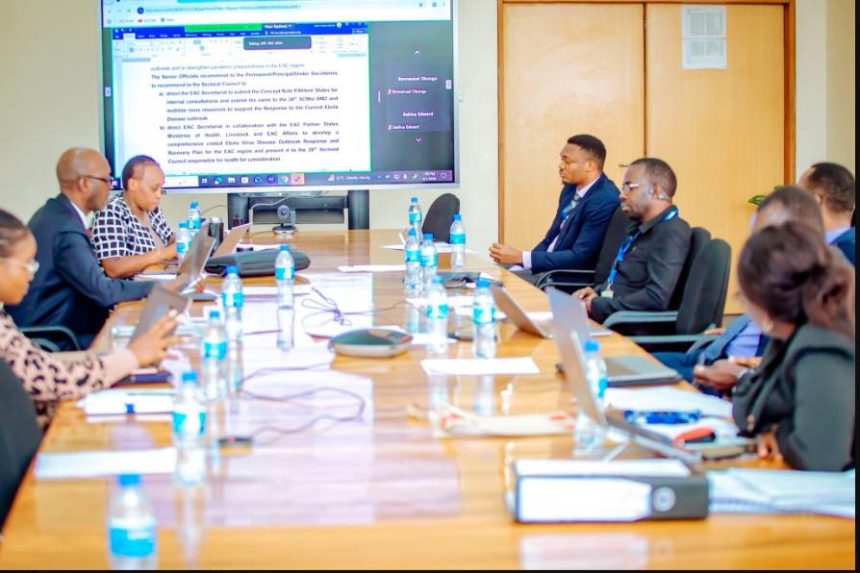
The virtual meeting, taking place from June 1–2, 2026, brings together health officials from across the region to coordinate efforts in surveillance, disease prevention, border screening, and emergency response.
The ministers emphasized the importance of a unified regional strategy to prevent the spread of the deadly virus beyond the affected areas.
The Ebola outbreak in Ituri has raised concerns among neighboring countries due to the province’s close economic and population ties with several EAC member states.
Increased cross-border movement has heightened the risk of transmission, prompting governments to strengthen monitoring systems at key entry points.
During the meeting, participants reviewed the current epidemiological situation in the DRC and discussed measures to enhance information sharing, laboratory capacity, rapid response teams, and public awareness campaigns.
They also reaffirmed their commitment to implementing the EAC Regional Contingency Plan for Public Health Emergencies.
EAC health ministers called for continued collaboration with international partners, including the World Health Organization (WHO), to ensure adequate resources and technical support for outbreak containment efforts.
The East African Community has previously demonstrated the value of coordinated regional action in addressing public health threats, and leaders expressed confidence that joint efforts would help limit the impact of the Ebola outbreak and protect millions of people across the region.
As health authorities remain on high alert, the meeting underscores the growing recognition that infectious disease outbreaks require collective action that extends beyond national borders.
By Andrew Shyaka