

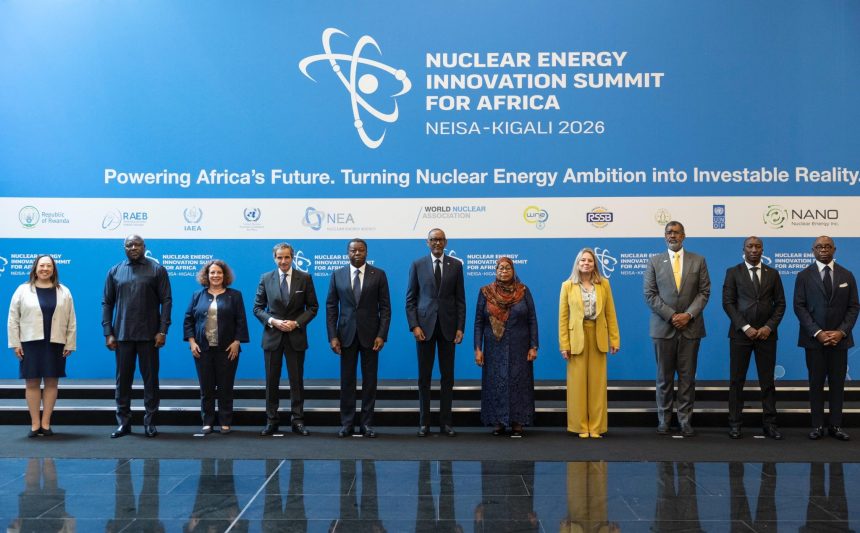
President Paul Kagame used the 2026 Nuclear Energy Innovation Summit for Africa (NEISA) in Kigali not simply as a diplomatic forum, but as a strategic platform to reposition Rwanda within Africa’s future energy and industrial landscape.
By convening global nuclear regulators, financiers, policy architects and industry leaders, Rwanda signaled that Africa’s nuclear conversation is shifting from abstract ambition toward implementation, financing and infrastructure readiness.
The summit itself was organized around the theme “Powering Africa’s Future: Turning Nuclear Energy Ambition into Investable Reality.”
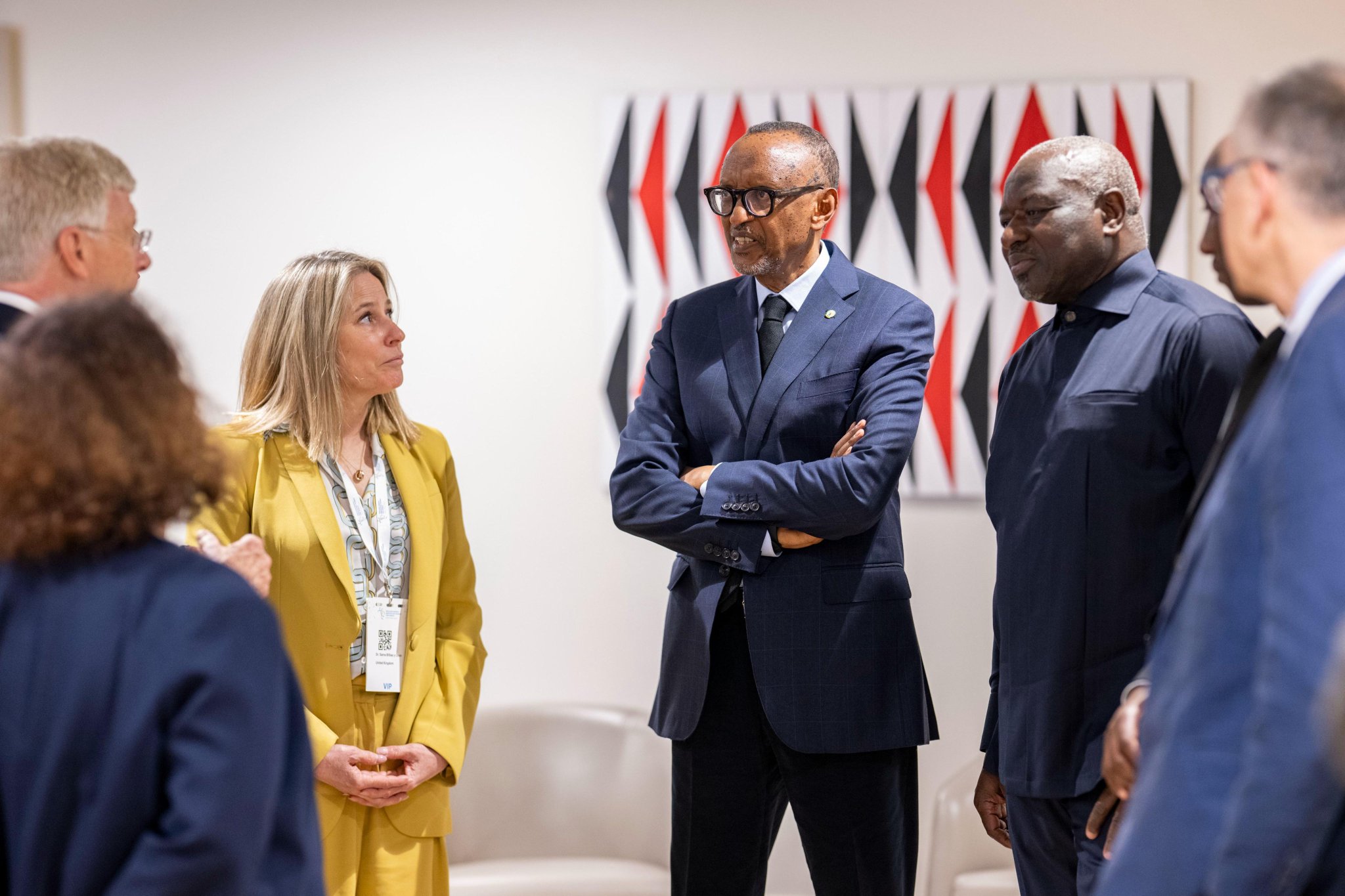
Kagame’s meetings with Sama Bilbao y León, Sylvie Bermann, Serge Ekue, Daniel Poneman and Ian Farnan reflected a deliberate effort to bring together three critical pillars of nuclear deployment: technology, regulation and capital.
During the summit, Kagame framed energy access not merely as a social development issue, but as the backbone of industrial competitiveness.
His remarks emphasized a broader economic argument increasingly gaining traction across Africa: that reliable baseload electricity is essential if African economies are to industrialize, digitize and compete globally.
“Africa, energy is not simply a development issue. It is the foundation of industrial growth, and competitiveness,” Kagame stated during the opening session.
The significance of this message lies in the way Rwanda is positioning nuclear energy not only as a climate solution, but also as an industrial policy tool.
While renewable energy remains central to Africa’s energy transition, many governments increasingly argue that intermittent power sources alone may not support energy-intensive sectors such as manufacturing, mining, AI infrastructure, heavy industry and urban expansion.

One of the most consequential developments during NEISA 2026 was Rwanda’s formal progression in the International Atomic Energy Agency’s nuclear development framework.
On the sidelines of the summit, Kagame met Rafael Grossi, Director General of the International Atomic Energy Agency (IAEA), who handed over Rwanda’s Integrated Nuclear Infrastructure Review (INIR), confirming completion of Phase 1 of the IAEA Milestones Approach.
Rwanda now advances to Phase 2, which focuses on preparatory activities for establishing a nuclear power plant.
The INIR process evaluates whether a country has the institutional, legal, regulatory, safety, workforce and technical foundations required for nuclear energy development.
This transition carries significant strategic implications. It strengthens Rwanda’s international credibility in nuclear governance and safety standards, reassures investors and multilateral institutions that Kigali is following internationally accepted procedures, and moves the country closer to its ambition of deploying nuclear energy in the early 2030s.
Rwanda’s approach has been notable for its emphasis on institution-building before construction commitments.
Through the Rwanda Atomic Energy Board, Kigali has steadily expanded regulatory capacity, workforce training and international partnerships.
At the same time, Kagame repeatedly returned to what remains the defining obstacle for Africa’s nuclear ambitions: financing.
Nuclear projects require enormous upfront capital, long repayment periods, sovereign guarantees, highly credible regulation and investor confidence.
Kagame acknowledged that many international investors still perceive Africa as a high-risk environment.
His call for “consistency and accountability” was therefore aimed not only at African governments, but also at global financial institutions and private investors.
This focus reflects a wider shift in the global nuclear sector. Following renewed international support for nuclear energy after COP28 and evolving discussions within multilateral financial institutions, African governments increasingly see an opportunity to access financing that was previously difficult to secure for nuclear projects.
NEISA itself reflected this investment-centered approach through discussions focused on risk-sharing frameworks, public-private partnerships, regulatory harmonization and regional power integration.
Kagame also emphasized the importance of continental coordination, warning that “Africa cannot afford fragmentation.”
This reflects a growing recognition that nuclear development in Africa may only become economically viable through regional cooperation.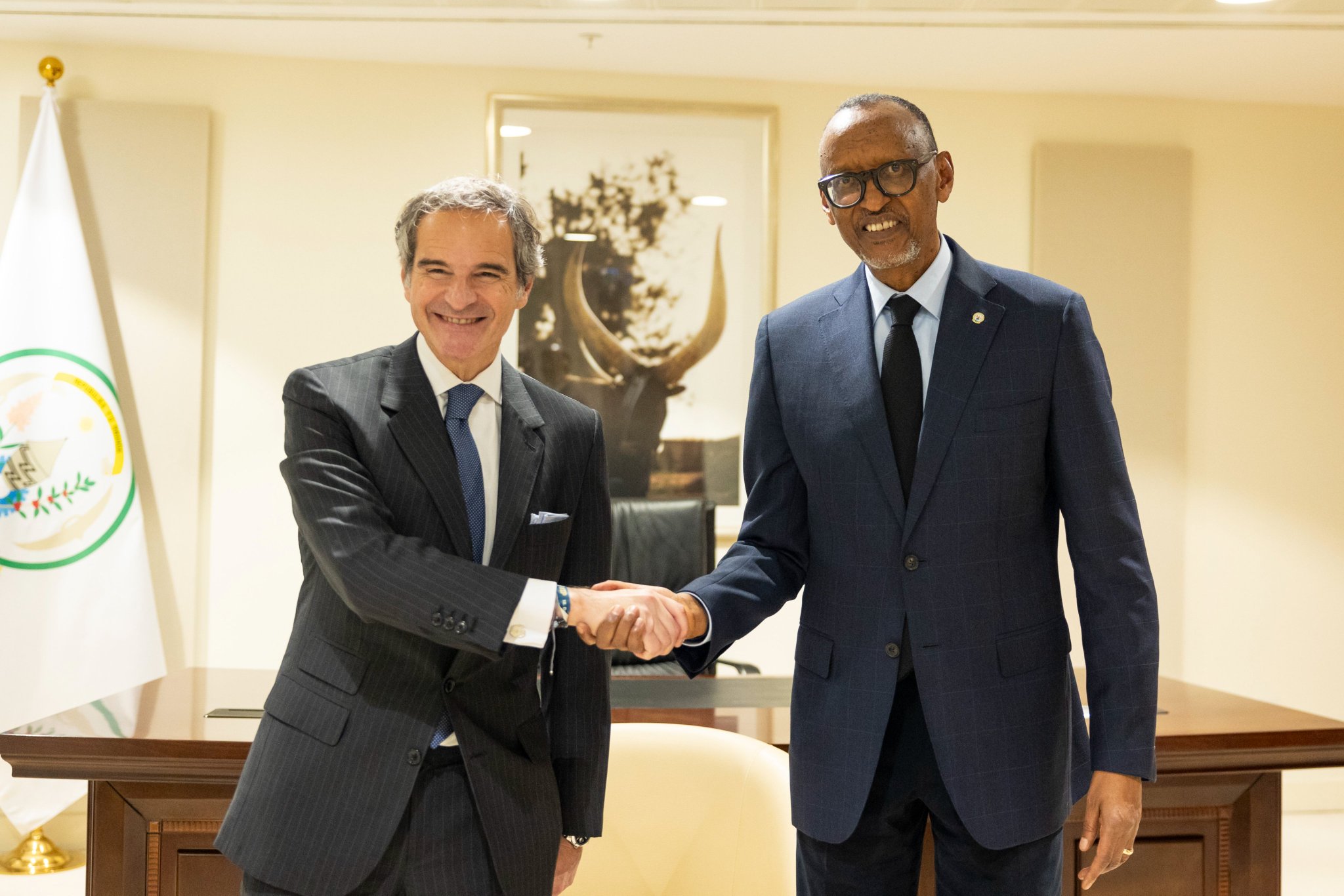

Shared regulatory frameworks, interconnected electricity markets and coordinated infrastructure planning could significantly reduce costs and improve project bankability.
For many African economies, nuclear energy projects remain too large and financially demanding to pursue in complete isolation.
NEISA therefore sought to frame nuclear energy as a continental development project rather than a collection of disconnected national ambitions.
The presence of the IAEA, international financiers and global nuclear industry leaders demonstrated increasing international interest in Africa as a future growth market for nuclear deployment.
Rwanda’s growing nuclear profile also carries broader geopolitical significance. By positioning Kigali as a convening hub for advanced energy discussions, Kagame is reinforcing Rwanda’s image as a technologically ambitious and governance-oriented state capable of leading highly complex sectors on the continent.
For Africa more broadly, nuclear energy is becoming intertwined with debates around energy sovereignty, industrial independence, climate resilience and strategic autonomy in a rapidly changing global economy.
IAEA Director General Rafael Grossi stated during the summit that Africa’s nuclear future is “no longer a theory,” arguing that the continent is approaching a decisive transition point.
That assessment captures the broader significance of NEISA 2026.
The summit marked an effort to move Africa’s nuclear agenda from policy aspiration into practical statecraft, financial engineering and long-term infrastructure planning.
For Rwanda, it was also a declaration that Kigali intends to position itself at the forefront of that transition.