







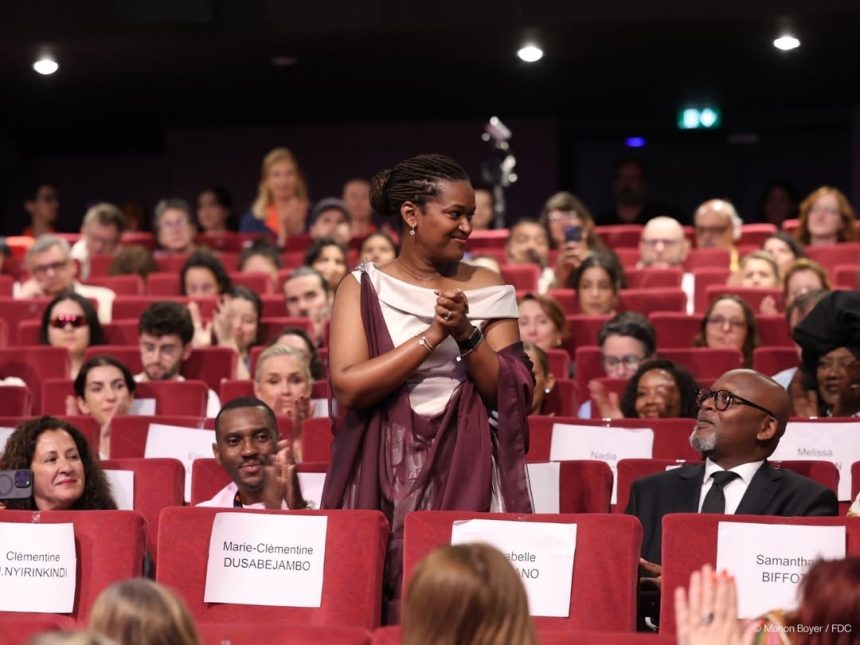
Rwanda’s film industry achieved a historic breakthrough after Ben’Imana, a film directed by acclaimed Rwandan filmmaker Marie-Clémentine Dusabejambo, premiered at the 79th Cannes Film Festival in France on Tuesday, May 19.
The film was screened in the prestigious “Un Certain Regard” category, one of Cannes’ most respected sections dedicated to showcasing original, daring, and visionary filmmaking from around the world.
The screening was attended by Rwanda’s State Minister for Youth and Arts Development, Sandrine Umutoni, and Rwanda’s Ambassador to France, François Nkulikiyimfura, highlighting the importance of the moment for Rwanda’s growing creative industry.
The selection of Ben’Imana marks a major milestone for Rwandan cinema, becoming one of the few films from the country to receive recognition at the world’s most influential film festival.
For many in the industry, it is not just a victory for one filmmaker, but a defining moment for Rwanda’s entire creative sector.
Directed by Marie-Clémentine Dusabejambo, who is already widely respected for her previous short films and socially conscious storytelling, Ben’Imana explores themes of memory, healing, reconciliation, and identity in post-genocide Rwanda.
The story is set years after the 1994 Genocide against the Tutsi and follows characters navigating the emotional and psychological realities of rebuilding their lives and communities.
The filmmaker has explained in previous interviews that the film was inspired by conversations with survivors and ordinary Rwandans whose experiences continue to shape the country’s collective memory.
Rather than focusing only on historical tragedy, the film seeks to examine the quiet human struggles, resilience, and emotional complexities that exist long after conflict ends.
Production of the film took several years and involved collaboration between Rwandan and international partners.
The project passed through multiple international development platforms and film laboratories, where it received mentorship, financing support, and exposure to global industry professionals.
Such programs are highly competitive and are often used to identify films with strong artistic potential before they enter the international festival circuit.
The road to Cannes itself is extremely difficult. Every year, thousands of films from across the globe are submitted to the festival, but only a small number are selected.
Cannes programmers are known for prioritizing films with strong artistic vision, unique storytelling, and emotional depth.
The inclusion of Ben’Imana in the “Un Certain Regard” section signals that the film stood out not only as an African story, but as a powerful cinematic work capable of resonating with international audiences.
Film critics and festival observers have already praised the movie for its emotional intensity, authentic storytelling, and visual direction.
Many have described it as a deeply human film that presents Rwanda through a nuanced and intimate lens rarely seen in global cinema.
The State Minister for Youth and Arts in Rwanda is Sandrine Umutoni, was among the audience to witness the historical milestone in Rwandan creative industry at Cannes.
For Rwanda’s local creative industry, the Cannes selection carries enormous significance.
It places Rwandan filmmaking on the international map and demonstrates that local stories can compete on the world stage without losing their cultural identity.
Industry experts believe the recognition could attract more international investment, partnerships, training opportunities, and distribution deals for Rwandan filmmakers.
The achievement is also expected to inspire a new generation of young creatives in Rwanda.
Over the past decade, the country has witnessed a steady rise in film production, digital storytelling, acting talent, and creative entrepreneurship.
However, the industry has often faced challenges including limited funding, lack of infrastructure, and restricted access to international markets.
The success of Ben’Imana now offers proof that those barriers can be overcome.
For many young filmmakers, actors, scriptwriters, and producers, seeing a Rwandan film screened at Cannes sends a powerful message that their stories matter and can reach global audiences.
It also reinforces the importance of investing in local storytelling, film education, and creative platforms that nurture talent.
Beyond entertainment, the film represents Rwanda’s growing cultural influence internationally.
As countries increasingly use cinema to shape cultural identity and soft power, Ben’Imana becomes part of a larger narrative about Rwanda presenting its own stories through the voices of its own people.
The Cannes premiere therefore stands as more than a cinematic achievement. It is a cultural milestone, a diplomatic symbol, and a moment of pride for Rwanda’s creative community.
As audiences at Cannes applauded the film on Tuesday night, many back home saw it as the beginning of a new era — one where Rwandan cinema is no longer emerging quietly, but confidently taking its place on the global stage.