






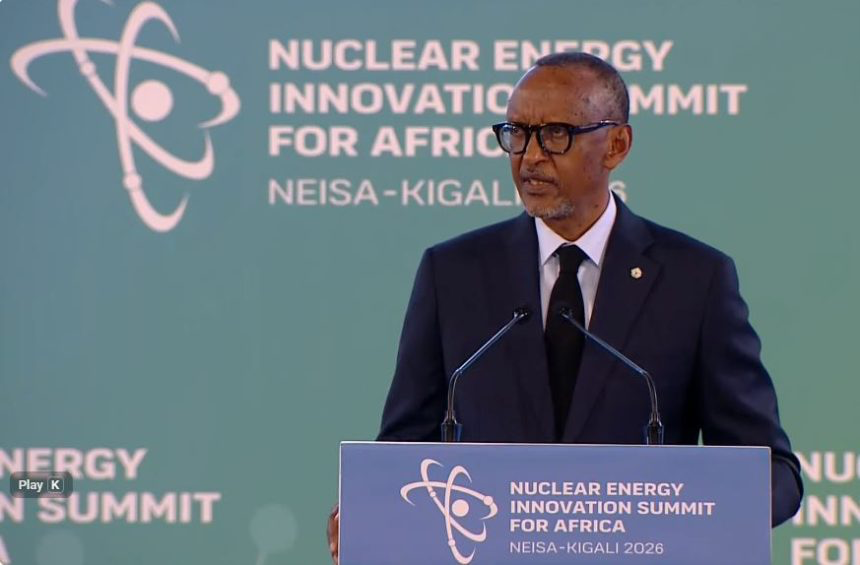
Rwanda aims to begin the processing and development of nuclear energy technologies by the early 2030s, President Paul Kagame said on Tuesday, as he opened a major international conference on nuclear energy in Kigali.
Speaking at a two-day summit bringing together African leaders, policymakers, and global energy stakeholders, Kagame said Rwanda’s long-term objective is to integrate nuclear energy into its national development strategy as part of broader efforts to strengthen electricity supply, healthcare systems, and emerging technologies such as artificial intelligence.
“By the beginning of the 2030s, we will have started working on nuclear energy development,” Kagame said, framing the ambition as part of Rwanda’s push for reliable and diversified energy sources.
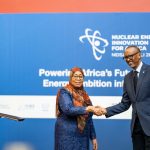
The conference, held in Rwanda’s capital Kigali, was attended by several high-level African leaders, including Samia Suluhu Hassan and Faure Essozimna Gnassingbé. The next edition of the forum is expected to be hosted by Togo.

Kagame emphasized that nuclear energy could play a transformative role in Africa’s development, particularly in expanding access to stable electricity, improving healthcare systems, and supporting the continent’s growing technological ambitions.
He argued that progress in the sector would depend on stronger cooperation between African states, private investors, and scientific institutions.
“To achieve these goals, it is essential to have private investment, institutional collaboration, and long-term, sustainable approaches that ensure efficiency and accountability,” he said.
The president warned that countries that fail to engage in emerging energy cooperation frameworks risk falling behind economically and missing out on the benefits of shared technological progress.
He also pointed to the development of small modular nuclear reactors as a potential pathway for African countries, saying such technologies could make nuclear power more accessible and adaptable for national grids in the future.
Kagame reiterated Rwanda’s commitment to working with regional and international partners to advance peaceful nuclear energy applications, stressing that the goal is to support development rather than military capability.
The conference theme, “Advancing Africa’s Future: Transforming Nuclear Energy Development into an Investable Project,” reflected growing interest in nuclear power as part of the continent’s broader energy transition.
Among other dignitaries in attendance was Niger’s Prime Minister Ali Mahamane Zeine, alongside representatives of governments and major research institutions.
Analysts say the discussions in Kigali highlight a broader shift across Africa as governments seek to expand electricity access, reduce reliance on fossil fuels, and prepare for rapid population growth.
By 2050, Africa is projected to account for a significantly larger share of the global population, increasing pressure on energy systems across the continent.
Rwanda’s announcement adds to a growing number of African countries exploring nuclear energy as part of long-term strategies to secure reliable power and support industrial growth.