



I have been to Cabo Delgado. I did not read about it in reports or policy papers. I walked those streets after our men and women in uniform stepped in to flush out the Islamic terrorists. It had barely settled.
If you want to understand what was at stake in northern Mozambique, you must forget the sanitized language that usually fills international briefings. Words like “insurgency,” “instability,” and “security operations” are too clean for what actually happened there.
When I arrived, Cabo Delgado was a graveyard.
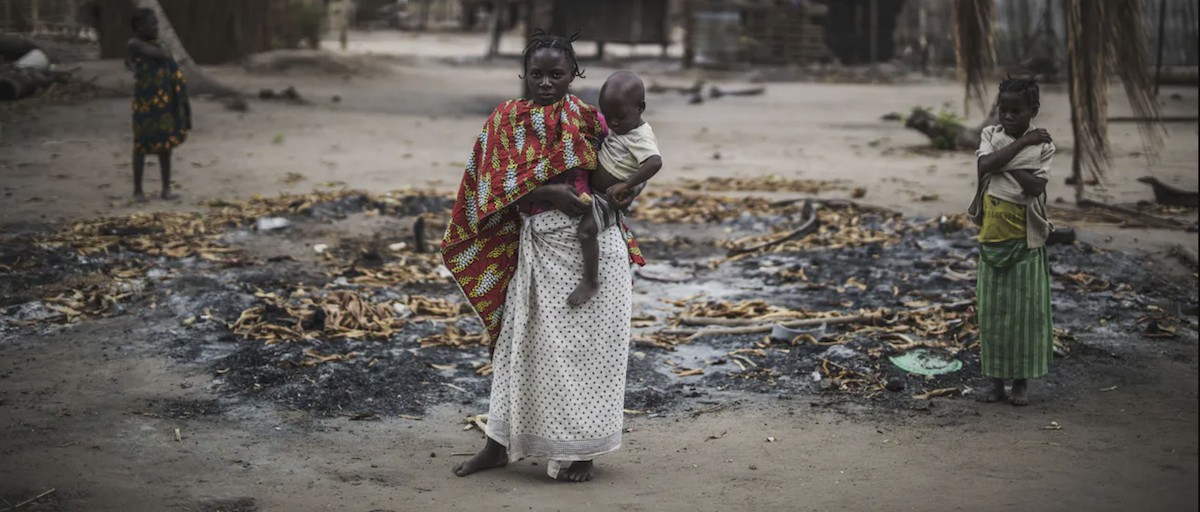
Villages that once bustled with fishermen, traders, and schoolchildren had been reduced to silent shells.
Homes were burnt down to their frames. The air still carried the acrid smell of charred wood and rubble, the kind that clings to your clothes long after you leave.
And in some places, the bodies had not yet been collected. The Mozambican security forces were dealing with pockets of terrorists in villages and helping collect bodies and burying bodies while Rwandan forces battled terrorists in the jungles.
You could still see the aftermath of the attacks that began around 2017, when Islamist militants swept through the province, killing civilians, burning towns, and terrorizing communities.
By the time the world finally began paying attention, the insurgency had already displaced more than one million people.
Thousands had been killed. Entire districts had emptied overnight. In some villages, you could walk for minutes without seeing a single person, only abandoned cooking pots, torn clothing, and doors left open as people fled in a hurry.
The militants had not only targeted villages. They went after the economic heart of the region.
At the time, Cabo Delgado was becoming one of Africa’s most promising energy frontiers. Offshore natural gas discoveries had attracted investments worth billions of dollars.
Among the most prominent projects was the massive LNG facility led by the French energy giant TotalEnergies near Palma.
That facility became a symbol of everything the militants wanted to destroy.
When RDF arrived, parts of the complex had already been attacked and torched. The extraction infrastructure, which should have been humming with engineers and technicians, stood eerily quiet. Steel structures stood like skeletons against the sky, and the silence around them was heavier than the noise of any working plant.
The officers’ mess was set up right at the base of that facility. It was a strange place for a dining hall, surrounded by the skeleton of a project that had once promised prosperity for the entire region.
Before RDF came, about three hundred Mozambican troops had been deployed there to protect the site.
They tried. But they were overwhelmed, the price of maintaining 300 officers to protect just one facility was too high.
For those who don’t know, the insurgents had moved quickly, attacking towns, cutting off supply routes, and spreading fear faster than the state could respond.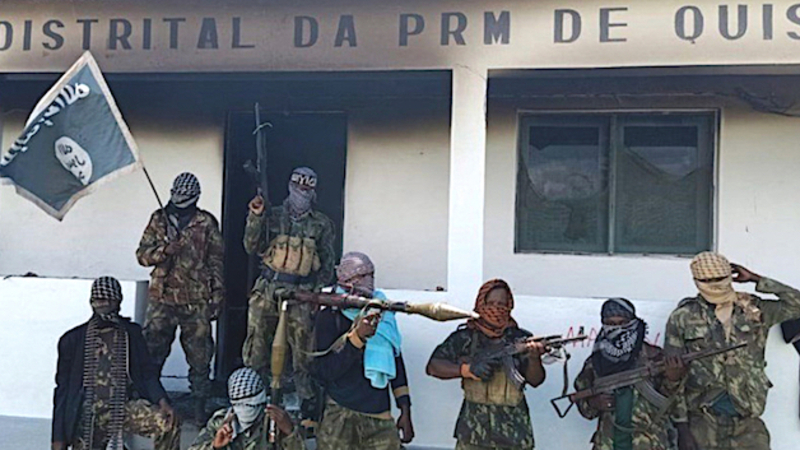
 Later, joining RDF, regional intervention force from SADC deployed in another part of the region, and they miserably struggled. Their deployments were brave but insufficient. The militants knew the terrain, the villages, and the forests. They moved like shadows, appearing at night, disappearing by dawn.
Eventually, the reality became unavoidable. Someone had to go in and clear the ground properly.
That is when Rwanda deployed more of its forces, solely battling the enemy.
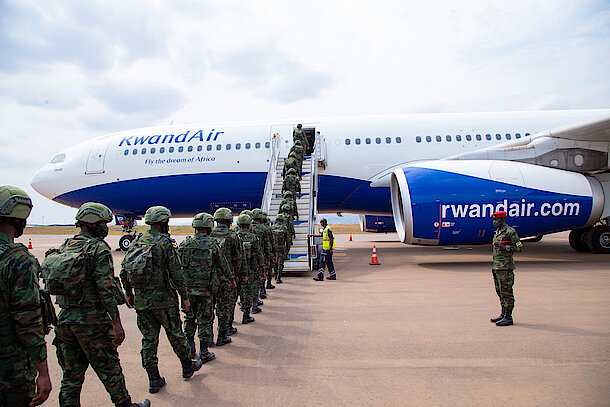
The operation began in July 2021, when Rwanda sent the first contingent of troops and police units to Cabo Delgado. The mission was not symbolic. It was decisive. Within weeks, key strongholds began to fall, and supply routes that had been cut for months were reopened.
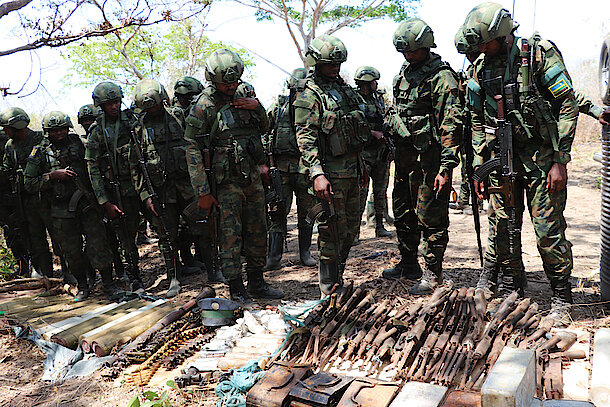
Our soldiers pushed into towns that had been abandoned for months. They retook Mocímboa da Praia, a strategic port that had been under insurgent control for nearly a year. They moved through Palma, Mbau, and surrounding districts, dismantling insurgent positions and reopening supply corridors.
It was not easy. They would navigate the semi desert 100km stretch to the port. It was a nightmare.
We lost men and women in those operations. Each one of them carried a story, a family, and a future that ended on those dusty roads. I remember one morning briefing where names were read out quietly. No speeches. Just silence. That kind of silence tells you everything.
People sometimes speak casually about military missions, as if they were pieces on a chessboard.
They forget that every move costs blood. But slowly, the tide turned.
Villages that had been silent began to breathe again. Families returned to homes they thought they would never see again. Children who had spent months hiding in displacement camps began walking back to school. You could see them in uniforms that no longer fit properly, but with a sense of normalcy slowly returning.
Hospitals reopened. Markets reappeared. Fishermen returned to the coast. Traders began moving goods again.
The port that had been deserted started receiving boats again.
And perhaps most importantly, the massive energy projects that had been frozen began preparing to resume operations.
Investment returned because security returned. This transformation did not happen by accident.
It happened because someone was willing to go in when others hesitated.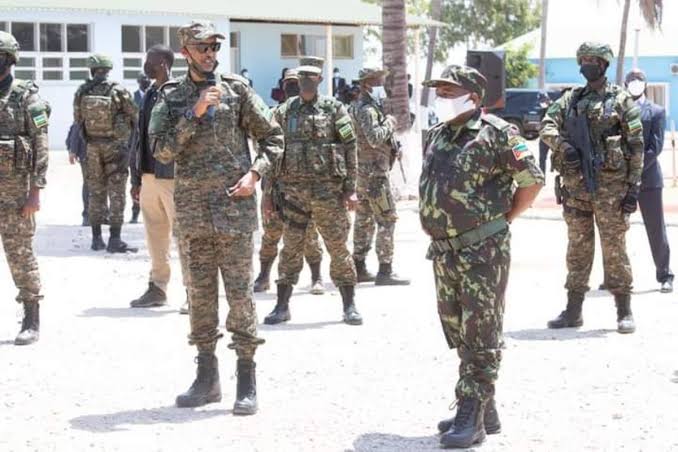
And yet, there is a bitter truth that sits quietly behind this success. The sacrifice of our forces, made with minimal resources and against a ruthless enemy, to secure what has become a massive and undeniable victory, is now being repaid with mockery, blackmail, and condemnation.
It is difficult to reconcile the scale of what was achieved on the ground with the tone of what is now said in distant capitals. It feels, at best, deeply unfair. At worst, it is simply absurd.
That is the part that makes the current situation so difficult to understand.
Many of the same Western countries now pressuring Rwanda had no clear answer when Cabo Delgado was burning.
They debated. They issued statements. They held meetings. Meanwhile, villages were being wiped out. It was Rwanda that acted.
And today, Cabo Delgado is not the same devastated region it was just a few years ago.
Civilians are back in their homes. Schools are functioning. Hospitals are operating again. Trade through the port has resumed. The gas projects that once seemed doomed are slowly moving forward again.
Mozambique is not fully healed, but it is stable. Yet now we see a strange twist in the story.
The European Union is considering withdrawing funding that supports Rwanda’s military deployment in Cabo Delgado.
If that happens, the consequences could be severe.
Rwanda’s presence in the region is not ceremonial. It is operational. Its troops maintain pressure on insurgent networks, patrol strategic corridors, and protect the infrastructure that keeps the local economy alive. At peak deployment, thousands of troops were involved in maintaining this stability across multiple districts.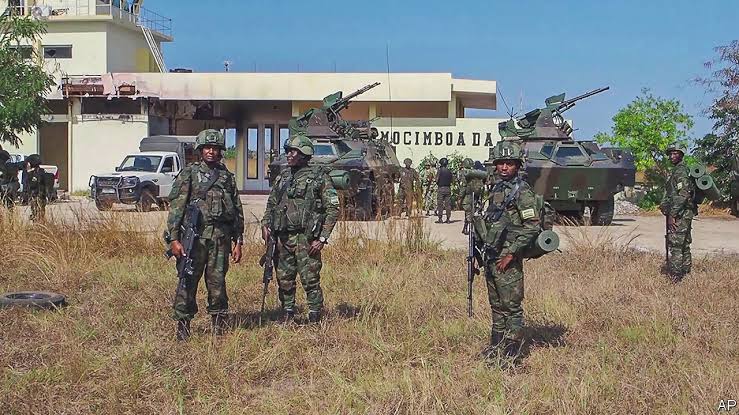
Without that presence, the security architecture that has held the province together could begin to weaken.
And insurgencies have a habit of returning quietly before anyone notices.
In security circles there is a simple saying: stability disappears faster than it arrives.
It takes years of effort to restore order to a devastated region. It can take only months of neglect for chaos to return.
That is why the current pressure on Rwanda feels misplaced. The minimum expectation should not be threats or political arm-twisting.
The minimum expectation should be support. And Rwanda has been very clear, in both tone and posture.
If financial supporters, like the European Union, choose to gaslight the situation while thumping their chest, even when their contribution represents only a fraction of the total effort, then Rwanda is left with two options.
The first is to work with Mozambique to find another benevolent partner or institution willing to support the mission in good faith.
The second is far simpler. Pack the bags and come back home. After all, the country is now relatively stable.
But everyone who understands insurgencies knows the uncomfortable truth: the guarantees against a return of terrorism in Cabo Delgado are still fragile. The threat has not disappeared. It has only been pushed back.
And that is where the real question begins to form.
Where is this pressure on Rwanda coming from? In whose interest is it?
Because from where we stood, on those burnt roads, inside those empty villages, next to that silent gas facility, there was no ambiguity about what needed to be done.
Yet today, those who never set foot there, who never had boots on the ground, who never lost a single soldier in that fight, are the ones claiming moral authority, suddenly.
It is difficult not to pause and ask for a moment of honesty.
Because when Cabo Delgado was burning, there was no chorus of solutions. There was only silence. And in that silence, Rwanda acted.
That is a fact no amount of pressure or revision of narrative can erase. Does anyone out there have plan B? I doubt! So, cut Rwanda some slack.