



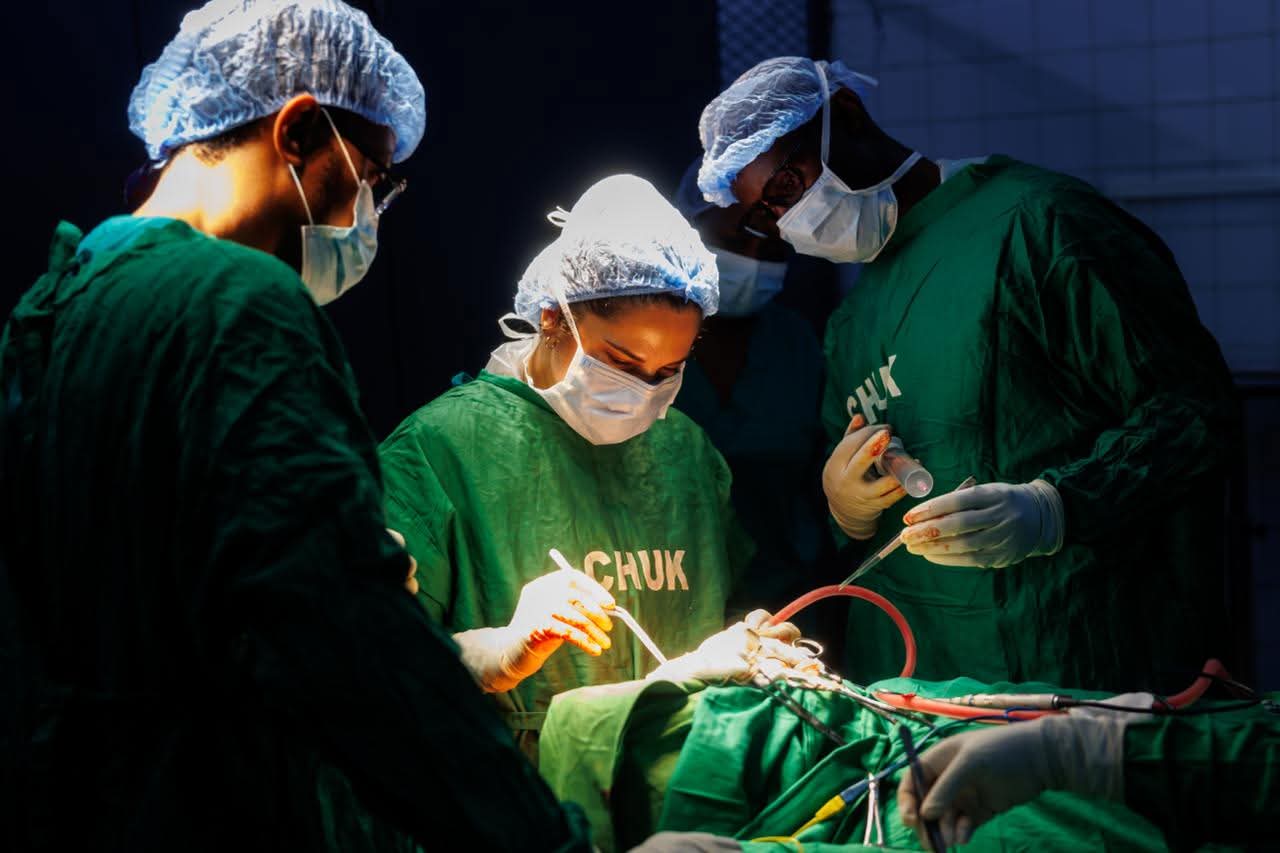
Rwanda has marked a historic milestone in its healthcare sector with the successful performance of its first-ever epilepsy brain surgery at Kigali University Teaching Hospital (CHUK).
The groundbreaking procedure was carried out by a joint team of international neurospecialists working alongside Rwandan doctors, signaling a new era for advanced neurological care in the country.
A Life-Changing ProcedureThe first patient to undergo the surgery was a 39-year-old woman who had lived with epilepsy for 15 years.
Medical staff involved in the operation confirmed that the procedure was successful, representing a major breakthrough in the treatment of severe and drug-resistant epilepsy cases within Rwanda.
Epilepsy affects an estimated 50 million people worldwide, nearly 80% of whom live in low- and middle-income countries.
In Rwanda, health experts estimate that between 1–2% of the population lives with epilepsy, meaning tens of thousands of people are affected.
While many patients manage seizures with medication, up to 30% suffer from drug-resistant epilepsy and may benefit from surgical intervention.
Reducing the Burden of Treatment AbroadBefore this milestone, Rwandan patients requiring complex epilepsy surgery were often referred abroad, mainly to countries such as India or South Africa.
These referrals were costly, with treatment and travel expenses sometimes exceeding USD 20,000 per patient, placing care out of reach for many families.
The introduction of epilepsy surgery within Rwanda is expected to significantly reduce these costs while improving access to life-changing care.
“This is not just a medical achievement, but a national one,” said a senior CHUK official.
“It demonstrates Rwanda’s commitment to strengthening specialized healthcare services and reducing reliance on treatment abroad.”
Building Local Capacity Hospital officials confirmed that the program will continue to operate on more eligible patients while prioritizing capacity building for local medical professionals.
Rwandan doctors are receiving hands-on training in advanced neurosurgical techniques, with the long-term goal of performing such procedures independently.
Neurosurgeon Dr. Inyange Musoni Sylvie explained that the current focus is on carefully selected patients who have been on anti-epileptic drugs for years with little or no improvement.
“This week, we are operating on patients with epilepsy, working closely with international specialists who are guiding us with their expertise,” she said.
“Many patients have relied on medication for years. After acquiring these specialized skills, we will continue operating independently. Some patients, including those with genetic forms of epilepsy, may be able to gradually reduce their medication dosage after surgery under close medical supervision.”
She added that epilepsy has different categories, and surgery is recommended only for patients whose condition originates from a specific area of the brain that can be safely treated by neurosurgical intervention.
High Success Rates and Careful Follow-UpAccording to specialists, patients who undergo epilepsy surgery have up to an 85% chance of long-term seizure control. However, doctors emphasize that patients do not stop medication immediately after surgery.
Instead, drug dosages are reduced gradually based on post-operative tests and continuous medical monitoring.
This week, neurosurgeons are focusing on epilepsy cases rooted in brain abnormalities, including patients who also have brain tumors and have been on a combination of drugs for years without improvement.
“We are targeting to operate on eight patients this week,” said one specialist.
“Each operation takes between five and six hours.” says MunezaRaising Awareness and Changing Perceptions Dr. Munenza Sévérien, a specialist involved in the program, highlighted the importance of public education alongside surgical treatment.
“This is the first time epilepsy is being treated through surgery in Rwanda,” he said.
“Many people have believed that epilepsy can only be managed with medication.
Beyond operating on patients, we are also conducting awareness campaigns on epilepsy, its effects, and how it can be treated.
We are grateful to work with international neurosurgeons and to learn from their experience so that we can continue treating patients locally.”
Epilepsy and Mental Health in RwandaData from the Neuropsychiatric Hospital of Caraes Ndera shows that epilepsy remains a significant health challenge in Rwanda.
In the 2021/2022 financial year, the hospital received 96,357 patients, an increase of 29.6% (21,993 patients) compared to 2020/2021.
Schizophrenia was the most prevalent mental health condition, accounting for 35,581 patients (35.9%), while epilepsy ranked second with 13,337 patients (13.8%).
Studies conducted in 2005 indicated that nearly 5% of Rwandans showed signs of epilepsy, while research from 2017 estimated the figure at approximately 4.7%.
About 25% of epilepsy cases have no clearly identified cause.
Among patients with epilepsy of unknown origin, studies suggest that around 80% eventually recover through treatment, while 20% live with the condition for life despite medical interventions.
A New Era for Specialized HealthcareThis initiative aligns with Rwanda’s broader health sector strategy, which prioritizes expanding specialized services, strengthening referral hospitals, and investing in medical education.
As epilepsy surgery becomes more accessible within the country, thousands of patients living with uncontrolled seizures may now have renewed hope for a better quality of life.
This historic achievement places Rwanda among a growing number of African countries capable of providing advanced neurosurgical care and highlights the impact of international collaboration in strengthening local health systems.
By Andrew Shyaka