






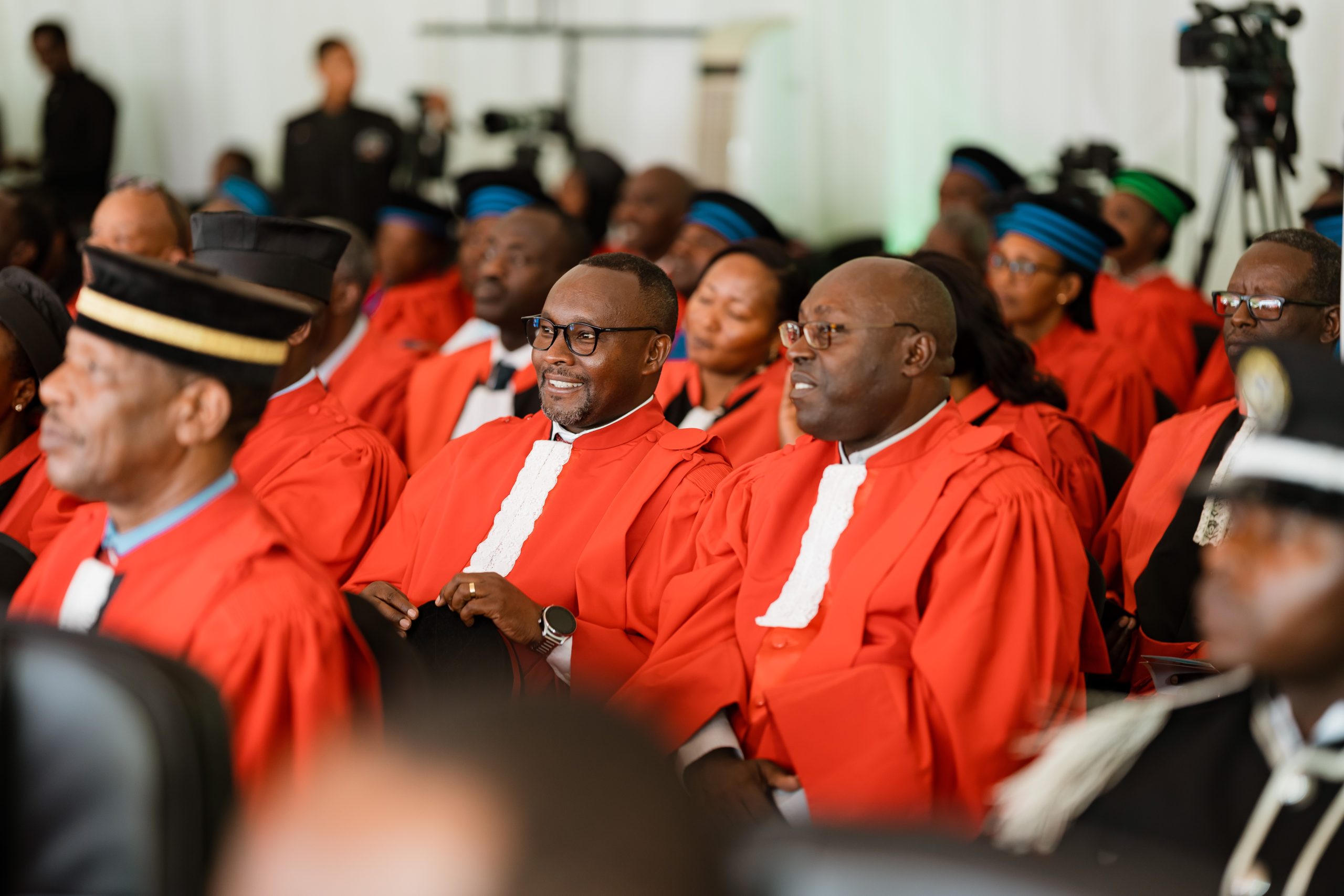
Rwanda’s judiciary has intensified its fight against corruption, sanctioning 13 judicial officials for corruption-related offenses in the 2024–2025 period.
According to figures released by the President of the Supreme Court, Hon. Domitilla Mukantaganzwa.
The disclosure was made on Monday as Hon. Mukantaganzwa officially launched the Judiciary Anti-Corruption Week, an annual initiative aimed at strengthening integrity, transparency, and accountability within the courts.
Beyond the most recent sanctions, the Chief Justice revealed that a total of 57 judicial employees have been dismissed over the past two decades from 2005 to 2025 after being found guilty of corruption.
The long-term data, she said, underscores both the persistence of the problem and the judiciary’s determination to confront it decisively.
“Any form of corruption within the judiciary directly undermines justice and erodes public trust,” Hon. Mukantaganzwa said.
“These actions demonstrate our unwavering commitment to ensuring that justice in Rwanda is delivered with integrity, fairness, and independence.”
She added.
A Strong Message to the System
The announcement sends a clear signal that corruption will not be tolerated at any level of Rwanda’s justice system.
Judicial officials entrusted with upholding the rule of law are expected to meet the highest ethical standards, and violations carry serious consequences, including dismissal and legal sanctions.
Observers note that by publicly releasing such figures, the judiciary is reinforcing a culture of transparency and self-accountability.
Rather than concealing internal challenges, the institution is openly acknowledging them while demonstrating corrective action.
Implications for Rwanda’s Judiciary
The sanctions highlight a broader reform agenda within Rwanda’s justice sector.
By enforcing strict disciplinary measures, the judiciary aims to safeguard its credibility and strengthen public confidence in the courts.
Trust in the justice system is widely regarded as essential for social stability, economic development, and the protection of citizens’ rights.
The Judiciary Anti-Corruption Week will feature awareness campaigns, internal reviews, and discussions with justice sector stakeholders, all focused on prevention, ethical conduct, and reporting mechanisms.
As Rwanda continues to position itself as a country governed by the rule of law, the latest figures serve as both a warning and a reassurance: corruption remains a challenge, but the judiciary is determined to confront it head-on and preserve the integrity of justice.
By Andrew Shyaka