




I’ve been thinking about that night. Not the food. Not the music. But the fire under the velvet.
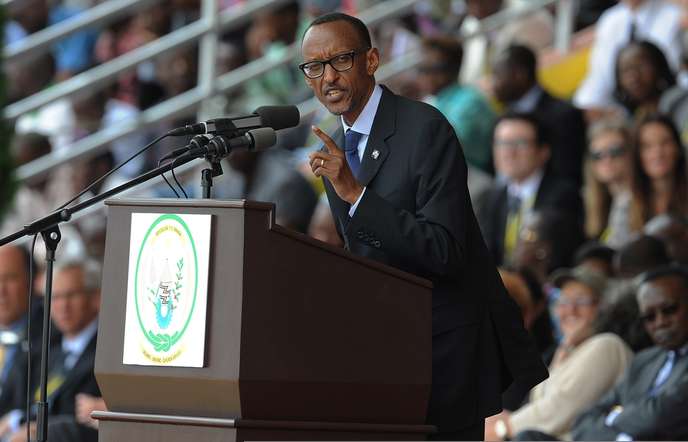
President Paul Kagame walked onto that stage at the Kigali Convention Centre not only to commemorate Rwanda’s liberation—but also to issue a warning.
A coded manifesto. A sovereign growl.
Since then, I’ve spoken with diplomats, politicians, and journalists—some of whom were present in that room.
One told me, “I wished for mild moments.”
Another said to me, “That speech was too packed; I’m still unpacking.” So am I.
And maybe that’s why this story must be told again—not for what was said, but for what was meant.
Because this wasn’t just a celebration. It was a doctrine wrapped in parable and provocation.
Kagame wasn’t thanking the world. He was reminding it that Rwanda will never be anyone’s cautionary tale again.
He didn’t waste time.
“We can walk 2,000 kilometers from here, fighting if and when we have to. The rest are just stories….”
No metaphor there. Just steel. That’s an Inkotanyi spirit. A clear enunciation of Rwanda’s military calculus: if there is a threat, Rwanda will reach it—and end it. “Urwanda ntiruterwa, ruratera!”
That line rested on something deeper—a vow that has become Rwanda’s generational compass:
“Once is too many. It will not happen again.”
Before that vow had settled, he took aim at the myth of military superiority—the fable that some hostile actors have the capacity to strike Kigali from a distance.
His response was cold and surgical:
“You used to hear people saying, they have power, they have capacity, they can even threaten this capital where all of us are now—from a distance. We told them—we may not have that capacity ourselves… we will find you there.”
This wasn’t bluff.
It was calibration. Capacity, Kagame hinted, isn’t always visible—but it’s always ready. “We have the capacity, he said. You don’t know.”
And in case anyone doubted who the message was for, they didn’t have to look far.
Ironically, one of the neighbor’s representatives—yes, from across the border—was in the room.
He clapped. Oblivious, it seemed.
Maybe the metaphor was too layered. Maybe the message went over his head. Or maybe some people have ears, but don’t hear.
Then came the confession that changed the air.
“We gave them passage. We gave them security. But they could have perished.”
That wasn’t poetic. It was precise. A reference to defeated forces caught red-handed with stockpiles in Goma and Bukavu—forces that, Kagame hinted, had once dreamt of “flattening Kigali.”
What was the meaning of that line?
Was it an admission of Rwandan deployment? Yes. And no. Go figure.
If you went to school, the answer is obvious. If you didn’t, this paragraph should be your tuition.
Kagame wasn’t done issuing warnings. He turned inward now—toward Africa and its own fearful, often indifferent posture.
“You fear death? But you’re already being killed—slowly and surely.”
A brutal line.
But it wasn’t just provocation. It was a call to courage.
A call to reject mental colonization, fear, and the erosion of dignity masquerading as stability.
And then he drove it home:
“I would rather go to my grave giving it a fight.”
In his worldview, death isn’t defeat. Surrender is. Some Africans, Kagame said, have accepted slow death. But Rwanda hasn’t. And won’t.
He turned his gaze toward the loud voices that frame Rwanda as the problem—while coddling the very actors who orchestrated its suffering.
“Sanctions for what? You are just foolish.”
That line burned. Not because it was rude, but because it was real. Unscathed. Undiplomatic.
And then came the sentence that stripped away diplomatic pretense: “You wag a finger at me? I will break it.”
I am telling you, this, no, it was unbearable. This kind of stuff is not for the typical African leader to say, but Kagame does, and he is largely understood. Many have now gotten used to him.
No interpretations needed.
The message is clear. Rwanda will not be patronized by those who watched it burn, only to return with conditional aid and moral lectures.
Perezida Kagame aruma ahuhaho.
He had receipts. He said , “Those who say they won’t give us their money—yes, it is your money. Give it to whoever you want.”
And then he twisted the knife—not in malice, but in honesty and integrity: “When it comes, I assure you, you won’t find a place that puts it to better use than we do.”
And if they don’t like the results? “I will tell you something you don’t want to hear.”
It was as if he was saying: “we’re not begging. We’re building.”
Then came a moment of solemn reflection—one that hovered somewhere between legacy and eternity.
Apparently he reckons of judgment day, for Christians if you may!
“When they (God) ask me what I did, I’ll say: “Sir, here is what I did.” I’ll apologize for my shortcomings, but I think largely there is something I’ll show for it.”
He wasn’t speaking to his base. He was speaking to his God. For those who believe in judgment day, Kagame says he will have something to show—his receipts in hand.
And then, the final gavel:
“We will find you there.” This is what has set the Congolese, the critics, the looters, all of them, into panic mode.
Not a metaphor. Not a flourish. A declaration.
Rwanda will not wait. It will act. Because once was too many—and twice will never be.
This wasn’t a dinner speech. It was a sermon of sovereignty. A mirror to hypocrisy. A fist in a velvet glove.
And here’s the thing: Kagame divides opinion. Always has. Always will.
Diplomats tried to unpack it. Critics cherry-picked soundbites and ran off to draft their conclusions.
Some praised. Some vilified. Some clapped loudly. Others ground their teeth—those who would rather sabotage than admit they heard the truth.
As one diplomat told me later, “Many don’t buy what he says.” Then paused. “But others strongly do—and admire him.”
That room was a microcosm of the world. But Kagame didn’t flinch.
He left it all on the floor—message delivered, line drawn, and no room for misinterpretation.
I, too, am still digesting more!