








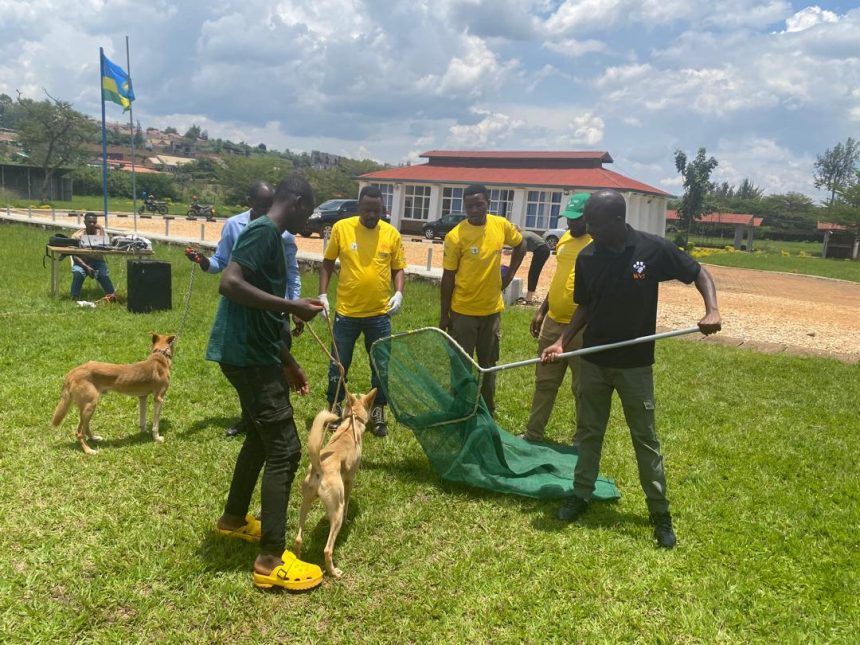
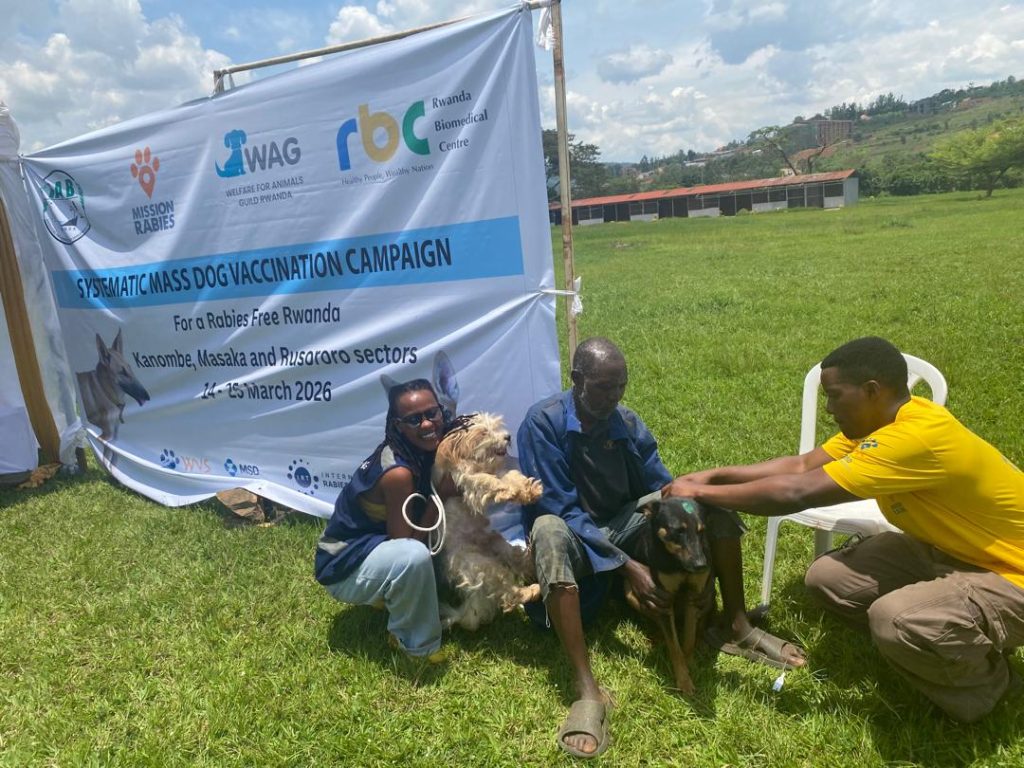
Rwanda has launched a major door-to-door campaign to vaccinate dogs and capture stray ones in a bid to eliminate rabies and join countries that have successfully achieved zero rabies, such as Germany.
The two-week rabies elimination campaign, which involves systematic vaccination of dogs, will take place in Kigali from March 14–25, 2026.
It is organized by the Rwanda Agriculture and Animal Resources Development Board (RAB) and the Rwanda Biomedical Centre (RBC) in collaboration with Welfare for Animals Guild Rwanda (WAG-Rwanda) and Mission Rabies.

The campaign follows statistics showing that in 2025, Rwanda recorded 3,227 dog-bite cases. Five cases were confirmed as rabies infections, including one death reported in Ngoma District.
According to Richard Nduwayezu, Head of Research and Partnerships at WAG-Rwanda, youth volunteers will work alongside veterinary professionals to carry out the exercise in key residential areas of Kanombe Sector, Masaka Sector and Rusororo Sector.

“This is a pilot campaign that will later be extended beyond Kigali, and its results will guide the next steps toward achieving zero rabies in Rwanda,” he said.
Each year, between 15,000 and 20,000 dogs are vaccinated in Rwanda.
Authorities say that data collected during the campaign will also help establish a national database of dog owners to improve vaccination coverage.
Dr. Samson Ntegeyirizaza, Head of the National Veterinary Diagnostic Laboratory in Rubirizi, said the door-to-door vaccination exercise will not only vaccinate dogs but also create a database of dog owners.

He called on the public to collaborate in order to help Rwanda achieve its goal of eliminating rabies, which is among the ten key Neglected Tropical Diseases (NTDs) the country aims to eliminate by 2030.
Meanwhile, Dr. Denyse Mugwaneza, a One Health specialist at RBC, emphasized the importance of prevention through vaccination.
“About 99 percent of rabies cases are fatal once symptoms appear. To meet the 2030 targets, we need responsible action toward animal welfare and prevention through vaccination,” she said.
Mugwaneza also noted the need to reduce the number of unmanaged dogs through responsible ownership rather than killing them.
“We want responsible dog ownership where animals are protected as part of the One Health approach. With more than 3,000 dog-bite cases recorded, there is also a need to raise awareness about rabies symptoms and the importance of seeking immediate medical attention,” she added.
Dr. Dagmar Mayer, Director of Operations at Mission Rabies Malawi, said her home country, Germany, eliminated rabies in the 1970s, making rabies-related deaths unimaginable there.
“Even if the number of global deaths is about 6,000 per year, no one should die of rabies. Mission Rabies works in countries such as India and Malawi, and some states in India are already rabies-free. In areas of Malawi where we operate, there have been no reported cases,” she said.
“It is a long journey, but with vaccination and responsible dog ownership, we can eliminate rabies. Rwanda has the potential to achieve this.”
Speaking during the pre-campaign launch, Dr. Richard Kubana, Director General in charge of Community Mobilisation and Youth Volunteers Coordination at the Ministry of Local Government Rwanda, said that the more than 3,000 reported dog-bite cases remain a major concern.

He noted that killing dogs is neither legal nor an effective solution, as it does not address the root causes of the problem.
“Through responsible dog ownership and the support of youth volunteers, we will use humane methods such as catching nets to manage stray dogs. If vaccination is free and communities cooperate, we can control rabies,” he said.
“If this was possible in Germany, then we in Rwanda can also achieve a rabies-free country.”