




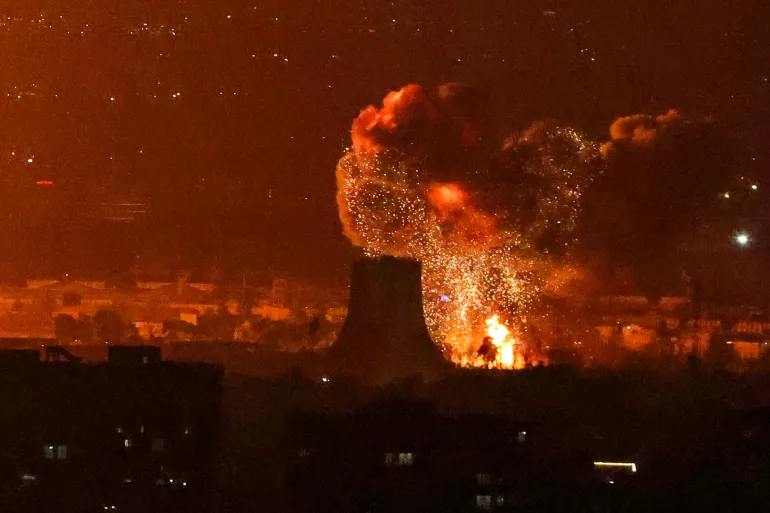
A war veteran told me on a one morning over coffee chat that war rarely ends where it begins. We were discussing the conflict in the Middle East and its implications. When the United States and Israel struck Iran, the explosions were thousands of kilometers away from Africa. Yet within hours the shockwaves were being felt in African markets, taxi conversations, WhatsApp groups, and evening debates outside neighborhood shops. My taxi driver glanced at his fuel gauge and shook his head. “Whenever America fights in the Middle East,” he told me, “we are the ones who pay for petrol.” Obviously he was partially correct. It was a familiar frustration. When shipping through the Strait of Hormuz was disrupted, through which roughly 20 percent of the world’s traded oil flows, global crude prices surged toward 120 dollars a barrel before retreating again after ceasefire announcements. For many African economies, that kind of volatility matters immediately. Countries such as Kenya, Rwanda, Ghana, and Senegal import most of their fuel. A spike in oil prices quickly feeds into transport fares, electricity costs, and food prices. In Nairobi’s Gikomba market, traders were already calculating what the war might mean for the price of maize flour and cooking oil. “It starts with oil,” one vendor explained. “Then everything becomes expensive.” But the conversations across Africa were not only about inflation. They were also about power, politics, and the familiar feeling that conflicts among global powers end up reshaping the lives of people far away. On university campuses in Johannesburg and Accra, students debated whether the strike that killed Iran’s long-time supreme leader, Ali Khamenei, would ever have been tolerated if it had happened in Europe or North America. Some pointed to how quickly Iran’s leadership reorganized, elevating Mojtaba Khamenei to replace his father, arguing that military pressure often hardens regimes rather than collapsing them. Meanwhile, the war was also becoming expensive for the countries fighting it. Early estimates suggest the United States spent several billion dollars in the opening weeks alone, largely on cruise missiles, precision-guided bombs, air operations, and naval deployments in the Persian Gulf. A single Tomahawk missile costs about 2 million dollars, and dozens were reportedly used in the first wave of strikes. Israel faced similar costs. Sustaining missile defense systems such as Iron Dome and Arrow interceptors, which can cost between 50,000 dollars and 3 million dollars per interception, quickly drains military budgets during sustained exchanges. But the economic shock traveled far beyond the battlefield. Insurance rates for shipping through the Gulf jumped dramatically, airlines rerouted flights to avoid the region, and global food and commodity markets reacted to rising energy costs. Then came the sudden shift. When U.S. President Donald Trump announced that the war could end soon, markets rallied almost immediately. Oil prices dropped sharply from nearly 119 dollars to around 90 dollars per barrel, and stock markets rebounded as investors bet that the Strait of Hormuz would reopen and energy supplies would stabilize. On African streets, however, the reaction was more cautious. In Kampala, an old friend told me he listened to the news on radio and was getting jittery. “Maybe the war is finished for them,” he said. “But the prices will stay with us.” That sentiment echoed across the continent. For many Africans, global conflicts often feel geographically distant but economically immediate. A missile strike in the Gulf can ripple through fuel imports, fertilizer prices, airline tickets, and the cost of running a small business. A refinery burns in Tehran, and a farmer in Tanzania pays more for fertilizer. A tanker cannot pass through the Strait of Hormuz, and a commuter in Accra pays more for the bus ride home. In minibuses in Nairobi, roadside tea stalls in Dakar, and markets in Kampala, the war quickly became more than a geopolitical headline. It became another reminder of how deeply connected the world’s crises have become, and how often their costs are felt first in the everyday economics of ordinary life.
When Washington Bombs Tehran Africa Pays the Price