







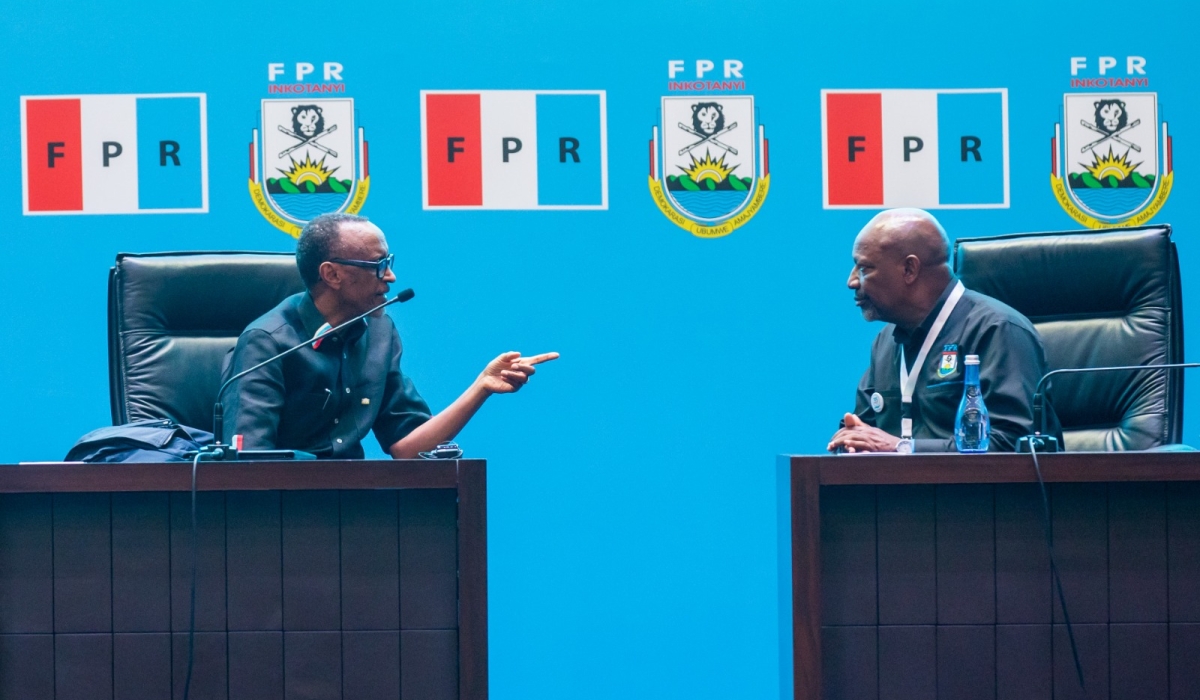
As the RPF Congress convenes today, Rwanda stands as a country that is orderly, stable, and internationally respected; but also one carrying quiet weight.
This stability did not come easily. It is the product of three decades of disciplined leadership, institutional rebuilding, security consolidation, and a clear national vision under the RPF. Many of these achievements—peace, safety, functioning institutions, gender inclusion, infrastructure, healthcare gains, and Rwanda’s restored dignity on the global stage—will rightly be raised by many during this Congress.
The elections of July last year resolved the political moment, yet they did not resolve the deeper anxieties people carry about the cost of living, access to opportunity, economic mobility, freedom to innovate, and what kind of country their children are inheriting. That is why, alongside celebrating progress, it is equally important to focus on the uncomfortable issues.
I am not inside the Congress hall.
I can’t participate directly in the conversations or inform other members what was discussed. The Congress has been decorated as a platform where those who are invited are seen as baptized loyalists, though at times this influence appears to be informally appropriated by a few for personal positioning. Not people who believe in critical thinking and choosing hard, unconventional ideas for the greater good. For five years now, I have not been invited to RPF events.
The last time I attended, I wrote stories about corruption and accountability—stories that reflected moments when President Kagame himself was furious and made hard decisions, including ordering the arrest of ministers. Those stories unsettled gatekeepers who prefer comfort to truth, and the doors closed.
But this is a different era.
Like millions of Rwandans, I follow the Congress on television. I listen. I speak to people inside. I participate through platforms that cannot be closed by invitations. I write this not out of bitterness, but out of duty. Rwanda matters. And silence has never built a nation. The RPF itself was built by those who spoke when silence was easier.
I have decided to participate via my platform. And here is what I think should not be ignored in discussions.
Everyone in the Congress, pick what you think makes sense and ignore what doesn’t.
1. Unity and the Fight Against Genocide Ideology: The Core of the RPF’s Political DNA
Unity is not just a policy choice for the RPF; it is its founding doctrine. It is the party’s political dogma, born from the understanding that Rwanda does not collapse because of poverty or lack of intelligence, but because of manufactured division. The RPF was created to end that cycle permanently. Fighting genocide ideology, therefore, is not an administrative task—it is the ideological backbone of the movement.
Genocide ideology did not end in 1994. It adapted. Today, it no longer wears uniforms or marches openly. It hides in academic language, in “balanced” narratives, in selective history, in social media fragments, and in regional and international discourse that deliberately blurs responsibility. It survives because it is repackaged as analysis, opinion, or free expression—while its intent remains destruction through division.
Our enemies understand this very well. They have deliberately forged alliances with genocide deniers, with the sons and daughters of perpetrators, and with political and intellectual networks that resent Rwanda’s post-genocide reconstruction. This marriage is not accidental; it is strategic. It provides manpower, moral cover, and local credibility to a broader regional and international agenda aimed at weakening Rwanda from within.
Neocolonialism feeds on this divisionism. A united Rwanda is difficult to control. A divided Rwanda is manageable, predictable, and exploitable. By amplifying denial, questioning historical truth, and attacking the legitimacy of Rwanda’s political order, these forces seek not immediate collapse, but gradual engulfment—political, moral, and economic suffocation disguised as “engagement” and “reform.”
This is why unity cannot be treated as a ceremonial slogan or an annual commemoration. It must be defended daily, aggressively, and intelligently. And in the modern era, that defense depends heavily on information systems. Weak media, restricted access to information, and fear of open explanation create fertile ground for manipulation. When truth moves slowly and lies move fast, ideology wins by default.
The fight against genocide ideology must therefore be total—embedded in education, media, diplomacy, security policy, and political communication. Silence is not neutrality. It is surrender. A state that does not explain itself leaves space for its enemies to define it.
If Rwanda underestimates this moment—if it allows denial, ambiguity, and intellectual laziness to grow—it risks being slowly surrounded, not by armies, but by narratives. And history has already taught us where that road leads. Unity is not optional. It is survival.
2. Security Is Essential — But Permanent Alert Is Expensive
Rwanda’s security is justified by history and geography, but constant alert drains resources, scares investors, and turns diplomacy into defense, not strategy. Reactive posture consumes attention, overwhelms progress, and slows innovation.
The RPF’s liberation doctrine reminds us: persuasion and coalition-building come first; confrontation is the last resort. Today, this means cultivating strong relationships with neighbors, encouraging them to fix internal problems that spill over, rather than using muscle and creating bigger risks. We cannot continuously be seen as the antagonistic people—it is draining the nation and the citizens. Inability to settle differences amicably is failure. Let’s not mask it by playing victim or pretending to be the innocent kids in the neighborhood. We must engage our neighbors head-on, send emissaries, and pursue peaceful solutions, because war is costly, dangerous, and exhausting.
Proactive neighborhood-building, strategic dialogue, and economic interdependence reduce threats before they reach our borders. Vigilance is necessary, but strategy wins. True security is not surviving threats—it is shaping a region where threats are less likely to materialize, while freeing resources for development and national growth. We are among the poorest countries in the world, for Christ’s sake. We must adjust our priorities and approaches or else we die poor and fighting. Peace with our neighbors shouldn’t elude us. The price is too big to pay.
3. Governance Requires Listening, Explanation, and Respect for Citizens
Listening is not weakness; it is intelligence. Citizens often face policies that deeply affect their lives—policies that are imposed without explanation, consultation, or rationale. Take the night economy closures: a policy with huge economic and social impact, yet never explained to the public. People lose income, jobs, and opportunities, yet the government provides no dialogue, justification, or roadmap for compliance.
Similarly, authorities demolish buildings in which citizens have invested hard-earned money, delay permits and licenses for months, close businesses arbitrarily, or impose excessive penalties. Some interventions are militarized—officials showing up at businesses with AK-47s—sending fear instead of guidance. These actions discourage initiative, stifle entrepreneurship, and erode trust between citizens and the state.
When leaders rely on gatekeepers to filter what reaches them, or enforce policy without explanation, small problems grow unseen until they become crises. True governance is not control for control’s sake. It is explaining, consulting, educating, and enforcing intelligently. It requires respecting citizens as partners in nation-building, not obstacles to be coerced. Policies that punish before they are understood are not discipline—they are a dangerous form of governance that undermines stability, growth, and national confidence.
4. Rwanda’s Image Abroad vs. Energy at Home
Rwanda’s image abroad is strong—“Visit Rwanda” is a powerful global brand—but at home, the story feels flat, controlled, and cautious. We are good—but boring. The country cannot be a destination for billionaires alone; it must feel alive, open, and confident for ordinary investors, creators, and risk-takers. Capital follows clarity—but it also follows energy. Without vibrancy at home, the global image risks becoming hollow, and the promise of “Rwanda, the land of opportunity” rings incomplete.
Events and conferences, under initiatives like MICE (Meetings, Incentives, Conferences, Exhibitions), are excellent sources of revenue and international visibility. But local organizers often struggle under suffocating regulation, excessive permits, and bureaucratic red tape. Rwanda should avoid chaos—but being over-controlled and policing every activity turns the city into a dull environment, discouraging innovation, investment, and creativity.
5. Media as a Public Good and National Defense
Telling Rwanda’s story is not mere marketing—it is national defense. Hostile narratives, genocide denial, and regional propaganda are organized, funded, and persistent. Without strong, credible media, citizens cannot counter lies, correct misinformation, or explain themselves effectively. Silence is not dignity—it is vulnerability.
Media is a public good, like health or security. It informs citizens, explains policies, tracks economic performance, and provides responsible content. Yet mainstream media has been weakened, leaving a vacuum filled by anyone with a camera and internet access. The population now consumes junk content—derogatory, sensational, and often harmful material. The consequences are already visible and risk long-term damage.
Rwanda needs a vibrant domestic media ecosystem that educates, informs, and entertains responsibly. Freedom without quality and support is like breeding a dog to guard your farm while starving it—it cannot perform its duty. Strong media is essential for defending truth, cultivating national pride, guiding citizens, and supporting sustainable economic growth.
6. Youth Patience Is Not Infinite
Rwandan youth have shown remarkable patience. Over the years, they have complied with societal expectations, adapted to limited opportunities, and waited quietly while the nation rebuilt itself. But patience without opportunity is not limitless; it slowly transforms into frustration, resentment, and disengagement.
Many graduates are forced into survival strategies. They drive motos, take on precarious short-term hustles, or work online in legal and economic uncertainty. This is not laziness—it is the product of blocked pathways. When young people cannot access meaningful employment, entrepreneurship, or skills development, they become vulnerable to misinformation, crime, extremism, and even the insidious influence of genocide ideology, which thrives in idle and frustrated populations.
Industrial training (stage) must therefore be enforced and standardized across every company and parastatal operating in Rwanda. No institution should benefit from the system without contributing to skills transfer. Mandatory, structured industrial training would bridge the gap between education and employment, expose young people to real work environments, and convert theory into competence.
Employment is not charity—it is social armor. It protects youth from exploitation, radicalization, and societal disengagement. Providing real opportunities is essential not only for the individual’s welfare but for the nation’s stability, cohesion, and future growth. A country that fails to harness the energy, skills, and creativity of its youth risks squandering the very generation that can drive innovation, economic transformation, and social resilience.
7. Education Is Producing Certificates, Not Competence
We celebrate enrolment and graduation numbers, but rarely measure outcomes. Employers quietly complain, families feel cheated, and students leave school unable to meet the demands of the modern economy. Too many graduates struggle to write clearly, reason critically, or apply knowledge practically. Teachers are overstretched, curricula are outdated, and practical skills are weak. The system produces credentials, but not capability.
This mismatch has serious consequences. It directly contributes to unemployment: graduates holding certificates without skills cannot compete for quality jobs, and many are forced into informal, precarious, or short-term work. Idle or underemployed youth are more vulnerable to misinformation, crime, extremism, and even the lingering influence of genocide ideology. In short, weak education amplifies social instability and creates security risks.
A country that produces substandard graduates below global standards mortgages its competitive advantage. Nations thrive when their people can innovate, solve problems, and engage globally. Producing certificates without competence undermines Rwanda’s ability to attract investment, expand industries, and participate meaningfully in the global economy. Education must be about skills, creativity, and application—not just numbers on a graduation report. It is the foundation of both national security and long-term prosperity.
8. Banks Are Too Rigid — Who Will Finance Vision 2050?
No one is asking banks to gamble with deposits. But Rwanda has confused caution with paralysis. Banks hold enormous deposits while productive businesses—those capable of creating jobs, driving innovation, and contributing to Vision 2050—struggle to access capital. Viable enterprises are frequently rejected because they lack textbook collateral, not because they lack potential or business acumen. This rigidity stifles entrepreneurship, slows economic growth, and narrows opportunities for meaningful investment. Vision 2050 cannot be financed by fear. If regulation prevents banks from supporting national development, the problem lies with the system—not the entrepreneurs.
Rwanda’s stock exchange is a modern, well-designed, and globally equipped market, capable of supporting sophisticated capital-raising, governance, and investment practices. Yet it remains underutilized. Only a handful of local companies have listed, including some with enormous growth potential. Listing publicly does more than raise capital: it enforces transparency, improves corporate governance, spreads ownership, and reduces reliance on bank debt. Underutilization of this platform narrows growth, confines opportunity to a small elite, and limits Rwanda’s ability to attract long-term, diversified investment.
To finance Vision 2050, Rwanda must reform banking rigidity and fully leverage its capital markets. These are not optional reforms—they are essential steps to unlock the nation’s economic potential, create jobs, and sustain broad-based, inclusive development.
9. Digital Economy, Forex, and the Danger of Overreach
The global economy is digital, fast, and borderless—over 9 trillion dollars are traded daily in forex alone. In Kenya, Mauritius, the UK, China, Singapore, South Africa—everywhere—they are trading, enriching themselves. Rwanda is being left behind. Instead of integrating and regulating these markets, the state has often responded with fear, treating forex trading, cryptocurrencies, and online income streams as criminal activities. Livelihoods are criminalized. People are imprisoned for participating in global markets the state has refused to structure. Many have been jailed under the label of “Ponzi schemes.” Yes, scams exist—but they are fundamentally different from legitimate forex, crypto, or bitcoin trading. Are we suggesting that Rwanda is wiser than the rest of the world by banning lawful participation while millions globally thrive under regulation?
Blocking these markets does not eliminate them; it pushes them underground, leaving citizens exposed to risk without protection. Rwanda must avoid oversight that punishes innovation and survival. Instead, the state should regulate responsibly, educate citizens, and provide safe channels for participation. Doing so protects livelihoods, strengthens the economy, and ensures the country does not miss out on the fastest-growing sectors of the global digital economy. RPF commissioners should not leave the Arena before they resolve this matter.
10. Agriculture Cannot Be Left to Individuals Alone
Agriculture is strategic. It is the backbone of national survival, economic growth, and long-term resilience. The burden of production—including inputs, irrigation, extension services, soil protection, storage, processing, and market access—rests primarily with the state. Farmers and citizens play their role, but expecting them alone to secure the nation’s food and economic future is unrealistic.
Producing just enough to eat while degrading the land is not success. Rwanda must go beyond subsistence: we must produce surplus for processing, export, and foreign exchange. The state has secured markets in the Middle East and West Africa, but we have failed to serve them effectively. Our economy is missing out on huge opportunities to generate revenue, create jobs, and strengthen trade relations. Subsistence feeds today, but surplus—and a strategically managed agricultural sector—secures tomorrow.
The state’s role is not charity; it is stewardship. By investing in modern techniques, extension services, storage facilities, and efficient market linkages, Rwanda can transform agriculture into a competitive, sustainable, and export-oriented sector, securing livelihoods, national stability, and economic growth for the long term.
Let me close. Indeed, many positive achievements of the RPF’s leadership will be raised during this Congress, and rightly so. This contribution deliberately focuses on the uncomfortable issues because strong movements do not weaken by self-examination—they are strengthened by it. Rwanda has endured pain and pressure, yet it stands firm. That endurance reflects the resilience of the RPF and the steadfast leadership of President Paul Kagame. There is room to improve, and there is capacity to do so. The future remains open. And for how far this country has come, there is reason for hope—and genuine gratitude.