








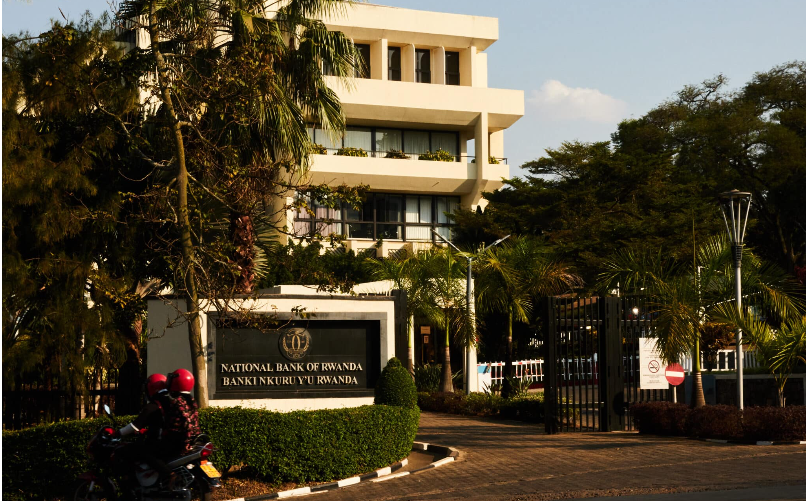
Iradukunda Joy, the Director of Monetary Policy Analysis at the National Bank of Rwanda (BNR), has announced that the central bank’s latest assessment shows a decline in the interest rates charged by commercial banks on loans during the third quarter of 2025.
She shared this update while appearing on Rwanda Television (RTV) earlier today, explaining that the findings are part of BNR’s routine analysis of monetary and financial sector performance.
According to Iradukunda, the moderation in lending rates reflects improved financial conditions in the banking sector and the central bank’s consistent efforts to support a stable economic environment.
This development follows BNR’s decision to maintain its key policy rate at 6.75%, a stance the Monetary Policy Committee upheld in its most recent meeting.
The decision aims to stabilize the monetary environment, help anchor inflation expectations, and support affordable access to credit for households and businesses.
By keeping the benchmark rate unchanged, BNR created favorable conditions that encouraged commercial banks to lower the cost of borrowing.
This has provided welcome relief for individuals seeking personal loans, entrepreneurs expanding their businesses, and companies financing new projects.
Lower lending rates are expected to stimulate investment activity, strengthen private-sector growth, and help sustain the country’s economic momentum in the months ahead.
Iradukunda emphasized that BNR will continue closely monitoring economic developments—such as inflation trends, liquidity conditions, and the performance of the global economy—to ensure monetary policy decisions remain supportive of Rwanda’s broader development goals.
She noted that maintaining a balanced monetary stance is essential in safeguarding stability while allowing room for continued credit growth.
As Rwanda enters the final quarter of 2025, analysts believe that sustained moderation in borrowing costs could encourage more private investment, enhance financial inclusion, and reinforce confidence in the banking sector.
The central bank is expected to provide additional updates in its next monetary policy briefing.