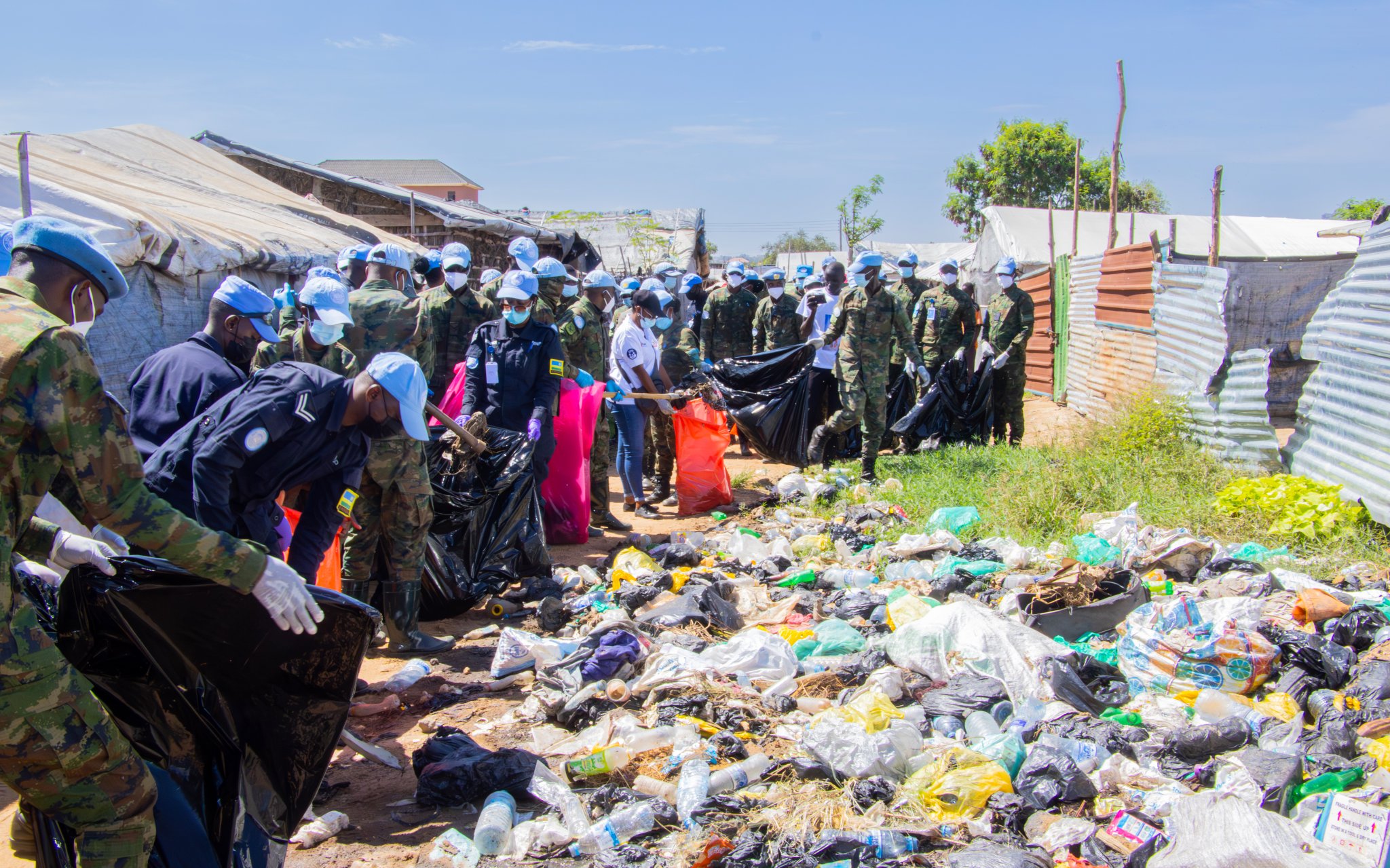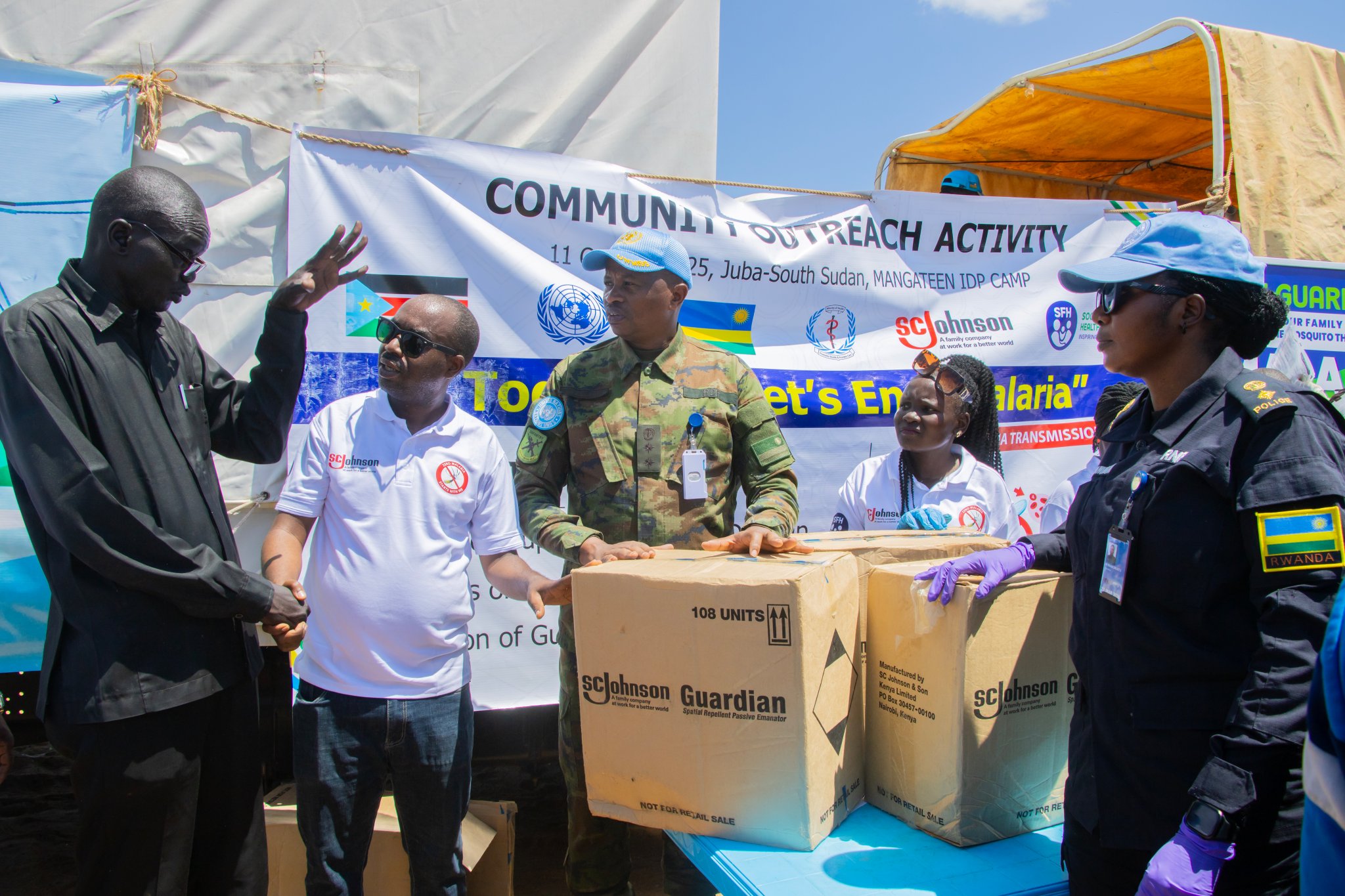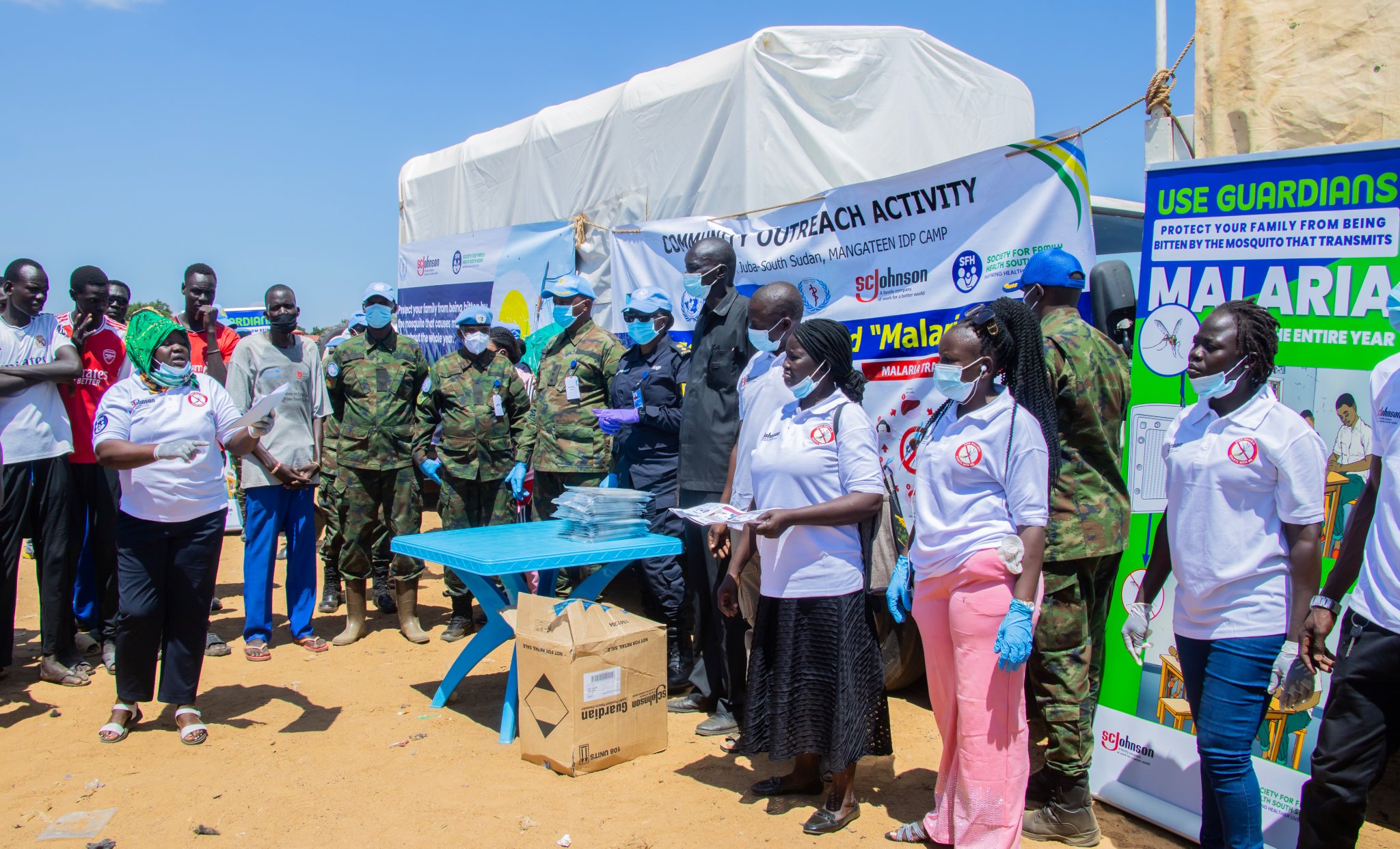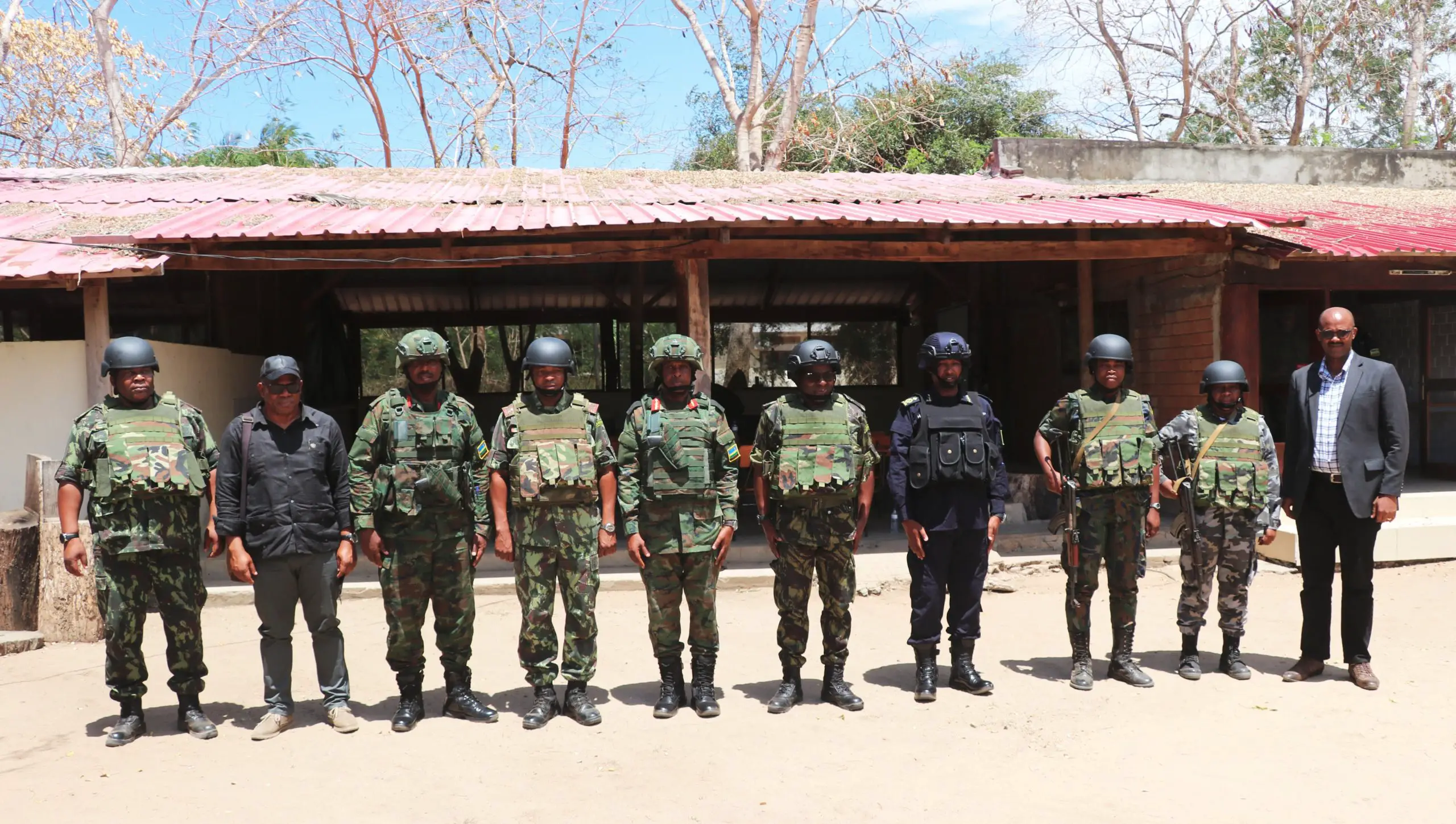




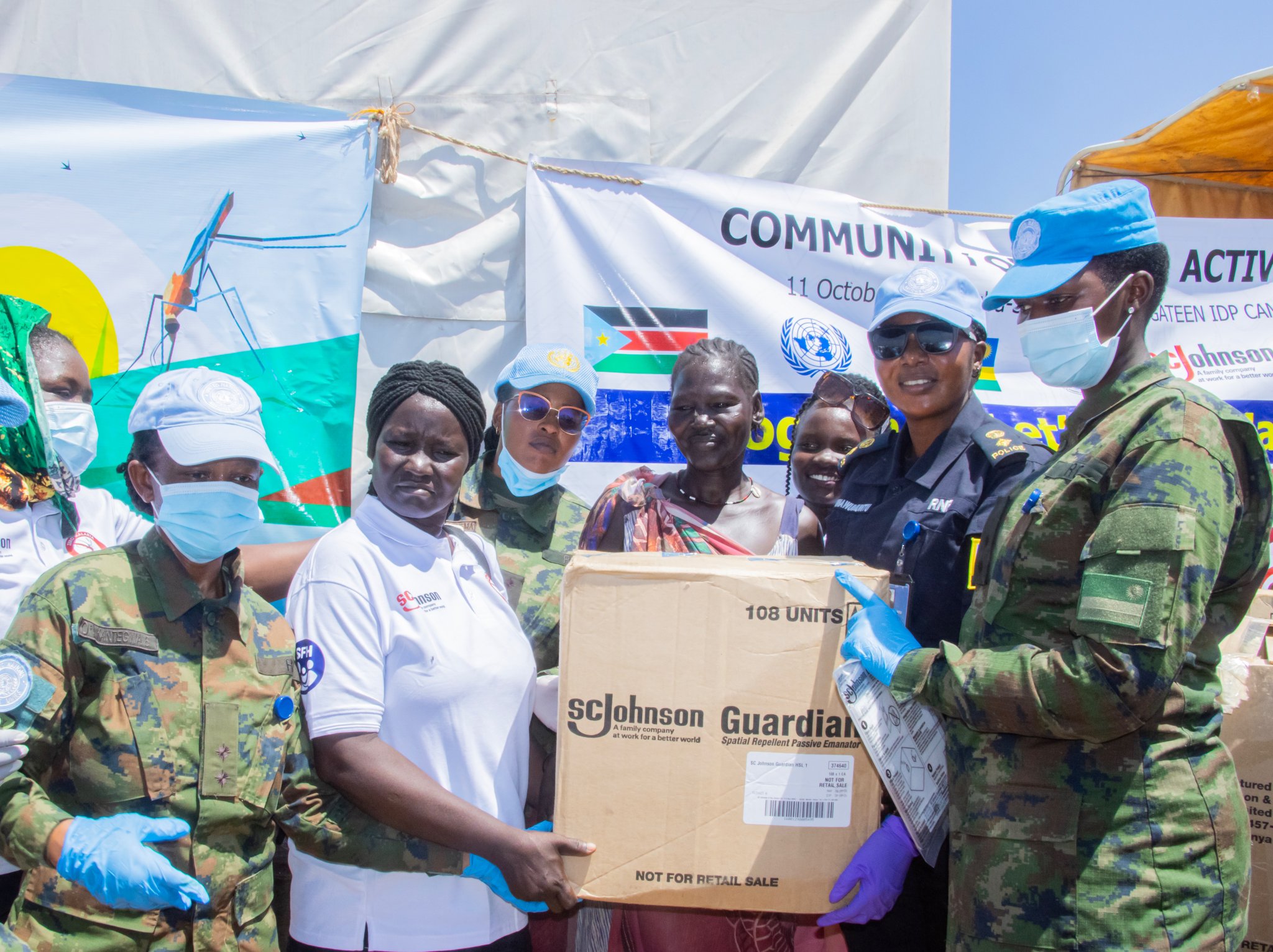
Rwanda Defence Force (RDF) and Rwanda National Police officers serving in the United Nations Mission in South Sudan (UNMISS) have launched an anti-malaria campaign to protect residents of Mangateen refugee camp near Juba.
The initiative aims to eliminate mosquito breeding sites and reduce malaria infections, which remain a leading health threat in the region.
South Sudan’s warm climate and limited rainfall create ideal conditions for mosquito proliferation. Pregnant women and children are the most affected, with malaria continuing to claim thousands of lives each year.
Rwandan peacekeepers, working closely with local authorities, camp management, and the Society for Family Health (SHF), have been clearing stagnant water, cutting overgrown grass, and removing waste where mosquitoes breed. They have also distributed mosquito repellents and insecticides to the camp’s residents.
Colonel Léodomir Uwizeyimana, commander of the Rwandan contingent under UNMISS, praised the collaboration between the peacekeepers and the community.
He urged residents to continue maintaining clean surroundings even after the campaign. “If we leave and you do not continue the efforts, the mosquitoes will return; our work will have been in vain,” he said.
Simon Khan Lok, the camp manager, echoed his message, urging residents to take responsibility for their own health. “Life belongs to you; when you fall ill with malaria, no one else loses sleep over it,” he told them.
The Mangateen camp, located near Juba, has been one of the hardest-hit areas by malaria outbreaks. According to the World Health Organization (WHO), South Sudan recorded more than 3.6 million malaria cases in 2022; the number rose to 3.8 million in 2023, and a similar figure was reported in 2024.
WHO data shows that malaria accounts for 66.8 percent of all hospital visits in the country.
Children between six months and five years are the most vulnerable; if untreated, the disease causes stunted growth and lifelong health complications.
In 2017, 32 percent of South Sudanese children suffered from malaria; by 2023, that figure had risen to 52.6 percent.
South Sudan has struggled to maintain stability since gaining independence in 2011. A civil war erupted in 2013 between President Salva Kiir and his then deputy, Riek Machar, dividing the country along ethnic lines. The prolonged insecurity has prevented the government from implementing long-term health and development strategies.
Through initiatives like the one led by Rwandan peacekeepers, international efforts continue to provide essential humanitarian support to vulnerable South Sudanese communities. Their work not only promotes health and safety but also strengthens peacebuilding efforts in one of Africa’s youngest and most fragile nations.