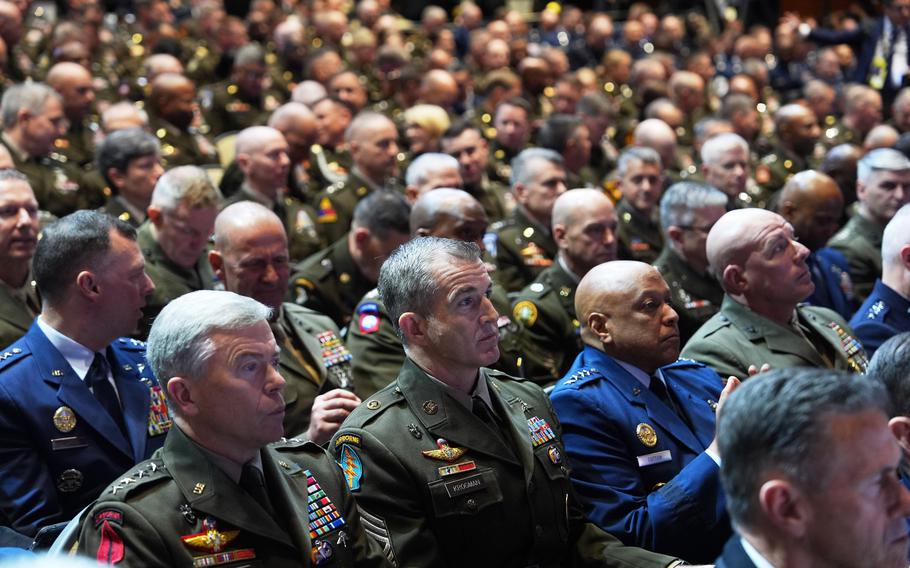








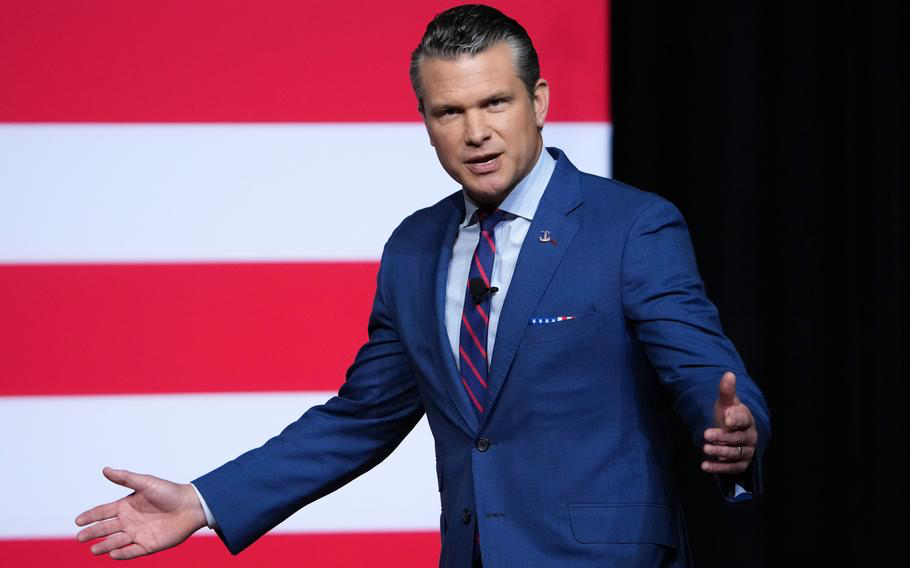
Silence filled the hall at Quantico, Virginia, as Defense Secretary Pete Hegseth addressed hundreds of the nation’s highest-ranking generals and admirals.
The officers, many battle-hardened veterans of Iraq, Afghanistan, and other conflict zones, had been summoned from posts around the world on short notice for what Hegseth called a “restoration” of American military might.
Clutching a cup of coffee, Hegseth paced the stage, walking awkwardly at times, hands in pockets, swiveling toward different sections of the stage.
The posture seemed almost casual, yet the intensity of his words cut through the room. “Those who long for peace must prepare for war,” he reminded the audience, punctuating it with a sip from his cup.
“If you don’t want to shave, join special forces.” Laughter mixed with nervous shuffling as officers digested the unusual combination of caffeine, pacing, and sharp rhetoric.
The speech was framed against the backdrop of China’s recent military showcase. Hypersonic missiles, aircraft carriers, and advanced drones had stunned the world and sent shockwaves through military planners globally. Hegseth warned that America must match—and surpass—these capabilities. “Enemies gather, threats grow. There is no time for games,” he said, signaling an aggressive posture that critics have called war-mongering.
Trump’s name appeared repeatedly throughout the address. “President Trump has your back. He built the strongest, most lethal military on the planet. Nobody can touch us. It’s not even close.” Yet Hegseth dismissed previous administrations as responsible for a “woke department” that eroded combat readiness.
Analysts quickly noted the contradiction: while Trump deserves credit, the Secretary ignored decades of prior investment and leadership that built the military he now claims is unmatched.
Hegseth’s directives were sweeping.
Physical fitness would follow male combat standards. Grooming rules would be enforced. Officers failing standards would be removed. Humor mixed with discipline: he mocked unfit officers as “fat generals” and referenced “dudes in dresses.” The audience absorbed it all in silence, the combination of coffee-sipping and pacing creating a surreal, almost theatrical tension.
Observers noted his speech blurred the line between military professionalism and political theater. Michael Steele, co-host of The Weeknight, called the address “dangerous” and “conduct unbecoming a former Army National Guard major.”
He described it as part political rally, part Friars Club roast, and criticized Hegseth for disparaging troops while appearing to endorse hazing and male-only fitness standards.
Former lawmakers and military analysts were equally critical. They said the speech undermined civilian control and professional norms, reduced decades of DEI progress, and could discourage women and minorities from pursuing critical military roles.
Some called it a “waste of time and money,” distracting officers from their mission of defending the nation.
Yet, Hegseth remained unapologetic. “We fight to win, not to defend,” he said. “We unleash overwhelming and punishing violence on the enemy. No more politically correct rules of engagement. Just common sense, maximum lethality, and authority for war fighters.”
He framed the military as a tool of national pride and discipline, repeatedly contrasting it with “stupid” rules, climate initiatives, and social justice programs.
Critics also flagged Trump’s presence at the speech as reinforcing political messaging. While Hegseth dismissed past administrations as incompetent, he repeatedly praised Trump for building the “strongest military,” a contradiction that undercut his own argument and drew accusations of overtly partisan rhetoric from both domestic and international observers.
The world watched. Military experts, analysts, and the public debated whether the speech signaled a return to disciplined strength or an alarming embrace of political posturing and war-mongering.
Some pointed to Hegseth’s comments on deploying troops domestically, noting that Trump expressed interest in sending forces to American cities like Portland as “training grounds.”
Hegseth concluded with a message of loyalty, discipline, and lethality. “If you can’t meet standards, you are out,” he warned.
The audience left with a stark understanding: the War Department is back. But whether this shift represents renewed readiness or reckless posturing remains a subject of global debate.
Even the sip of coffee, the casual walk across the stage, and the informal posture will be remembered as part of a moment that has been watched worldwide, sparking conversations about military professionalism, leadership, and the role of politics in the armed forces.