






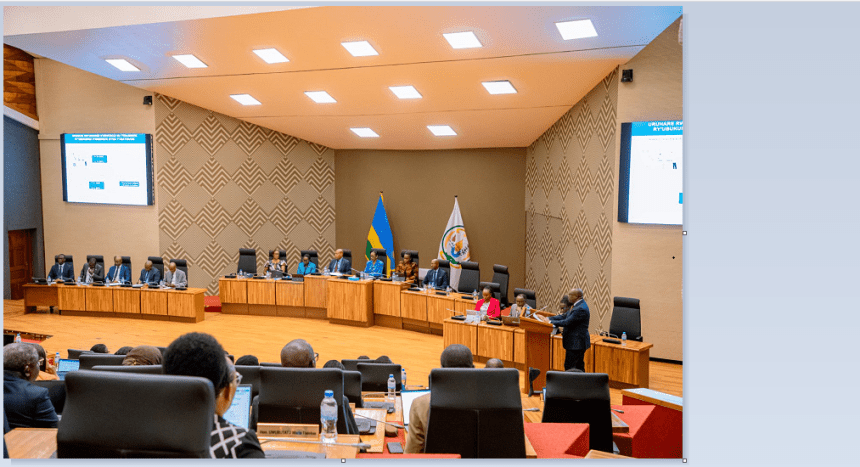
Prime Minister Dr. Justin Nsengiyumva has told members of both chambers of Parliament that agriculture and livestock remain central to Rwanda’s economy, contributing nearly half of the country’s exports and employing the majority of citizens.
Presenting an update on the sector’s progress, Dr. Nsengiyumva said agriculture accounts for about 25% of Rwanda’s Gross Domestic Product (GDP) annually.
While this share is expected to gradually decline as industry and services expand, he stressed that agriculture will continue to play a vital role in ensuring food security and improving livelihoods.
“The goal is to achieve full food self-sufficiency by 2029, up from 79.6% in 2024,” he said.
According to the Prime Minister, about 70% of Rwandans depend on agriculture and livestock, with the sector providing 40% of all jobs nationwide and up to 55% in rural areas.
In cities, agriculture contributes around 12% of employment. The number of people farming for markets has also grown, from 41.7% in 2017 to 48% in 2024.
To support this growth, government has significantly increased budget allocations to the sector.
The agriculture budget rose from Rwf 128 billion in 2017 to Rwf 225 billion in the 2025/26 fiscal year — a 75% increase over eight years.
The sector is also a key source of foreign exchange. Nearly half of Rwanda’s exports come from agriculture and livestock products such as coffee, tea, fruits, vegetables, and flowers.
Export earnings grew from $287 million in 2017 to $544 million in 2024, and are projected to surpass $1.5 billion in the coming years.
Agriculture also supports the growth of local industries, supplying raw materials such as cereals, fruits, and livestock products.
Employment in agro-processing industries rose from 52,700 workers in 2017 to 84,300 in 2024.
The Prime Minister said agriculture has been crucial in fighting poverty.
Rwanda’s poverty rate dropped from 39.8% in 2017 to 27.4% in 2024, with 1.5 million people lifted out of poverty during that period.
“While progress has been made, especially in reducing poverty and improving nutrition, there is still much to do to build a resilient and modern agricultural sector,” Dr. Nsengiyumva told lawmakers.