








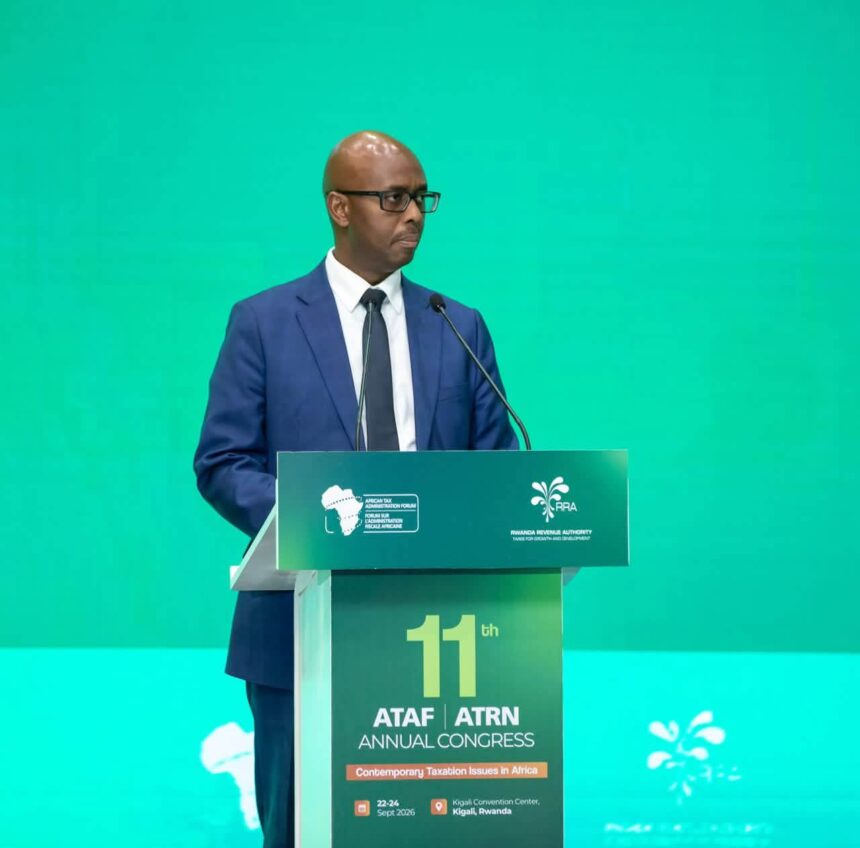
Research will play a critical role in helping Rwanda refine its tax system, improve revenue mobilisation and ensure that taxation does not place disproportionate pressure on small businesses, Rwanda Revenue Authority (RRA) leadership has said.
Speaking to Taarifa during the 11th African Tax Research Network (ATRN) Congress in Kigali, the RRA boss said evidence-based research allows policymakers and tax administrators to assess whether existing tax measures are delivering the intended results while identifying areas that require adjustment.
“Through research in taxation, this helps us to see, are we doing well?” the RRA boss said, highlighting the importance of examining Rwanda’s tax policies alongside experiences from other countries.
The three-day ATRN Congress, taking place in Kigali from September 22–24, 2026, brings together researchers, policymakers, tax administrators and development partners to examine contemporary taxation challenges and ways of strengthening domestic revenue mobilisation.
The 2026 congress received 190 research paper submissions, up from 120 in 2024, representing a 60% increase.
Balancing taxation and business growth
The RRA leadership said research is particularly important in determining how taxation can generate public revenue while allowing businesses—especially smaller enterprises to grow.
Rwanda’s tax framework provides different regimes depending on the size and circumstances of businesses.
For example, small enterprises with annual turnover between Frw12 million and Frw20 million can fall under a lump-sum regime in which they pay 3% of annual turnover, while businesses can also opt for taxation based on actual profits under specified conditions.
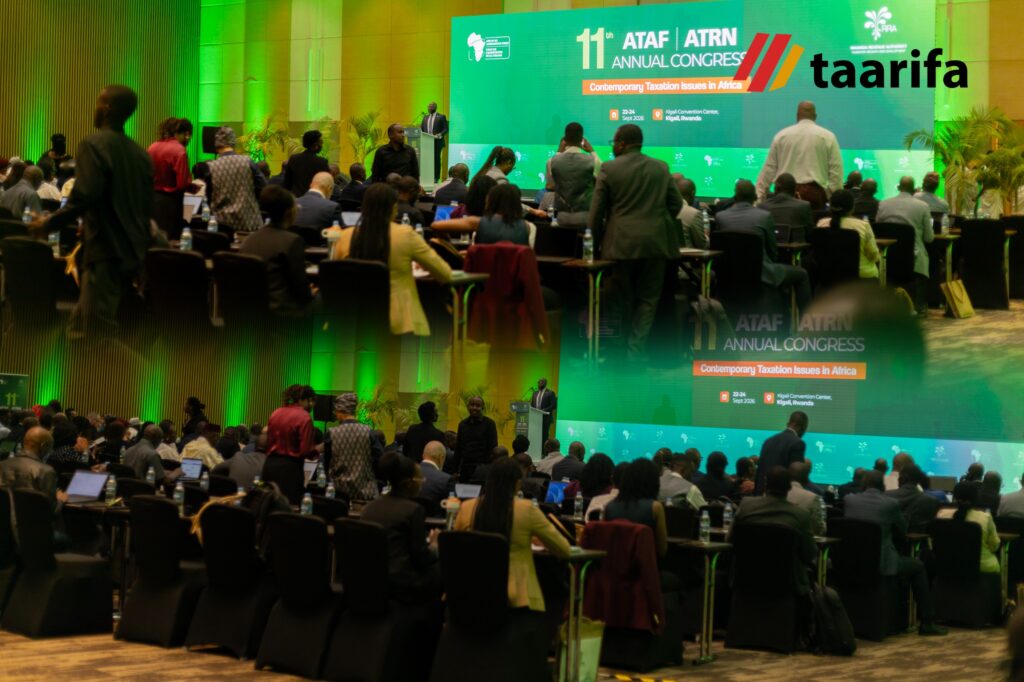
The RRA boss said such differentiated treatment reflects efforts to make taxation more proportionate, noting that smaller businesses have tax arrangements and support measures that are not necessarily available to larger enterprises.
“We have a tax system where small businesses pay less, big businesses pay more according to their incomes. There are incentives to give. Small businesses have [benefits] that big businesses don’t have, and many things have been done to make sure that taxation is fair.”
The emphasis on research comes as Rwanda seeks to broaden its tax base and increase domestic revenue while maintaining an environment where businesses can formalise, survive and expand.
Research published by RRA has previously examined the impact of simplified tax regimes on small and medium-sized enterprises. One study using RRA tax-declaration data from 2011 to 2023 found that simplified regimes, including flat-amount and lump-sum arrangements, improved accessibility and compliance among SMEs.
Research to guide Rwanda’s tax reforms
The RRA boss said Rwanda can also learn from tax systems implemented elsewhere, but research is necessary to determine which approaches are suitable for the country’s economic circumstances.
Rather than simply adopting models from other countries, evidence can help Rwanda assess the impact of different tax policies on businesses, consumers, investment and government revenues.
RRA has increasingly developed its own research programme, covering issues including tax compliance, audits, technology, electronic services and the digital economy. Its research portfolio includes studies on tax arrears, electronic billing machine adoption, tax audits and the impact of digitalisation on compliance.
The authority is also preparing its 4th Annual RRA Research Day, with the 2027 edition focusing on “Advancing Domestic Revenue Mobilization and National Development through Fair and Effective Taxation.” The research themes include tax policy design for equity and growth, broadening the tax base, integrating the informal sector and digitalisation of tax administration.
Linking taxation, trade and African integration
Professor Annet Oguttu, chairperson of ATRN, speaking separately to Taarifa, said research should also contribute to deeper integration of taxation and trade across Africa.
He stressed the importance of African countries generating knowledge that responds to their own economic and social realities, particularly as countries seek to modernise their economies and strengthen regional trade.
The issue is closely connected to the broader African integration agenda. The ATRN Congress is examining issues including regional tax harmonisation, trade policy and domestic resource mobilisation under the African Continental Free Trade Area, alongside digitalisation, artificial intelligence, international taxation and illicit financial flows.
The growing number of research submissions to this year’s congress reflects increasing interest in African-led evidence to address the continent’s tax challenges. ATAF said the ATRN was established to strengthen Africa’s capacity for credible research in tax policy, administration, law and leadership and to promote research that can inform tax policy and administration.
For Rwanda, the research agenda offers an opportunity to continuously test the effectiveness of its tax policies while balancing two objectives: raising sufficient domestic revenue to finance development and ensuring that taxation remains manageable for businesses at different stages of growth.
The RRA leadership’s message at the Kigali forum was therefore that taxation should not be viewed only through the amount of revenue collected, but also through evidence of how tax policies affect businesses, compliance and the wider economy.