





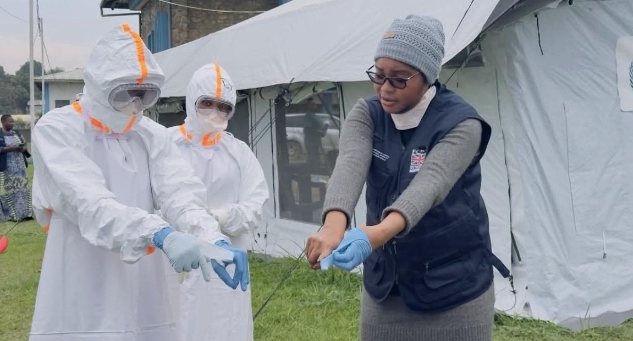
The response towards containment of spread of Ebola is still insufficient, according to Doctors Without Borders (MSF).
“To consider that the epidemic is under control because some Ebola Treatment Centers (ETCs) are receiving fewer patients would be a mistake,” warns Anthony Kergosien, MSF emergency coordinator in Bunia, Ituri province in the Democratic Republic of Congo.
The medical organization argues that the decline in certain indicators in the initial outbreak areas does not allow them to conclude that the epidemic is under control.
Meanwhile, the epidemic continues to produce new cases and is spreading to areas where response capacity remains limited.
MSF, notes that the situation is mixed. Ituri, the initial epicenter of the outbreak, is showing signs of slowing, but this trend is not reflected nationwide.
North Kivu, on the other hand, is experiencing a significant increase in infections and now accounts for a substantial proportion of new cases.
South Ubangi, meanwhile, has become the seventh province affected. This geographical expansion constitutes one of the main current risks according to MSF.
Dr. Wessam Mankoula, head of emergency response at Africa CDC also argues that a temporary decrease in cases is therefore not enough to conclude that there is a lasting control of transmission.
“When we talk about a peak, we need to understand that there can be several peaks during an epidemic. There may be an increase in cases, which you will control, then the situation stabilizes, there is even a slight decrease. But if you do not maintain this control over time, the increase can start again,” He said.
On September 12, the DRC government announced that the peak of the epidemic had been reached in mid-August and that available indicators showed a decrease in the number of cases nationwide.
DRC’s Health Minister Roger Kamba had indicated that the number of new daily infections had fallen from 120 at the height of the transmission to nearly 80.