








Rwanda’s economy expanded by 9.4% in the second quarter of 2026, driven by strong construction, mining, manufacturing and trade. Yet, for many households facing high food, fuel and other essential costs, the impressive figures may still feel distant from daily life.
Data from the National Institute of Statistics of Rwanda shows that the country’s gross domestic product, measured at current market prices, reached Rwf 7.174 trillion between April and June, up from Rwf 5.799 trillion during the same period in 2025.
Industry recorded the fastest growth at 18%, followed by services at 7% and agriculture at 4%.
The services sector remained the largest part of the economy, contributing 51% of GDP. Industry accounted for 23%, agriculture contributed 21%, while net indirect taxes represented the remaining 5%.
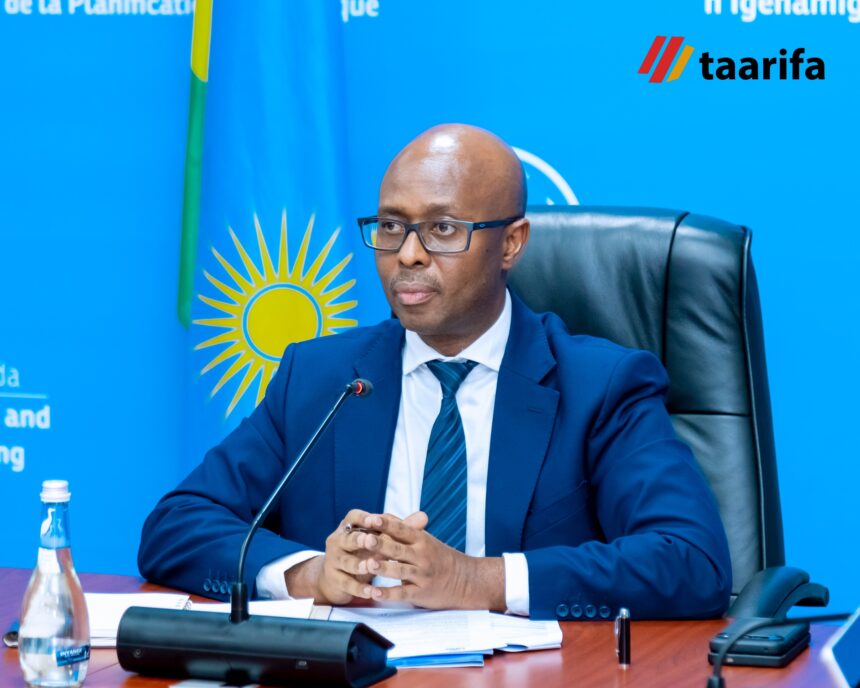
Finance Minister Yusuf Murangwa told Taarifa Rwanda that the economy remained resilient despite the effects of geopolitical tensions in the Middle East.
“When you look at how we managed the situation as a country, the performance was good. Without those challenges, the economy could have performed even better,” Murangwa said.
Much of the industrial growth came from construction, which increased by 24%, raising demand for locally manufactured building materials. Mining and quarrying grew by 26%, while manufacturing expanded by 10%.
Production of metal products, machinery and equipment increased by 51%, while manufacturing of non-metallic mineral products rose by 22%. Textiles and leather products grew by 13%, although food processing increased by only 2%.
Among services, information and communication recorded growth of 29%, while wholesale and retail trade increased by 18%. Transport services grew by 7%, hotels and restaurants by 5%, and financial services by 4%.
However, some areas performed poorly. Public administration services declined by 3%, while health services fell by 39%. Export crop production also dropped by 20%, despite overall agricultural growth of 4%.
Economist Teddy Kaberuka cautioned that GDP measures the value of goods and services entering the formal economy, but does not automatically show how individual families are living.
“When GDP is calculated, what reaches the market is measured and compared with production during a similar period,” Kaberuka told Taarifa Rwanda. “Milk produced and consumed by a household without being sold, for example, is not counted in GDP.”
He said economic growth must remain strong over a sustained period, and create jobs and incomes, before its impact becomes widely visible in people’s lives.
“If factories increase production, it normally means they are employing more workers. In that case, citizens benefit,” he said.
Agriculture, however, remains a concern because it supports a large proportion of the population. Kaberuka warned that if agricultural production grows at roughly the same pace as the population, the country may make little progress towards improving food availability per person.
The concern is particularly relevant at a time when households have faced persistent increases in market prices, compounded by higher costs for petroleum products.
Household spending nevertheless increased by 13% during the quarter, while government consumption declined by 6%. Gross capital formation rose by 32%, reflecting continued investment in construction, equipment and other productive assets.
Exports of goods and services increased by 19%, but imports rose much faster, at 36%, highlighting the country’s continued dependence on imported products and equipment.
Murangwa said the government would conduct a separate assessment to establish how much Rwanda’s diaspora contributed to the quarter’s economic performance.
The latest figures show an economy expanding rapidly despite international pressures.
The more difficult task is ensuring that this growth translates into stable food prices, better-paying jobs and visible improvements in the lives of ordinary Rwandans.