





Imagine you are a small shopkeeper on a busy, chaotic street. Fights keep breaking out around you. Bigger shops are accusing you of starting trouble.
The most powerful man in town is threatening to sanction you. Your loyal customers are watching nervously, wondering if they should still do business with you. What do you do? You do not panic. You dress sharp, walk calmly into the neighborhood, shake hands, sign deals, and remind everyone that you are still very much open for business.
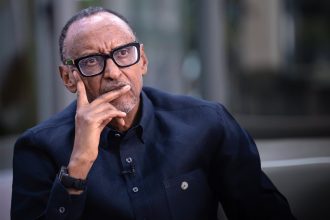
That, in essence, is what Paul Kagame is doing right now.
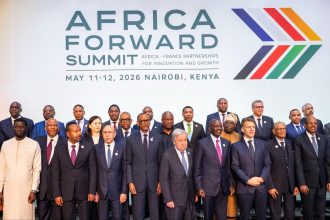
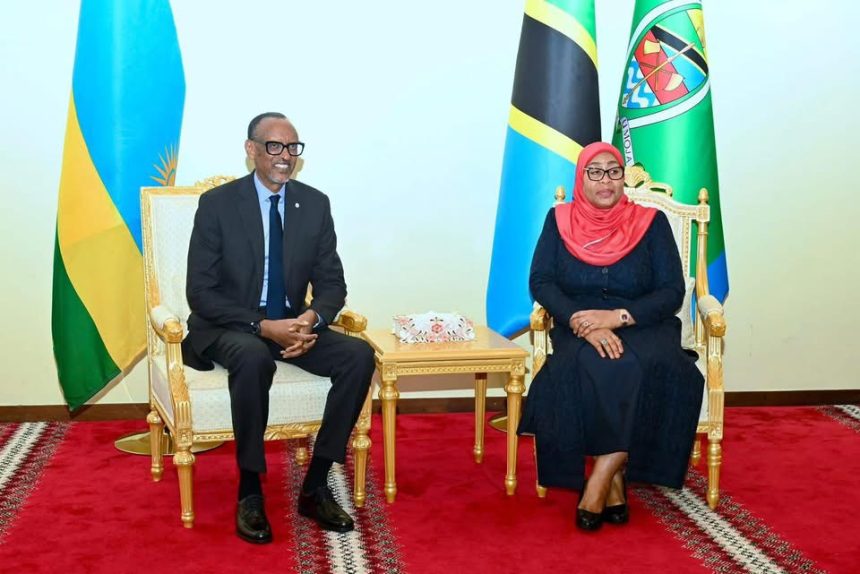
It is May 2026, and within the space of one week, Rwanda’s president has touched down in Dar es Salaam for a working visit with Tanzania’s President Samia Suluhu Hassan, and is preparing to fly south to Gaborone for a two-day state visit with Botswana’s President Duma Gideon Boko. Two countries. One week. One unmistakable message. At a time when the world is loudest about Rwanda’s troubles, its leader is out making friends, signing deals, and expanding alliances. That is not coincidence. That is choreography.
As an observer who has followed this man’s moves for years, I will say this plainly. I am not surprised. I am amazed. There is a difference. Surprise belongs to those who were not paying attention. Amazement belongs to those who were watching closely and still could not predict the exact moment or the precise direction.
Kagame has a rare and almost unsettling gift for doing the right thing at the right time without announcing it in advance. Just when the pressure is at its peak, just when the critics are loudest and the adversaries most confident, he moves. Quietly. Decisively. Always at the most opportune moment.
This Tanzania visit, this Botswana trip, arriving in this particular week of global and regional turbulence, is not an accident. It is instinct sharpened by experience and hardened by survival.
To understand why these visits matter, you need to understand the fire Kagame is currently walking through and why he believes he has every moral right to walk through it with his head held high.
Eastern Congo has been ablaze for decades. But what often gets buried beneath the geopolitical noise is the human horror at the center of it. The FDLR, a militia harbouring genocidal elements, has been operating freely in eastern DRC, enabled by regional and international actors who have failed to take decisive action, sometimes providing indirect support under various political or diplomatic pretexts.
For Rwanda, this is not an abstract security concern. This is existential. The FDLR carries the ideological DNA of the 1994 genocide that wiped out nearly a million Tutsi people in one hundred days. The hate rhetoric against Tutsi minorities did not die with the genocide. It mutated, crossed the border, and found sanctuary in the Congolese jungle.
Hate radio that once told neighbors to kill neighbors simply moved frequency and kept broadcasting. When Kigali says it faces an existential threat from eastern Congo, it is not making a political speech. It is reading from a history written in blood.
There is an old Rwandan saying that a man who has been bitten by a snake fears even a rope on the ground. Rwanda has been bitten before. It knows exactly what that rope looks like.
Kagame has openly confirmed Rwanda’s military presence in eastern DRC, reframing it as a defensive measure explicitly tied to the neutralisation of the FDLR.
To him, this is not aggression.
This is a father standing between his children and the people who once tried to exterminate them. The world may call it interference. Kigali calls it survival.
The international community, however, saw it differently.
The US imposed sanctions on four senior Rwandan military officials and the Rwanda Defence Force as an entity, citing violations of the Washington Accords signed in December 2025.
That is a thunderclap from your most powerful Western ally. Most leaders would go silent, issue careful statements, and wait for the storm to pass. Kagame did the opposite. He walked to the microphone.
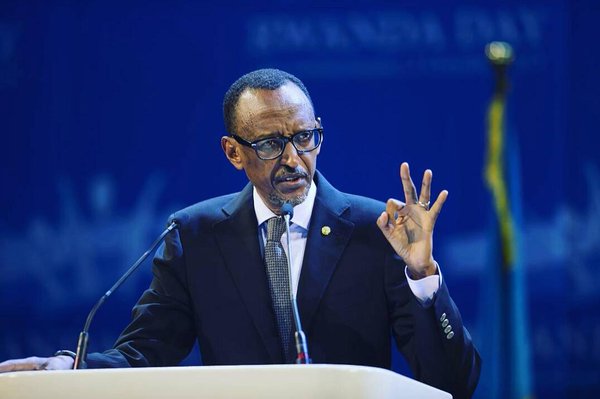
Addressing ambassadors and high commissioners gathered in Kigali, he told them plainly that any condemnation of Rwanda’s security forces was a badge of honor, and that selective international pressure had only emboldened the Congolese government and its affiliated militias to resume military action.
He was not raging. He was calm, the kind of calm that comes not from indifference but from deep conviction. You may have power. But I have a point. And history is on my side.
This defiance is not recklessness. It is the posture of a man who watched the world do nothing in 1994, who sat in the hills as a young rebel commander listening to RTLM incite the slaughter of his people, and who has decided once and for all never to outsource Rwanda’s survival to anyone else’s goodwill.
When the international community lectures him about rules, he listens politely and keeps his troops exactly where he believes they need to be.
Kagame has also said something that reveals the larger philosophy driving these diplomatic moves. Speaking about Africa’s place in the emerging global order, he has argued plainly that Africa does not want charity.
It wants a mutual relationship. A partnership of equals, where the continent’s resources, its people, and its strategic position are respected and reciprocated rather than simply extracted. The old model of Africa as a junior partner, grateful for whatever the West decides to offer, is finished. The new world demands new terms. And Rwanda intends to negotiate from strength.
What followed the sanctions looked, to many observers, like the diplomatic bullying of a small nation. The DRC hired high-profile Washington lobbyists on contracts worth millions of dollars, including a deal specifically to secure American support for Kinshasa’s position in Western capitals.
Big country, big wallet, loud voice. Rwanda had no such budget. What it had was relationships, reputation, and strategic clarity.
Think of it like two men in a dispute. One hires the most expensive lawyer in town and fills the courtroom with noise. The other walks quietly to the judge’s house, sits down over coffee, and has a calm conversation about what actually matters.
Kagame personally reached out to US Senator Lindsey Graham, making the case that Rwanda is a reliable American security partner and a key supplier of critical minerals. Graham contacted the White House and the office of Vice President JD Vance, and the planned sanctions package was shelved indefinitely.
A phone call from the leader of a nation of fourteen million people stopped a Washington sanctions machine in its tracks. That is not luck. That is leverage, painstakingly built over thirty years of delivering on promises that larger, richer nations routinely break.
Here is where ordinary people need to pay attention, because this next part touches every smartphone in your pocket and every electric car on the road. The device you are reading this on likely contains rare materials like tantalum, tungsten, or coltan, mined in the DRC or Rwanda, and these minerals go into nearly every form of high-end defense equipment manufactured today.
The world is running on central African rock. It just prefers not to say so too loudly. China currently dominates the processing of rare earth elements, cobalt, and lithium, controlling around 80% of Congolese cobalt production alone.
Washington is desperate to break that stranglehold, and Rwanda, tiny and landlocked with no oil of its own, has made itself America’s most reliable African partner in that race. A recent shipment of tungsten concentrate from Rwanda’s Nyakabingo mine directly to a refinery in Pennsylvania illustrates the kind of traceable, legally formalised supply chain the United States wants to scale across the continent.
Kagame has made Rwanda indispensable. And indispensable countries do not get sanctioned. They get deals.
But this very reality, that the world’s great powers are rushing into Africa for minerals with the same hunger that colonial powers once brought for land and labor, is precisely what makes Kagame uneasy. He has seen this film before. It does not always end well for the continent. The global oil markets are rattled.
The mineral scramble is intensifying. Conflicts from Sudan to eastern Congo to the Sahel are redrawing maps and loyalties faster than diplomats can keep up.
When powerful nations arrive with handshakes and investment forums, small nations can very easily become the pieces on the board rather than the players moving them. Kagame has no intention of being anyone’s piece. So he moves. Swiftly. Deliberately.
To Tanzania first. Tanzania is not just a neighbor. It is Rwanda’s economic lungs. The port of Dar es Salaam is how goods enter and leave landlocked Rwanda. Close that artery and the country slowly suffocates. Security considerations around eastern DRC are also on the agenda, as both countries carry deep strategic interests in the region’s stability, with analysts describing the Kigali, Dar es Salaam, and Nairobi axis as a power triangle driving the East African Community’s economic and security agenda.
Tanzania has not always applauded Kigali’s moves. Dar es Salaam hosts peace talks, harbors its own interests in eastern Congo, and has watched the Rwanda and DRC crisis with a cautious eye. By flying in personally, Kagame sends an unspoken message that no press release could carry.
Whatever the world is saying about me, you and I are still standing together. A neighbor who shows up at your door, breaks bread with you, and looks you in the eye is far harder to vote against at the next regional summit. It is diplomacy in its most ancient form, presence as a statement.
Then he flies south to a country that surprises many watchers. Botswana. Agreements are expected across digital trade, tourism, animal vaccines, transport connectivity, and cooperation in the diamond value chain.
Rwanda has no diamonds. Botswana has plenty. Rwanda has governance systems and technology infrastructure that African peers increasingly study and admire. Botswana needs exactly that. It is a clean exchange between two nations who see each other clearly.
The deeper reason for Gaborone, however, goes beyond the deal sheet. Botswana is one of Africa’s most stable and internationally respected democracies, carrying the kind of quiet moral credibility that no lobbyist can buy. The two nations share a relationship grounded in mutual respect and self-reliance, cooperating on platforms like the African Union on peacebuilding and security.
At a moment when Rwanda is being painted as a destabilising force, having Botswana welcome you with full state ceremony sends a powerful message across the continent. Rwanda is not a rogue state. It is a trusted partner expanding its reach southward, into the SADC bloc that has been notably less sympathetic to Kigali over the DRC crisis than its eastern African neighbors.
The visit will also spotlight Rwanda’s rapidly evolving ICT and artificial intelligence ecosystem, with potential for joint innovation programs linking institutions and entrepreneurs across both countries.
A landlocked nation with no oil and no diamonds has decided that its wealth will be its ideas, its systems, and its people. Kagame has been selling that vision for twenty years, and the buyers are multiplying.
What is most remarkable about all of this is not the strategic brilliance alone. It is the moral defiance beneath it. Kagame has been accused, sanctioned, pressured, and lobbied against by nations with vastly greater resources. The ghost of 1994 has been weaponised against him even as he fights to ensure it never rises again.
He has watched the same international community that abandoned his people in their darkest hour arrive with briefcases full of conditions and lectures about sovereignty. A community that looked away when Tutsi blood filled the streets now tells Rwanda how to defend itself. The irony is not lost on anyone in Kigali.
And yet Rwanda stands.
It signs deals. It builds roads. It sends peacekeepers to Mozambique, to Haiti, to the Central African Republic, stabilising the very kind of chaos the world failed to prevent at home.
Analysts have compared Kagame to an African Bismarck, crafting a long-term combined military and economic strategy with coherent diplomacy that portrays Rwanda as an island of stability amid regional chaos, befriending important leaders across the globe while keeping a firm grip on the country’s strategic direction.
But even Bismarck had sleepless nights. The world Kagame navigates in 2026 is one where a ceasefire can be signed in Washington on a Thursday and violated by Friday, where sanctions are drafted in the morning and shelved by the afternoon, where peace deal ink barely dries before the guns fire again.
Despite ceasefire agreements brokered by Qatar and the United States, armed operations are still being recorded in North Kivu, South Kivu, and Ituri, a stark illustration of the widening gap between high-level agreements and the actual security situation on the ground.
This is a man who cannot afford stillness. Every week of inaction is a week that an adversary finds a new lobbyist, a new narrative, a new ally.
“Our collaboration and friendship have been vital to Rwanda’s revival and development,” he told the assembled diplomats in Kigali, and then in the same breath warned them that the crisis in eastern Congo demands a far more honest and balanced reckoning with the responsibilities of every party involved.
That is the voice of a man who has made peace with the fact that the world will not always be just, and has decided, for the sake of his people, to thrive anyway.
The grandmaster plays several boards at once, and he plays them all with the quiet, controlled urgency of someone who knows exactly what is at stake if he loses.