

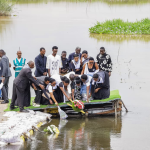

Every April, Rwanda and its friends around the world pause to remember the victims of the 1994 Genocide against the Tutsi. The commemoration, known as Kwibuka, meaning “to remember,” is both an act of remembrance and a reminder of a responsibility shared by the international community.
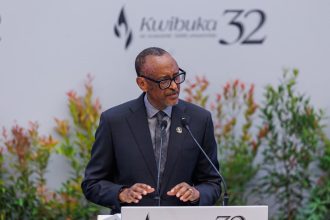
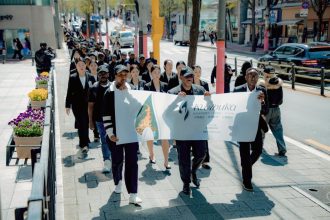
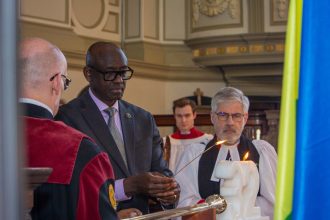
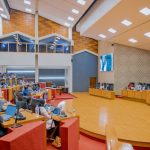
This year’s Kwibuka 32 commemoration in London was among the largest held in the United Kingdom. Over 400 guests gathered, including more than 70 members of the diplomatic corps, senior officials, representatives of civil society, and members of the Rwandan community.
That alone tells a story.
Thirty-two years after the genocide, remembrance in the United Kingdom continues to grow, both in scale and in significance. What was once a modest gathering has gradually become a major diplomatic and community event. The presence of such a large number of diplomats and public figures signals a widening recognition that the lessons of Rwanda remain relevant for the world today.
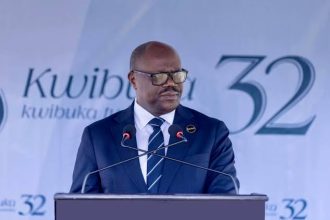
Among the notable voices at this year’s commemoration was the Secretary-General of the Commonwealth, Shirley Ayorkor Botchwey, who voiced a sobering reminder that remembrance must also include honesty about the past. The international community, she noted, failed Rwanda in 1994. The warning signs were visible and shared, yet the world did not act in time to stop the genocide.
Her remarks also highlighted something equally important: Rwanda’s remarkable journey since then. Against enormous odds, Rwanda has rebuilt its institutions, pursued reconciliation, and emerged as an active and constructive member of the Commonwealth. The country’s resilience, she observed, stands as one of the most striking examples of national recovery in recent history.
Another speaker, Dr Michael Gray, an educationist who has worked closely with Rwanda for more than 15 years, reflected on a paradox that continues to challenge observers. Rwanda today demonstrates strong leadership, economic growth, and social stability. Yet at the same time, forces linked to the ideology that fueled the genocide continue to operate in the region.
His question was both simple and uncomfortable: how can we explain Rwanda’s resilience and progress while genocidal forces remain active in neighboring areas and, in some cases, while individuals accused of participation in the genocide continue to live freely abroad?
That question leads to another, perhaps even more difficult one.
Why is it that the United Kingdom appears to be the only Western country where genocide suspects linked to the 1994 atrocities continue to reside without having faced trial, extradition, or deportation?
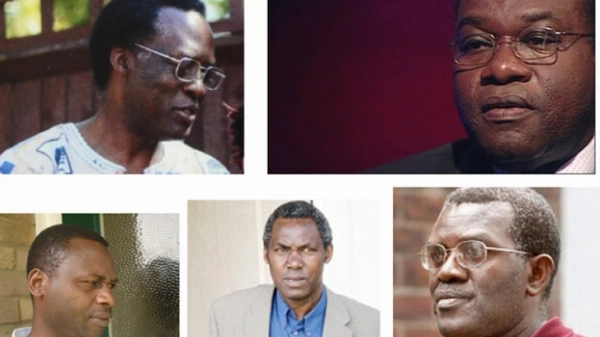
More than three decades after over a million Tutsi were killed in the genocide against the Tutsi in Rwanda, several individuals accused of orchestrating mass killings live freely in the United Kingdom.
Among the most prominent five suspects are former mayors and other senior political leaders such as Célestin Ugirashebuja and Emmanuel Nteziryayo, alleged to have organised, directed, and enabled killings in their communes. Arrested in the UK in the mid-2000s following repeated extradition requests from Rwanda, these individuals have never faced a trial, either domestically or abroad.
“We watched our families murdered. Knowing some killers walk freely abroad is unbearable,” says a survivor from Kigoma.
Over the past two decades, several countries have taken steps to address such cases. France, Germany, the Netherlands, Belgium, Sweden, Denmark, Norway, Canada, and even Malawi have pursued prosecutions or extradition processes against individuals accused of participating in the genocide.
The United Kingdom, by contrast, has struggled to move similar cases forward.
The reasons are likely complex. Legal standards, evidentiary challenges, and procedural requirements all play a role. Courts must ensure that justice is pursued carefully and fairly. Yet for survivors, and for a country that continues to carry the weight of one of the twentieth century’s most devastating crimes, the passage of time without resolution remains difficult to understand.
Justice delayed, as the saying goes, can easily become justice denied.
It is worth emphasising that this issue is not solely about Rwanda. It speaks to a broader principle in international affairs: that genocide must never be met with impunity.
When individuals accused of such crimes are allowed to live freely without facing judicial scrutiny, it raises uncomfortable questions about the consistency of our commitment to international justice.
At the same time, the growing scale of commemorations such as Kwibuka 32 in London suggests that awareness and engagement are deepening. The increasing participation of diplomats, policymakers, and members of the public reflects a recognition that remembrance must be accompanied by reflection and, where necessary, by action.
Rwanda’s story today is not only one of tragedy. It is also a story of recovery, reconciliation, and determination. The country’s progress over the past three decades demonstrates that even after the most profound devastation, societies can rebuild and move forward.
Yet remembrance must also keep alive the difficult questions.
Among them is the one that still lingers here in the United Kingdom: why have the genocide suspects who reside here not yet had their day in court?
For survivors, for the families of the victims, and for the credibility of international justice, it is a question that deserves an answer.
The writer is a political and diplomatic analyst specialising on Africa and countries of the Great Lakes Region.