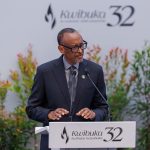
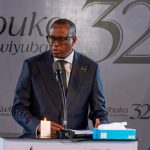



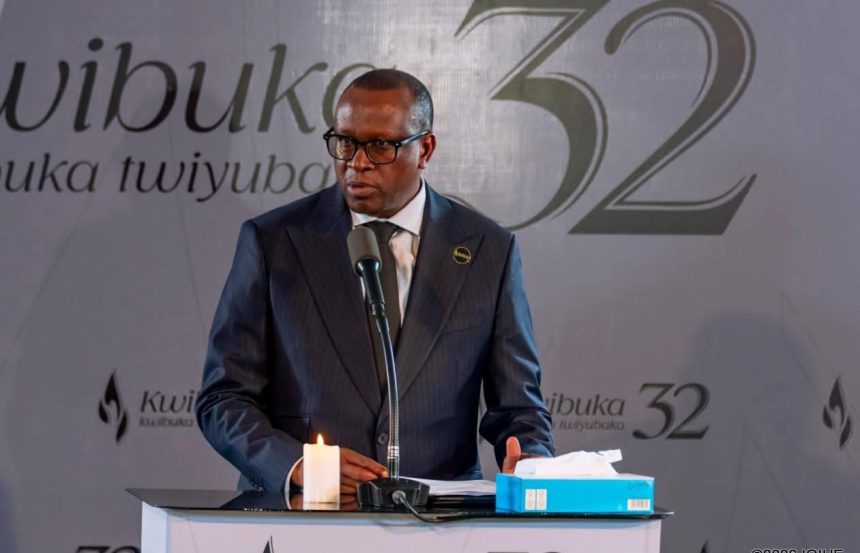
Rwanda’s Minister of National Unity and Civic Engagement, Jean-Damascène Bizimana, has warned about the dangerous power of language, highlighting how words were used as tools of destruction during the 1994 Genocide against the Tutsi.
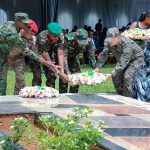
Dr. Bizimana delivered the remarks at the headquarters of Rwanda Broadcasting Agency (RBA), where media practitioners, government officials, and representatives from institutions related to the media sector gathered to commemorate journalists who perished during the 1994 Genocide against the Tutsi.
The event also provided a platform to reflect on the darker chapter of media history, with participants listening to testimonies detailing how some journalists fueled the genocide through hate speech broadcast on radio, television, and published in newspapers.
These accounts underscored the devastating consequences of irresponsible journalism.
Speaking on the role of media, Dr. Bizimana explained that while many perpetrators did not physically take part in the killings with traditional weapons, their use of speech and written communication played a critical role in inciting violence.
Through various media channels, messages of hatred and division were spread, influencing ordinary citizens to participate in the atrocities.
He stated: “They did not take up machetes to kill, nor did they throw grenades into crowds or fire guns. They killed through words, through what they wrote. A journalist, in many cases, can kill with words and words can indeed kill.”
The minister’s remarks served as a powerful reminder of the influence media holds in shaping public thought and behavior.
In times of tension, irresponsible communication can escalate fear, deepen divisions, and ultimately lead to violence.
Conversely, ethical journalism has the power to promote understanding, unity, and peace.
Dr. Bizimana urged contemporary journalists to uphold professionalism and integrity, emphasizing the importance of using media platforms to foster truth, unity, and reconciliation.
He stressed that the lessons from the Genocide against the Tutsi must remain central in guiding the media industry in Rwanda and beyond.
He concluded by calling on the media to act as a force for good one that builds bridges rather than division and to ensure that the tragic consequences of harmful speech are never repeated.
By Andrew Shyaka