





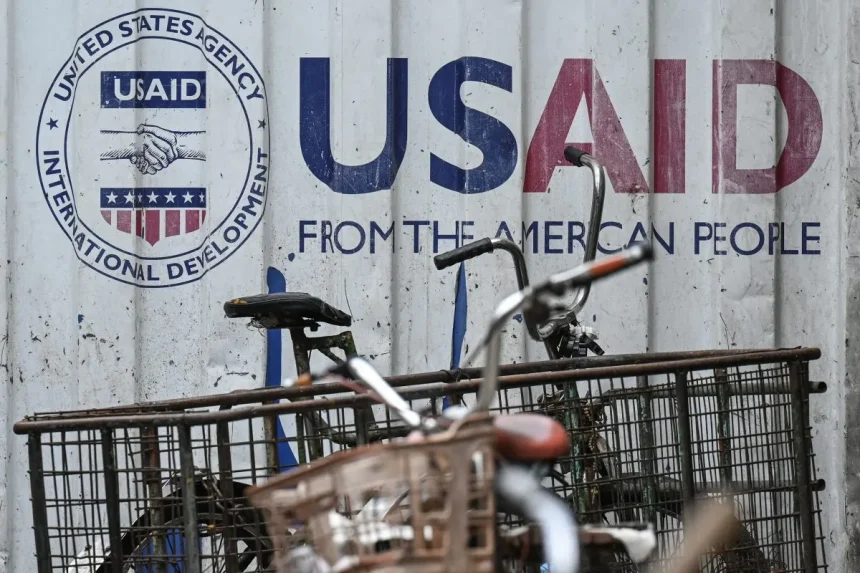
The United States has formally declared an end to its decades-long aid-driven approach to Africa, unveiling a new strategy that prioritizes trade, investment, and geopolitical interests over traditional development assistance.
Speaking at a summit hosted by the Center for Strategic and International Studies, senior U.S. official Nick Checker said Washington is abandoning a model that has delivered over $200 billion to the continent since 1991 but failed to produce lasting economic transformation.
“That era is over,” Checker said. “We are moving from aid to trade, from assistance to investment, and from dependency to partnership.”
Checker argued that despite decades of funding, many African economies remain constrained by limited industrialization, narrow export bases, and persistent infrastructure gaps.
He said past approaches often rewarded commitments rather than results and, in some cases, enabled poor governance rather than correcting it.
The shift reflects growing frustration in Washington over weak returns on aid and declining diplomatic alignment, with African countries voting with the United States only 29 percent of the time on key United Nations resolutions in 2023.
Under the new approach, U.S. engagement will be driven by commercial diplomacy, tying foreign policy directly to business deals, infrastructure development, and supply chain priorities.
U.S. ambassadors will now be assessed in part on how effectively they support American companies and help close investment deals.
“Sustainable growth does not come from aid,” Checker said. “It comes from private enterprise, from companies investing capital and creating value.”
Africa, projected to reach 2.5 billion people by 2050 with over 16 trillion dollars in purchasing power, is being repositioned in U.S. policy as a strategic economic partner.
Yet U.S. exports to sub-Saharan Africa currently account for less than one percent of total trade, a gap officials describe as both a commercial and strategic failure.
The new strategy places particular emphasis on critical minerals, strategic infrastructure, and sectors where U.S. commercial interests align with African growth ambitions.
Washington is also linking economic engagement to regional stability efforts, including initiatives in the Great Lakes region involving Rwanda and the Democratic Republic of the Congo.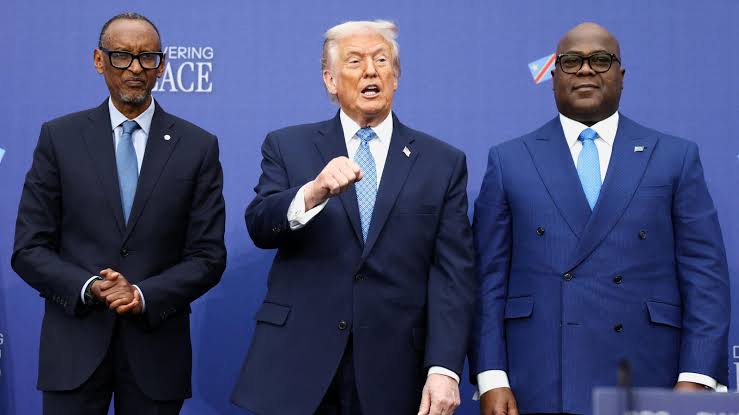
But the reset comes with stricter conditions.
Future U.S. support will be targeted, time-bound, and performance-based, with priority given to countries willing to implement reforms, reduce barriers to investment, and co-finance development initiatives.
“We are not ending foreign assistance,” Checker said. “We are ending the old model.”
“Our goal is not to sustain aid dependence. It is to make it unnecessary while advancing mutual prosperity.”
The policy shift marks one of the most significant recalibrations of U.S.-Africa relations in decades, signaling a more transactional, results-driven approach that places economic outcomes at the center of engagement.