



We all remember President Félix Tshisekedi publicly threatening to overthrow President Paul Kagame and flatten Rwanda “in the blink of an eye.”
The statement was made without hesitation, has never been withdrawn, and has faced little meaningful contradiction. He was never condemned, domestically or internationally.
In that context, any external support to his government cannot be separated from the intent he has openly declared. Support, in effect, signals alignment.
That is the political environment in which France is choosing to operate.
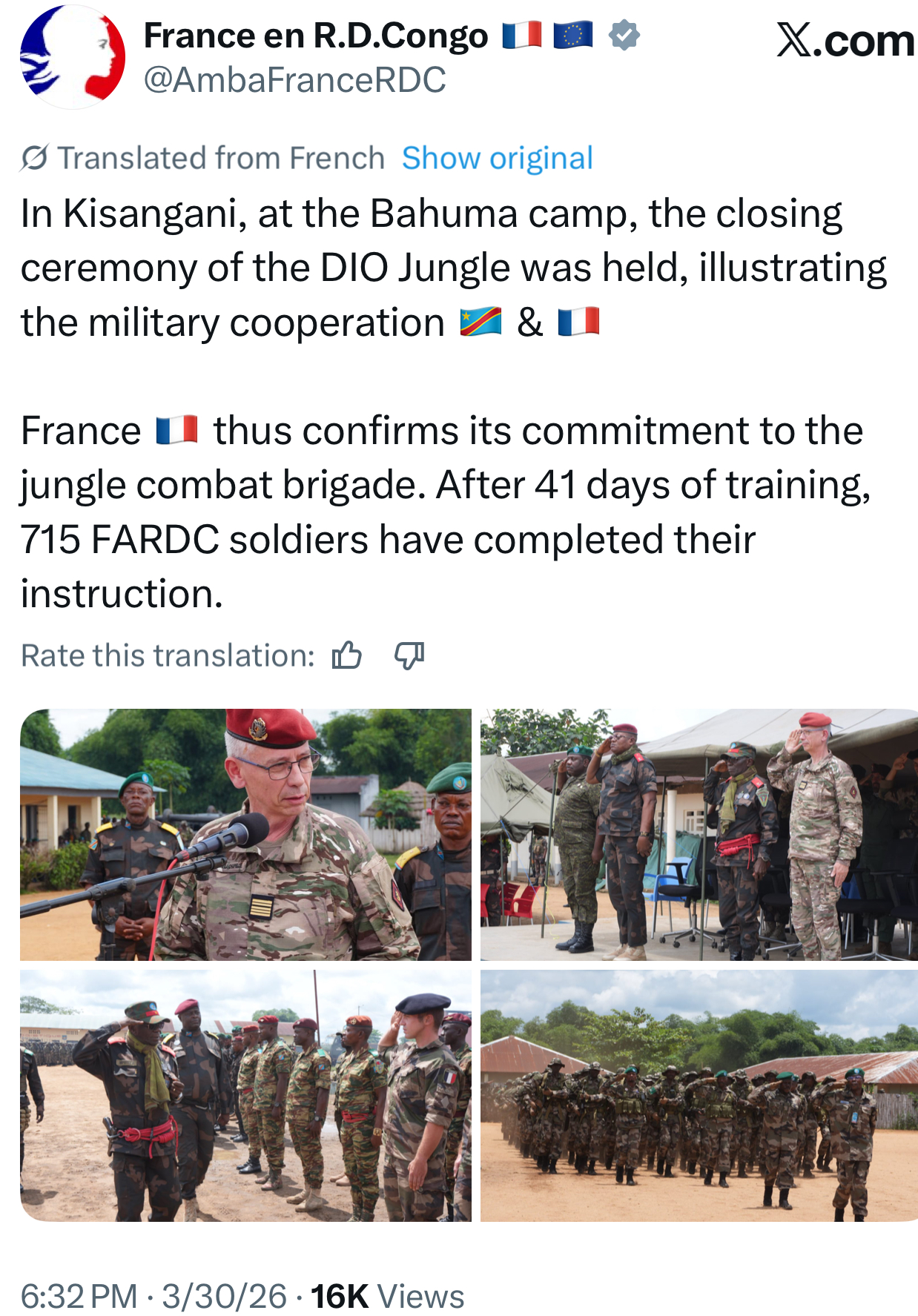
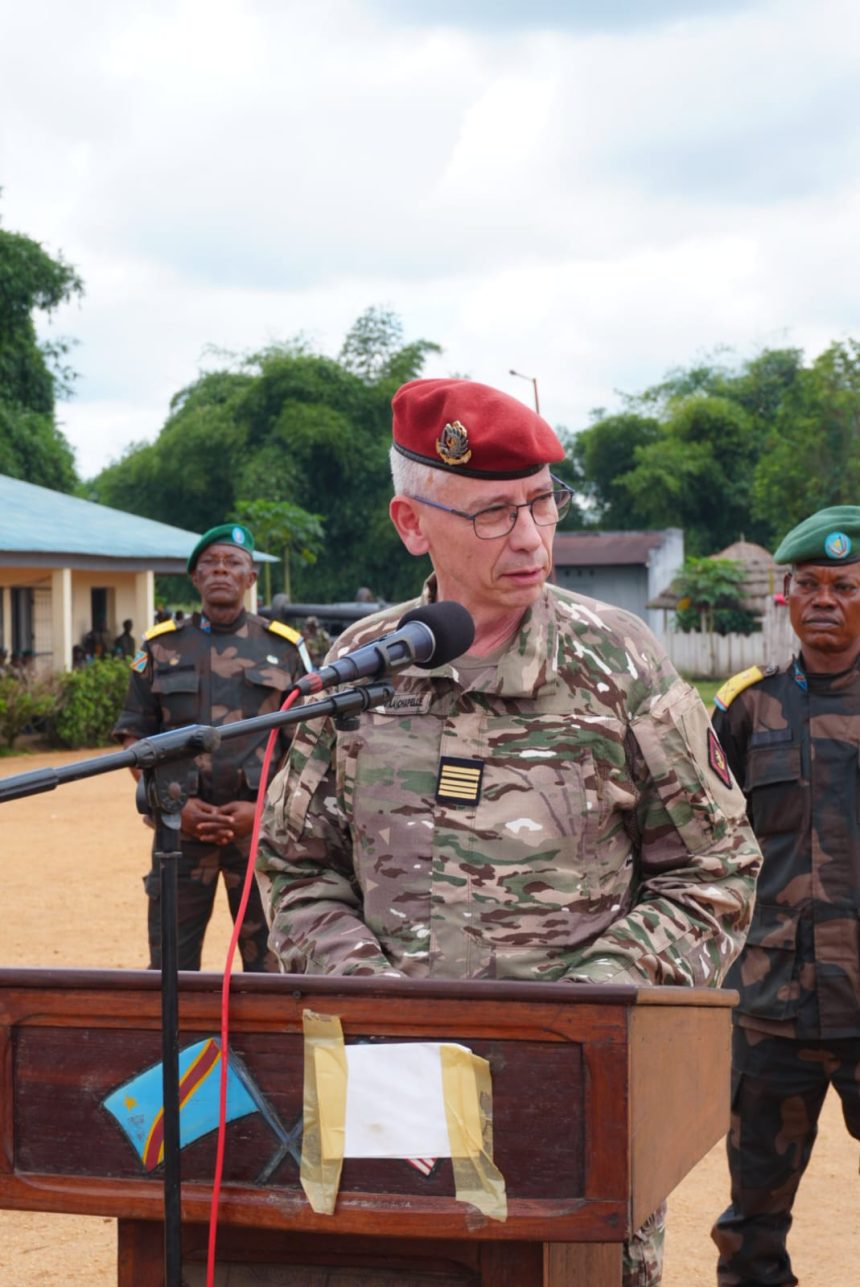
France is openly training the Armed Forces of the Democratic Republic of the Congo (FARDC). The training and military guidance is taking place in Eastern Congo, right in the arms reach of Rwanda.
This is deliberate and visible engagement in an active conflict zone. It is also taking place in a setting where civilians continue to be reported as victims of bombardment and reprisals, and where armed groups such as the Democratic Forces for the Liberation of Rwanda (FDLR); with direct links to the forces behind the 1994 genocide against the Tutsi. They remain embedded in the broader security landscape.
In such a context, military cooperation cannot be treated as a neutral or purely technical exercise. On paper, it is about training and professionalism. In practice, it should be anchored in strict rules of engagement that protect civilians and impose clear limits on force.
Without visible, enforceable conditions tied to those standards, a fundamental question arises: is this support improving conduct, or reinforcing a system where those rules are already under strain?
That concern deepens when considering the composition of forces on the ground. Elements of the FDLR have been integrated into or operated alongside FARDC units.
And the question of who exactly is being trained becomes difficult to ignore. Even the possibility that such actors could benefit from external support leaves a troubling implication.
The recent sequence of events adds further weight to this. After the capture of Goma by the March 23 Movement, external partners quickly distanced themselves from the FARDC amid reports that cross-border shelling had struck Rwanda, killing civilians on its soil. At that moment, countries such as France adopted a cautious posture.
Yet as the immediate pressure has eased, that caution appears to have receded. Engagement is resuming, cooperation is becoming more visible, and the same actors are stepping forward again.
The contrast suggests restraint under scrutiny, followed by renewed involvement once attention fades. That pattern raises legitimate questions about consistency.
France’s current posture also carries broader implications for credibility. International reporting, including from UN mechanisms, has documented abuses against civilians involving both state-linked forces and militias such as the FDLR.
Deepening cooperation without clearly tying it to accountability weakens the impact of those findings and suggests that documented violations do not necessarily alter strategic decisions.
Three decades after the Genocide against the Tutsi, France is operating in a region where history is neither distant nor abstract. Its role is not ambiguous, and its choices are being assessed against that history in real time. We haven’t talked about hosting individuals affiliated with FDLR and RNC, and allowing them to conduct subversive activities.
The issue is no longer about what is known. It is about what is being done with that knowledge; and what it ultimately signals.
It’s a dangerous alignment, nevertheless.