




From a handful of coffee farmers united by a shared vision, Dukunde Kawa Musasa Cooperative has grown into one of Rwanda’s most celebrated coffee success stories, marking 25 years of transforming both the country’s coffee industry and the livelihoods of thousands of rural families.
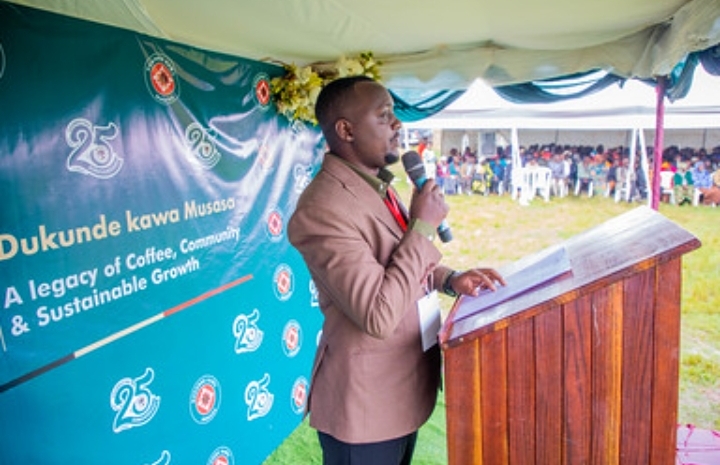
The silver jubilee celebrations were held on March 25, 2026, at the cooperative’s facilities nestled in the scenic hills of Ruli Sector, Gakenke District, bringing together founding members, government officials, partners, and farmers to reflect on a journey defined by resilience, innovation, and community impact.
Founded in 2000 by 300 pioneer farmers in the former Musasa commune, the cooperative began as a small association selling home-processed coffee.
Today, it has grown to 1,193 registered members—326 of them women—and supports more than 4,600 coffee farmers, becoming a model of success in Rwanda’s specialty coffee sector.
Speaking at the event, Cooperative President Virgine Uwingeneye highlighted the remarkable transformation over the past two and a half decades, noting that what started as a modest initiative has evolved into a key driver of economic empowerment in the region.
Model of Economic Growth and Job Creation:
Since entering the specialty coffee market in 2004, Dukunde Kawa Musasa has expanded from exporting a single container of coffee annually to more than 15 containers.
Its contribution to the local economy has surged from Rwf70 million in its early years to over Rwf3.5 billion today, while creating employment for more than 450 workers annually, including 55 permanent staff.
This growth has translated into improved incomes and better living conditions for farmers, reinforcing coffee as a reliable “income machine” for rural households.
Building a Complete Coffee Value Chain:
One of the cooperative’s defining achievements is the establishment of a fully integrated coffee value chain—from nurseries and farms to four washing stations, a dry mill, roasting plant, and even a café.
This “seed-to-sip” model, rare in Rwanda, has strengthened quality control, earned international certifications, and secured long-term relationships with global buyers.
The emphasis on quality and innovation has positioned the cooperative at the forefront of Rwanda’s specialty coffee movement.
Empowering Women, Strengthening Social Cohesion:
A key milestone in the cooperative’s journey has been the creation of the Rambagirakawa women’s group in 2012. The initiative has empowered women economically and socially, enabling them to produce and export premium coffee while also engaging in handicrafts and savings schemes.
Today, the group exports over two containers of coffee annually and operates its own office, demonstrating how gender-focused initiatives can drive both inclusion and economic growth.
Diversifying Livelihoods Beyond Coffee:
Beyond coffee production, Dukunde Kawa Musasa has invested in complementary sectors to enhance resilience.
Since 2008, the cooperative has distributed more than 350 cows to members, supporting dairy farming and improving nutrition and incomes.
This initiative has evolved into a full dairy enterprise, with a milk collection centre established in 2015 and expanded in 2025 to process fresh milk, yogurt, and cheese with a daily capacity of 5,000 litres.
Investing in Youth and Skills Development:
The cooperative has also prioritized the next generation through the Musasa Coffee School, established in 2021.
The institution trains youth in coffee farming, barista skills, cupping, and quality analysis, alongside vocational skills such as tailoring and weaving.
To date, over 300 young people have been trained in coffee farming, while more than 90 have completed advanced coffee programs.
During the anniversary, 21 young coffee experts and baristas graduated, symbolizing a commitment to sustaining the coffee legacy.
Access to Finance and Community Development:
Through the Musasa Development Fund, members can access interest-free loans ranging from Rwf50,000 to Rwf300,000 to support farming, small businesses, or emergencies.
Over Rwf150 million has been disbursed with an impressive 99% repayment rate, all without requiring collateral.
In addition, the cooperative continues to invest in community welfare, including the establishment of an Early Childhood Development (ECD) centre in 2025.
The facility currently supports 92 children, helping working mothers while addressing malnutrition and child welfare challenges.
Promoting Sustainability and Environmental Stewardship:
Dukunde Kawa Musasa has maintained multiple international certifications, including Fairtrade, Rainforest Alliance, Organic, Café Practices, and ISO standards, reflecting its commitment to sustainable production and global best practices.
Environmental conservation, coffee tourism, and responsible farming practices remain central to its operations.
Giving Back and Supporting Other Cooperatives:
As part of its broader impact, the cooperative has reinvested in the community by providing over Rwf16 million in grants to support other cooperatives, including funding maize processing machinery to strengthen local value chains.
Challenges Ahead:
Despite these achievements, Uwingeneye acknowledged persistent challenges that could hinder future growth.
These include poor road infrastructure, limited access to water, lack of electricity at the Nkara washing station, aging coffee trees affecting quality, unresolved land ownership issues, and the growing impact of climate change on productivity.
Addressing these issues will be critical as the cooperative sets its sights on the next 25 years.
Recognizing Partnerships and Shared Effort:
At the celebrations, the cooperative gifted 25 cows, paid cash dividends and premiums , garden fork and a coffee bag to its members.
Key partners were also honored, including Root Capital, a U.S.-based financial institution that has funded their operations since 2005 as their first client in Africa.
Other partners recognized included Starbucks FSC/RWANDA, Rabobank, RWASHOSCO Ltd, Progresso, REDI, Thanksgiving, ACDI/VOCA, USADF, MCM, BDF, Women Win, Fairtrade, and SGR.
Members used the occasion to appreciate key contributors to their journey, especially the Ministry of Defence which supported the cooperative in its early stages by helping with infrastructure such as roads and mobilizing communities.
The ministry was also presented with a trophy in acknowledgment of its long-standing support.
Former RDF officer Jerome Mureramanzi reflected on the military’s role in development, noting that beyond ensuring national security, efforts were made to improve citizens’ economic wellbeing.
“Our goal was not only peace and security, but also ensuring security in people’s pockets—and today we see the results,” he said.
Another former officer, Eugene Haguma, emphasized that the support was part of a broader national mission to drive development, adding that the cooperative’s diversification into dairy and education is a testament to that vision.
The cooperative also recognized outstanding members, including founding figures such as Anastase Minani, who led the organization through difficult periods.
Minani expressed gratitude to the government and partners, urging young people to embrace coffee farming:
“We need more children to join and love coffee the way we did.”
Driving National Coffee Growth:
Officials from the National Agricultural Export Development Board (NAEB) praised the cooperative as a model for improving coffee quality and exports.
They highlighted innovations such as organic coffee and women-led specialty production as key to Rwanda’s competitiveness on international markets.
With only 14% of farmers currently in cooperatives, officials stressed the need to expand participation while addressing challenges like aging coffee trees.
Local Impact and Future Outlook:
Gakenke District Vice Mayor for Economic Affairs, Aime François Niyonsenga, noted that Dukunde Kawa Musasa has elevated the district’s economic profile, contributing significantly to improved livelihoods, savings, and access to health insurance.
As the cooperative celebrates its silver jubilee, its story stands as a powerful example of how collective action, innovation, and strong partnerships can transform rural economies.
With a renewed focus on sustainability, youth engagement, and quality production, Dukunde Kawa Musasa is now setting the stage for an even more impactful future in Rwanda’s coffee sector.