






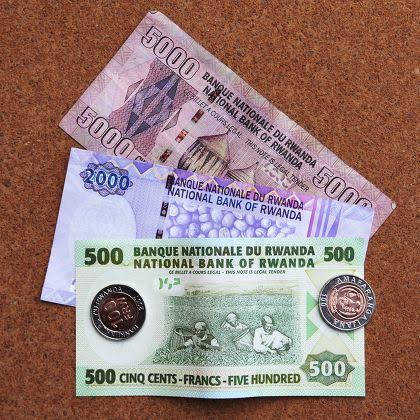
The National Bank of Rwanda has announced a nationwide withdrawal of several series of Rwandan franc banknotes, giving citizens and businesses a 12-month window to exchange them before they are permanently removed from circulation.
The decision follows Presidential Order nº11/01 of February 27, 2026, which authorised the demonetisation of specific banknote series.
The order was published in the Official Gazette on March 2, 2026, marking the official start of the transition period.
In a public notice issued on March 24, 2026, the Governor of the central bank, Soraya Hakuziyaremye, said the affected banknotes will cease to be legal tender on March 2, 2027.
After that date, they will no longer be accepted as a means of payment anywhere in the country.
The banknotes targeted in the withdrawal include Rwf 500 notes issued on July 1, 2004, and January 1, 2013; Rwf 1,000 notes issued on July 1, 2004, and May 1, 2015; Rwf 2,000 notes issued on October 31, 2007; as well as Rwf 5,000 notes issued on April 1, 2004, and February 1, 2009.
These older series will gradually be replaced by newer versions already in circulation.
To facilitate a smooth transition, the central bank has outlined a phased exchange process.
From March 2, 2026, to November 1, 2026, holders of the affected notes can exchange them at commercial banks and Umwalimu SACCO branches across the country.
After this period, the exchange will be restricted to the headquarters of the National Bank of Rwanda in Kiyovu, Kigali, and its branches, until March 1, 2027.
The central bank has urged the public to act early and avoid last-minute inconvenience, emphasizing that the value of the notes remains unchanged as long as they are exchanged within the prescribed timeframe.
Demonetisation, the process of withdrawing certain currency notes from circulation, is a standard monetary policy tool used by central banks worldwide.
In Rwanda’s case, the move is aimed at modernising the national currency by replacing older banknote series with improved designs that incorporate enhanced security features, making them harder to counterfeit.
The exercise is also expected to strengthen financial transparency by encouraging the return of cash held outside the formal banking system.
By channeling currency exchanges through regulated financial institutions, authorities can gain better oversight of money circulation while reinforcing anti-money laundering efforts.
Beyond security and regulation, the move is seen as part of broader efforts to maintain public confidence in the Rwandan franc.
Ensuring that only updated and secure banknotes remain in use helps preserve trust in the currency and supports the stability of the financial system.
For the public, the message is clear: the withdrawal does not reduce the value of their money, but it does impose a firm deadline. Any unexchanged notes after March 2, 2027, will lose their legal status and cannot be used for transactions.
As the countdown begins, individuals and businesses are being encouraged to review their cash holdings and take advantage of the available exchange channels well before the deadline.
By Andrew Shyaka