





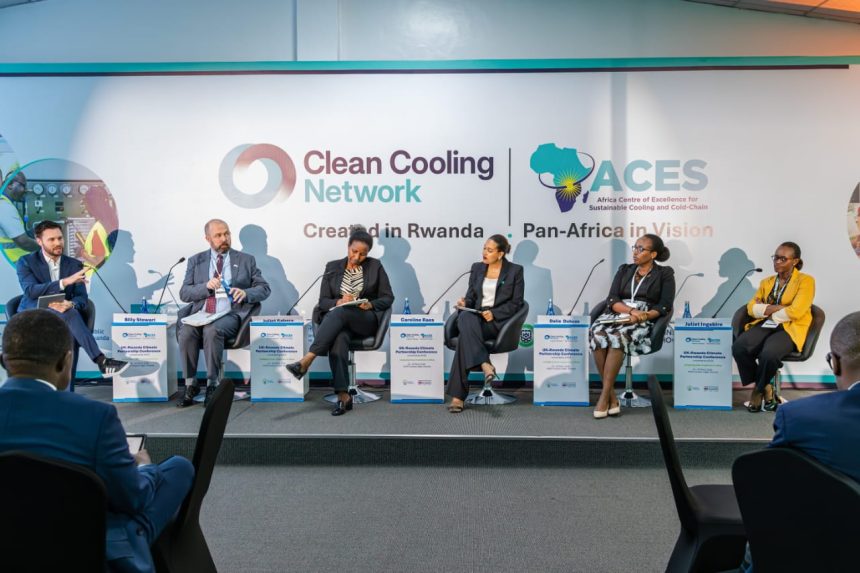
Rwanda has secured a £20 million investment under the climate partnership with the United Kingdom, reinforcing its position as a regional leader in climate innovation and sustainable infrastructure.
The funding supports the development of climate-resilient systems, with a strong focus on cooling and cold chain solutions through the Africa Centre of Excellence for Sustainable Cooling and Cold Chain in Rubirizi.
Officiating, Bernadette the conference Arakwiye, Minister of Environment of Rwanda, emphasized the urgency of translating strategy into tangible outcomes:
“This is the moment to move from ambition to execution. We have policy clarity, institutional leadership, and now ACES as a platform to anchor capability, innovation, and investment. What is required now is to align these elements into a coherent ecosystem that attracts capital, builds industries, and delivers impact at scale.”
The investment comes at a time when global climate financing is shifting away from traditional grants toward private sector-driven models.
The UK–Rwanda partnership is therefore focused on mobilizing sustainable financing through innovative mechanisms such as green bonds, carbon markets, and blended finance, while strengthening the ecosystem needed to attract long-term capital.
At the center of this effort is the Rwanda Green Fund, working in collaboration with the World Resources Institute to establish an investment facility that can unlock both domestic and international private funding for climate projects.
Toby Peters, Executive Director of ACES, highlighted the structural gaps the initiative seeks to address:
“Across Africa, we do not lack ambition or capital; we lack the systems that connect them. Investment flows where there is confidence: in regulation, standards, skills, and delivery. ACES exists to develop those systems.”

Cooling and cold chain infrastructure has emerged as a priority area due to its direct impact on food security, healthcare, and economic growth.
In Rwanda and across Africa, up to 30% of food is lost post-harvest due to inadequate cooling, while vaccine losses can reach 50% without reliable cold storage.
Addressing these challenges requires not only infrastructure but also training, sustainable business models, and clean energy solutions.
The ACES model focuses on delivering holistic, system-level solutions by combining research, skills development, and private sector engagement.
Built on a hub-and-spoke approach, it enables knowledge transfer and localized implementation across different markets.

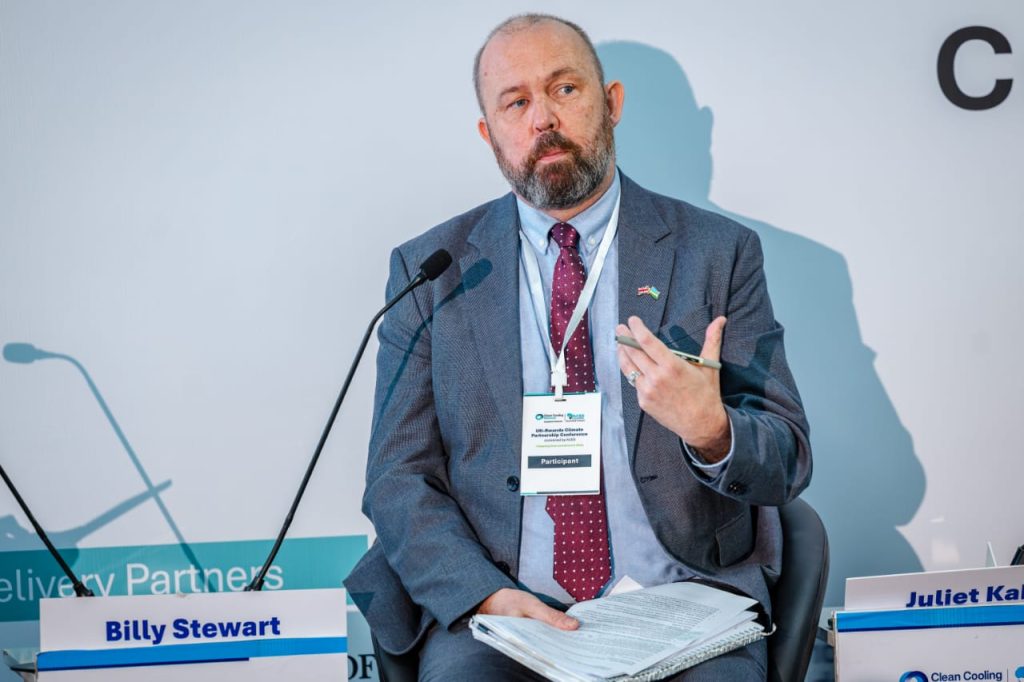
Development Director at British High Commission, Billy Stewart underscored the broader impact of the partnership:
“Through initiatives such as ACES, we are beginning to see how practical, investable climate solutions can take root in Rwanda. The progress already made shows the potential for locally driven innovation to scale across the region and deliver real impact for communities and markets.”
Over the course of the conference, stakeholders from government, private sector, academia, and finance are engaging in discussions aimed at moving from policy dialogue to implementation.
Key focus areas include mobilizing private finance for green infrastructure, strengthening certification and standards, building technical workforce capacity, and supporting industrial development.
The investment signals a shift in how climate action is financed and delivered, positioning Kigali not just as a center for dialogue but as a platform for execution. By aligning policy, innovation, and finance, Rwanda is advancing toward scalable, sustainable solutions that can drive long-term climate resilience and economic transformation.
By Andrew Shyaka